Considering digital transformation in FMCG, we often assume the most common outcome is a well-built, effective, and convenient set of workflows that drive business results. Unfortunately, that’s rarely the case. The most common scenario is a sales team surrounded by disconnected tools that only interpret the routine.
The sales promotion activities of FMCG companies are often managed in isolation. Reporting is delayed or incomplete. Everyone is busy, but no one has the full picture. Meanwhile, the sales cycle keeps moving.
This fragmentation doesn’t just slow operations; it weakens the growth strategy for FMCG. Without connected data and synchronized execution, it’s nearly impossible to optimize investments, align teams, or scale what works. FMCG sales strategy isn’t driven by individual tools. It’s driven by how well everything connects.
What FMCG Businesses Lose Without an Ecosystem Approach
According to McKinsey, companies that rely on disconnected sales and trade systems experience 20–30% lower promotional ROI compared to those with integrated platforms. That gap is rarely due to execution failure; it’s often the result of broken feedback loops between sales planning in FMCG and actual in-store performance.
In another study by PwC, 70% of FMCG leaders admitted they struggle to make timely commercial decisions because data is scattered across too many systems. Sales teams are left waiting on reports. Trade marketers operate with outdated field insights. And adjustments that should take hours, critical for a responsive FMCG business strategy, end up taking weeks.

Even with growing proof that integration drives better outcomes, many FMCG businesses still hesitate to embrace a truly unified system. In most cases, the barrier isn’t resistance to technology; it’s a lack of visibility. When reporting is fragmented and key business processes aren’t fully tracked, it becomes nearly impossible to see the cumulative impact of disconnection.
While the losses might not be dramatic at first, the symptoms are familiar: too much manual work, delayed decisions, limited confidence in commercial planning, and reporting that lacks transparency. Over time, it slows the long-term growth strategy for FMCG products and holds back the ability to increase sales or respond effectively to evolving consumer preferences.
Seamless Sales Cycle
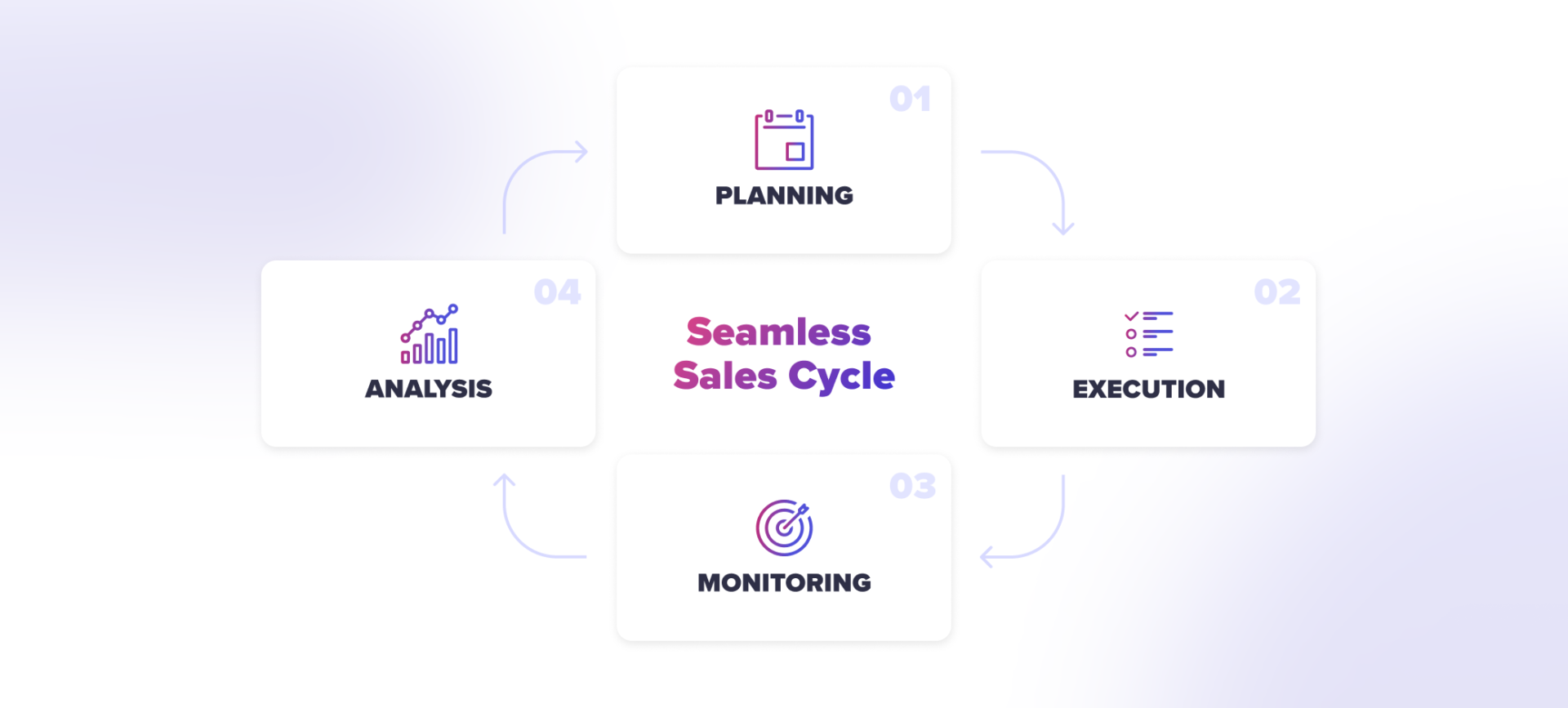
No matter the difference beyween CPG & FMCG, the sales cycle is a fast-moving, cross-functional loop that engages multiple teams and technologies. From planning promotions to executing in stores, from tracking distributor activity to analyzing outcomes, every stage relies on the one before it.
At least, that’s the theory. In reality, in many organizations, this loop is broken.
Let’s review how the integrated tools and business processes fix the sales strategy for each of 4 main cycle stages: Planning, Execution (including FMCG merchandising), Monitoring and Analysis.
Planning
Sales planning FMCG strategies are built on a foundation of ongoing process improvement. Markets shift, stores change, and consumer behavior evolves. Effective sales planning FMCG approaches rely on data and in-store visibility to maintain a competitive edge. A well-designed FMCG strategy relies on this real-time adaptability.
Use Cases of Ecosystem Approach in Planning
Real-time evidence-based planning. When our Image Recognition solution is used within the ecosystem, shelf data is instantly fed into the Trade Promotion Management system, where AI-driven forecasting adjusts promotion plans based on actual in-store execution.
Let’s say a planned promotion is underperforming in certain regions due to poor on-shelf availability. Instead of waiting for end-of-month reports, trade and sales managers can identify the issue in real-time, shift resources, and rebalance efforts to salvage ROI, before the campaign ends. This creates a live planning cycle where field execution informs forecasting, and forecasting dynamically refines field strategy, supporting a responsive growth strategy for FMCG.
Field Execution Adjustments. Planning field resources is another area where ecosystem integration adds value. Our SmartManager helps structure sales rep routes and territory coverage, but when linked to real-time execution data from Image Recognition and Sales Force Automation tools, it realizes the full benefits of SFA and becomes adaptive.
If shelf gaps are consistently flagged in specific store clusters, Smart Manager can pinpoint growth gaps and optimize resource allocation for maximum revenue, ensuring that the planning process remains responsive to in-store conditions, not fixed assumptions.
Positive Business Impact
- More Accurate Forecasting: Field and shelf data are used to inform demand planning leading to better stock availability and fewer lost sales.
- Faster Response to Market Changes: Teams can spot and act on underperformance mid-cycle, avoiding waste and saving campaigns before they fail.
- Optimized Field Deployment: Sales routes evolve based on store performance and execution gaps, leading to more efficient coverage and higher rep impact.
- Clearer Strategic Alignment: Because planning is connected to real-time retail realities, commercial strategy stays grounded in what’s actually happening.
Exeсution
Execution is where strategy meets the shelf and where even the best plans can fall apart if not supported by real-time visibility, consistency, and automation. In a traditional setup, field teams often work with incomplete instructions, disconnected systems, or delayed feedback. But in an ecosystem approach, execution is guided, verified, and continuously improved through smart tools working together to support a scalable growth strategy for FMCG products.
Explore the variety of automation systems for the FMCG industry to understand the different ways in which seamless integration drives efficiency and growth.
Use Cases of Ecosystem Approach in Execution
Retail Shelf Monitoring. Our Image Recognition tool transforms execution into a data-rich process. Every shelf photo becomes a source of measurable insights: on-shelf availability, share of shelf, promo compliance, and others. These insights are immediately validated and sent back into the ecosystem to update dashboards, trigger alerts, or refine ongoing field strategy.
Learn what is Route to Market in FMCG and how B2B eCommerce platforms are transforming it.
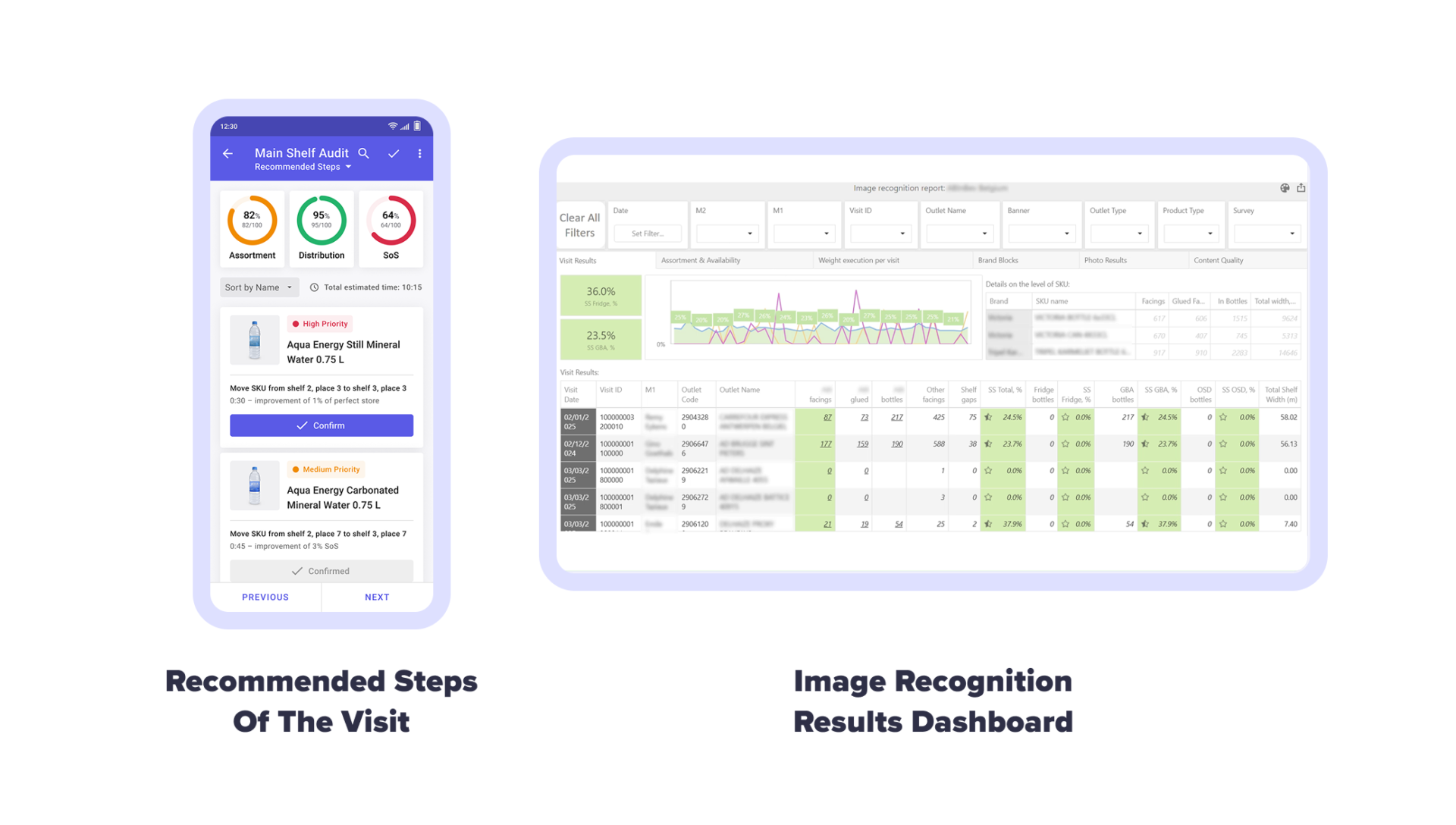
Imagine a launch campaign that’s active across multiple regions. As IR data flows in, the system identifies stores where promo materials are missing or poorly executed. Field teams are notified instantly, allowing route corrections while the campaign is still running, not weeks later.
Enhanced Distributor Collaboration. The Distributor Management System (DMS) facilitates real-time data exchange between manufacturers and distributors. By integrating DMS with SFA and TPM solutions, companies can harmonize promotion planning and execution even within a fragmented retail landscape.
This integration provides a comprehensive view of promotional investments by offering insights from both the manufacturer’s and distributor’s perspectives. It supports more coordinated execution strategies across distribution channels, ultimately helping to streamline operations and drive sales across markets.
Positive Business Impact
- Fewer Execution Gaps: Real-time guidance and validation reduce planogram errors, missed tasks, and incorrect promo displays.
- Increased In-Store Availability: Shelf data triggers fast responses from field teams and drives restocking activities, reducing out-of-stock incidents.
- Time Savings and Productivity: Smart tasking and automation reduce manual admin, letting reps focus on high-value activities.
- Higher Promo Compliance: When execution is automatically tracked and corrected in real-time, compliance increases without extra overhead.
- Integrated Retail Feedback Loop: Execution insights fuel better planning and smarter mid-cycle decisions, closing the loop across departments.
Monitoring
Execution without monitoring is just guesswork. Without live visibility into what’s actually happening in stores and across your distribution network, it’s nearly impossible to respond in time.
In an ecosystem, monitoring isn’t a separate task, it’s built into the daily rhythm of operations. Data flows from distributors, sales reps, and retail shelves into a central system that tracks KPIs, flags deviations, and keeps every department aligned in real-time.
Use Cases of Ecosystem Approach in Monitoring
Integrated Data Platform for Comprehensive Insights. Implementing a Data Platform within the ecosystem allows for the consolidation of data from various sources, including sales, distribution, and retail execution. This integration provides a unified view of operations, enabling real-time monitoring and facilitating data-driven decision-making. For instance, AB InBev utilized such a platform to save millions in inventory management and achieve a 3% sales increase.
Optimized Sales Territory Management. The Territory Management Solution offers a 360-degree overview of sales teams, facilitating efficient task management and data-driven insights. By integrating this tool into the ecosystem, businesses can monitor field team efficiency, optimize workload distribution, and ensure comprehensive management of sales territory, essential for any FMCG growth strategy.
Positive Business Impact
- Faster Issue Detection: Get notified when promo compliance drops, availability suffers, or distributors underperform.
- Greater Accountability: Field, trade, and distribution teams operate with shared visibility, making it easier to measure performance and act on gaps.
- Efficient Exception Handling: With real-time alerts and monitoring, teams focus on what’s broken instead of reviewing what’s already working.
- Transparent Performance Management: Centralized KPIs mean less time building reports and more time using them to improve execution.
Analysis
Analysis is where value is either unlocked or missed entirely. Without live visibility into what’s actually happening in stores and across your distribution channels, it’s nearly impossible to respond in time or adjust a sales strategy for FMCG products effectively.
With an ecosystem approach, every action taken across the sales cycle feeds into a central analytical layer. Data flows from distributors, sales reps, and retail shelves into a central system that tracks KPIs, flags deviations, and keeps every department aligned in real-time, supporting responsive and measurable FMCG growth strategies.
Use Cases of Ecosystem Approach in Analysis
Cross-Function Data Aggregation with the Data Platform. SoftServe’s Data Platform integrates structured and unstructured data from SFA, DMS, IR, and TPM into a single analytical hub. This allows commercial teams to run real-time dashboards, generate automated reports, and apply predictive models across markets.
For example, a manager can view the effect that improving on-shelf availability during a promotional period had on actual sales uplift and adjust future campaign planning accordingly. No more static reports or missed insights.
B2B eCommerce Data Feeding Into Forecasting. With our FMCG B2B eCommerce solution connected to the broader ecosystem, companies gain visibility into buying behavior, basket composition, order cycles, and response to campaigns. This transactional data supports not only account-level engagement but also demand forecasting at a macro level.
Read more about the challenges of B2B eCommerce and what can slow adoption after launch.
Positive Business Impact
- Smarter Campaign Optimization: Get a 360° view of what worked and what didn’t.
- More Accurate Sales Forecasting: Connect field and transaction data to build demand forecasts grounded in execution reality.
- Better Category Performance Tracking: Combine shelf data, distributor inputs, and sell-out numbers to make stronger assortment and space decisions.
- Stronger ROI Visibility: Measure commercial return based on execution data.
- Faster, More Confident Decision-Making: With automated dashboards and predictive models in place, leadership can steer strategy proactively.
The examples we’ve covered across planning, execution, monitoring, and analysis are just a small glimpse into what’s possible when FMCG companies adopt a unified digital ecosystem. The real strength of this approach lies in its adaptability: each solution, workflow, and integration can be tailored to reflect the specific goals, structure, and challenges of your commercial process and FCMG strategy.
Whether you’re aiming to boost promotional ROI, improve in-store compliance, streamline distributor collaboration, or enhance forecasting accuracy, the ecosystem provides a connected foundation that scales with your ambition. Because in FMCG, growth isn’t just about having tools; it’s about how well they work together.