COVID-19 and then the hype around AI have forced FMCG companies to rethink how they reach customers. As a result, the industry is now moving beyond basic digital ordering into a more connected, automated, and insight-driven FMCG Route to Market model.
After a decade of helping businesses to improve their FMCG Route to Market process through digital innovation, we’ve identified a few major shifts that are crucial to embrace before it’s too late. Companies that adapt quickly will be able to strengthen relationships with on-trade and off-trade customers, capture market opportunities faster, and operate with greater efficiency. Those who hesitate risk losing visibility, speed, and relevance in this increasingly competitive field.
In this article, we’re sharing those key shifts explaining what they mean for FMCG businesses so you can stay ahead over the next five to ten years.
But before discussing the future, let’s revisit how the traditional Route to Market in FMCG used to work.
The Current State of the FMCG Route to Market
The traditional distribution used to be a highly personal process built on one-on-one communication and trust. Manufacturers relied on a large number of sales representatives, responsible for building relationships with customers. Often, these responsibilities were shared with third parties like distributors and wholesalers.
The tools were simple: pen and paper, phone calls, and Excel spreadsheets. Orders were placed manually, inventory tracking was reactive, and sales operations lacked real-time visibility.
Then came the pandemic, and digital transformation in FMCG gained new momentum. The path from manufacturers to retail outlets and final consumers became more digitalized and straightforward, eliminating the role and the amount of those third parties we’ve mentioned.
And what is Route to Market in FMCG these days? How does it look?
The industry now sees an explosion of new sales channels, including eCommerce platforms, quick-commerce, and delivery apps (Glovo, Instacart), direct-to-consumer brand websites, and social media storefronts (Pepsi’s Online Store on Facebook Messenger). Omnichannel FMCG sales strategy is becoming the standard.
Personalization also took center stage as FMCG companies have begun investing heavily in consumer and customer engagement solutions. Engagement now often means loyalty programs (both for shoppers buying in-store or online and for retail customers) to boost brand awareness, loyalty, and both primary and secondary sales.
For example, a beer brand might reward consumers with points for every purchase scanned via a mobile app. At the same time, traditional trade stores or smaller modern trade outlets could receive tiered incentives based on sales performance or participation in promotional campaigns.
Read also how to track general trade vs modern trade channels
In this context, let’s take a closer look at how the core components of an effective RTM strategy have evolved.
Core Components of an Effective Route to Market Strategy in FMCG
The shifts toward digitalization, omnichannel presence, and deeper personalization mean each element of a Route to Market strategy in FMCG now plays a more interconnected role, from how your business segments markets to how it executes promotions and measures results.
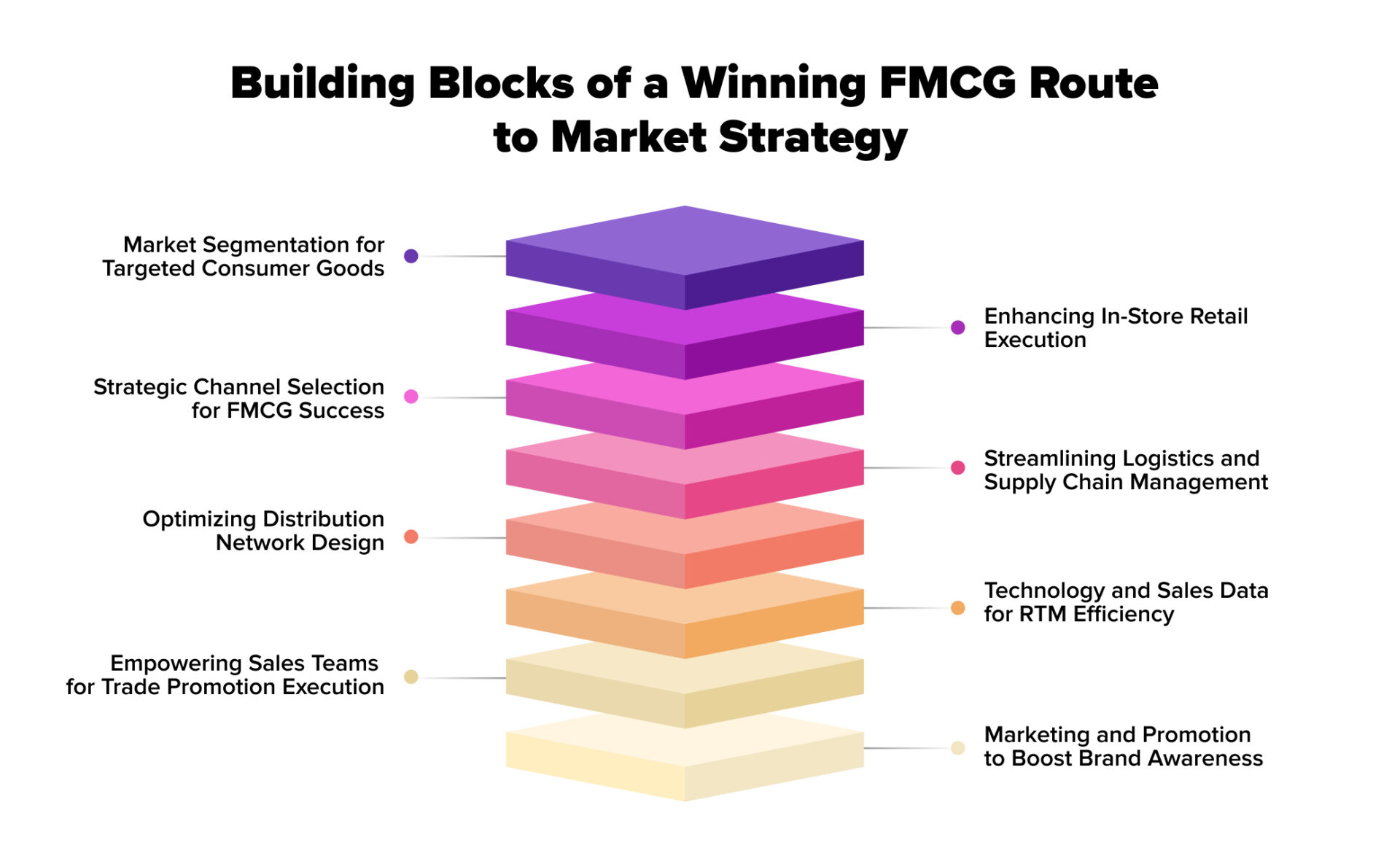
Market Segmentation for Targeted Consumer Goods
With more sales channels and diverse shopper profiles, market segmentation has become sharper and more data-driven. Fast-moving customer goods companies now use retail analytics and consumer insights to tailor assortments, promotions, and pricing to specific customer segments.
Strategic Channel Selection for FMCG Success
The right mix of channels ensures maximum reach, from traditional trade to B2B e-Commerce and quick-commerce. A beer brand, for example, might combine supermarket sales, convenience store partnerships, and on-demand delivery apps to reach different consumption occasions.
Optimizing Distribution Network Design
Efficient network design balances cost and availability. This can involve reducing the number of middlemen, shipping directly to on-trade and off-trade customers, or using small local warehouses to make deliveries faster and more efficiently.
Empowering Sales Teams for Trade Promotion Execution
Managing tons of promo using only Excel isn’t effective anymore. Progressive FMCG companies need Trade Promotion Management and Trade Promotion Optimisation solutions to balance discounts with sales growth and profitability.
Enhancing In-Store Retail Execution
The battle for consumer attention still happens on the shelf. Image Recognition (IR), planogram compliance checks, and both physical and digital POS materials help ensure products are visible, priced, and presented correctly.
Streamlining Logistics and Supply Chain Management
Supply chains must be agile in an omnichannel environment. Route optimization software, integrated inventory systems, and close distributor collaboration keep stock moving smoothly and costs under control.
Technology and Sales Data for RTM Efficiency
By focusing on proper data collection and management today, brands set themselves up to fully use AI in B2B eCommerce in the future. Furthermore, data loses much of its value when it’s kept in isolation within a single system. When sales, inventory, and market data are connected across platforms, it creates a complete picture that helps teams spot trends, make faster decisions, and improve their Route-to-Market efficiency.
Marketing and Promotion to Boost Brand Awareness
Integrated campaigns now combine digital ads, in-store activations, influencer collaborations, and loyalty programs to connect with consumers across every touchpoint.
From what we see lately, for many manufacturers, B2B eCommerce platform integration can be a great tactic for strengthening almost every component above. Because these platforms impact almost every part of the Route to Market FMCG process, they shift how the industry operates on a global scale.
How is the FMCG Route to Market Changing?
The more widespread B2B eCommerce platforms become, the more connected, AI-driven, and customer-focused the FMCG Route to Market will be. Let’s look at what specifically is about to change.

Shift №1: From Working in Silos to B2B eCommerce Marketplaces
For retailers and on-trade customers that work with multiple brands, logging in to dozens of platforms for ordering or simple communication with the supplier may not be as convenient as working with sales teams. That’s why non-competing brands are beginning to consolidate around one local platform that grows into a marketplace.
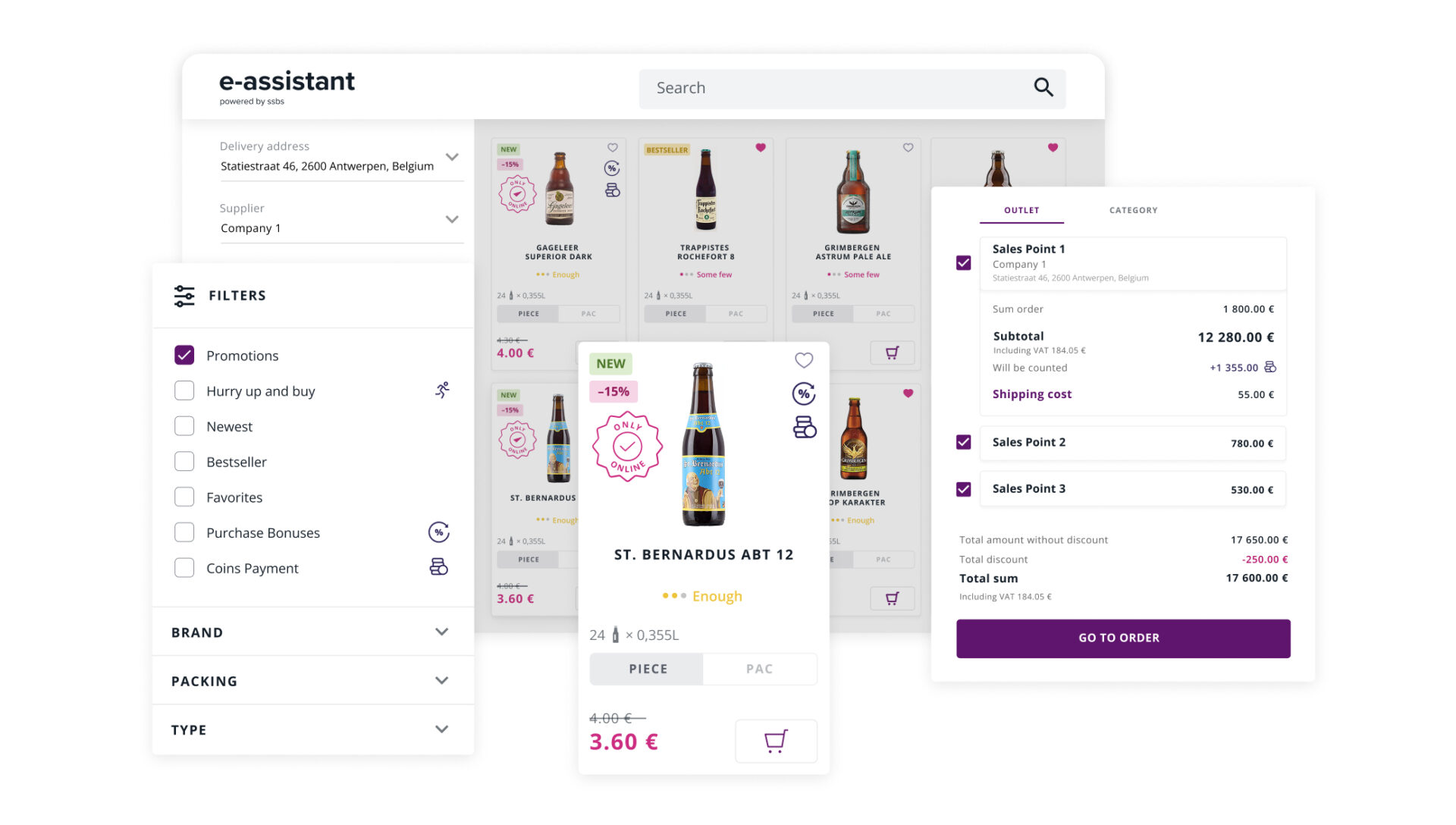
Imagine a snack manufacturer that sells in thousands of different sales points across Europe. The brand was one of the pioneers in B2B eCommerce adoption, so when localized versions of the platform started to attract more and more customers, they decided to offer their platform also to soft drinks, dairy, and cleaning supplies brands.
The number of brands grew, and so did the convenience for those customers. Instead of juggling multiple systems, they could now make the most of their orders in one place. What started as a single-brand online store transformed into a popular B2B marketplace.
As an early adopter, the snack company gained a first-mover advantage and real financial upside. They not only increased customer stickiness but also unlocked a new revenue stream. Hosting soft drinks, dairy, and cleaning supply brands now earns them commissions and boosts order volumes.
But even more valuable? Data. With multiple brands and on-trade and off-trade customers transacting on their platform, they now have access to a much broader view of the market.
That’s how a standard, basic marketplace operates. But in reality, the system can be far more layered and complex. AB InBev’s BEES, for example, backed their marketplace with an ecosystem of apps.
Another significant trend is that marketplace functionality can vary greatly depending on the manufacturer’s size and scale.
A small manufacturer might only need core features like a digital product catalogue, order placement, and basic promotion setup. In contrast, a global brand could benefit from a more advanced suite (think of dynamic pricing, a rewards system, and 24/7 customer support).
Shift №2: From Templates to AI Personalization
An FMCG B2B eCommerce platform isn’t a static ordering tool. Not anymore. By implementing AI into a platform, brands ensure tailored promotions, personalized product recommendations, and customer-specific prices.
Picture this: a retailer logs into a B2B eCommerce platform in the middle of a busy day. Instantly, an AI assistant pops up, and not with a generic greeting, but with personalized suggestions: “You haven’t reordered SKU 124 in over 3 weeks. Based on your usual sell-through rate, you might be running low. Want to add it to your cart?”
This is not just automation. It’s proactive support. AI spots stock gaps before they become a problem, recommends the right products to reorder based on past trends, and answers FAQs without involving a support agent.
On the content side, it writes sharp product descriptions, updates promo banners across multiple regions in real time, and even tailors messaging based on buyer behavior.
Another area of AI adoption is financial services. For example, some marketplaces use ML algorithms to validate customers’ creditworthiness, allowing credit to be offered more widely and with lower risk.
Shift №3: From Limited Control to 100% In-Store Execution
The way FMCG Image Recognition solutions operate is also shifting, thanks to tighter integration with B2B eCommerce platforms.
Traditionally, sales reps would use a Territory Management tool to visit the right stores, scan the shelves using an Image Recognition solution on their devices, and then the data syncs with their Sales Force Automation for FMCG system. From there, the data could be used by other tools within their AI-Driven EcoSystem, such as Trade Promotion Management or Distributor Management systems. Image Recognition worked well in that setup, but still relied on physical visits.
Now that IoT has become routine and eCommerce platforms are more common, Image Recognition can function in a completely new way – remotely.
For example, instead of waiting for sales reps, store staff can perform their own shelf audits by simply capturing images with a mobile app. Those images are automatically transmitted from the Image Recognition solution to the eCommerce platform and then to the SFA. This way, insights like shelf share, out-of-stocks, and compliance issues are instantly fed into the brand’s internal systems.
This remote approach is a complete win-win: the manufacturer minimizes issues with retail execution and out-of-stock situations, while the retailer receives bonuses from the supplier for meeting the standards.
In another case, smart cameras, for example, installed in fridges or shelves, can take photos every few seconds. The IR analyzes these images in real time, identifying stock levels, misplaced items, or even competitor products. The results are seamlessly pushed to the eCommerce platform, triggering personalized alerts or auto-replenishment prompts.
Conclusion
Widespread use of B2B eCommerce platforms triggers some of the most critical shifts in the FMCG Route to Market.
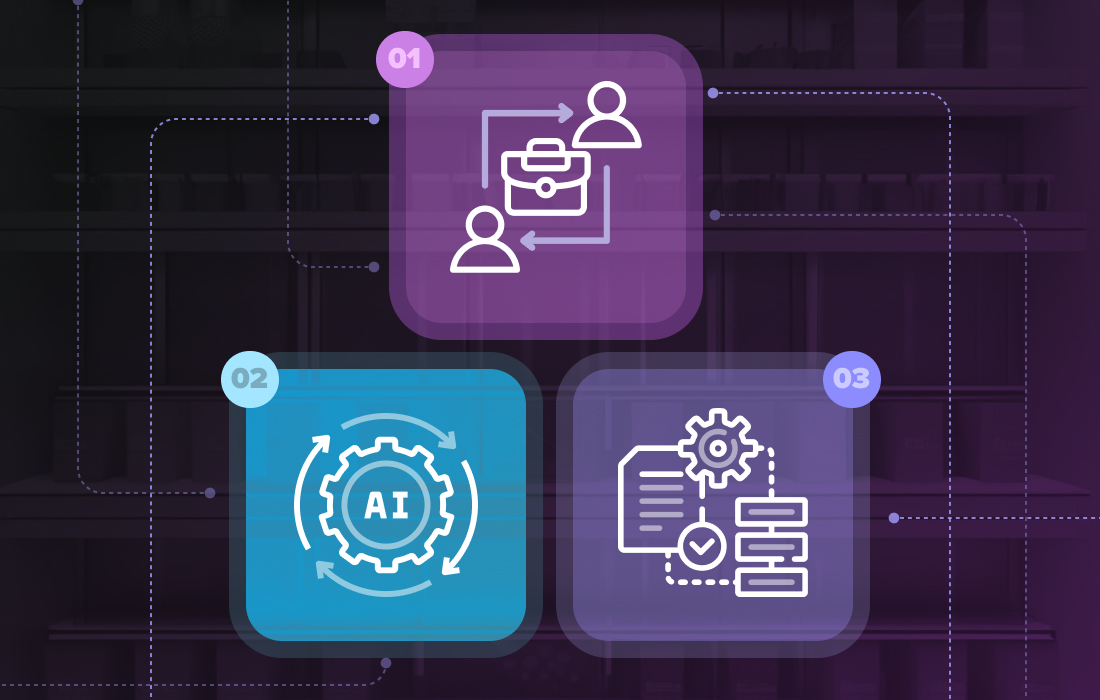
The three shifts outlined here highlight a clear path forward: brand collaboration through marketplaces, improved personalization with AI, and automated in-store execution without countless visits.
Adapt these innovations early and you’ll streamline the FMCG Route to Market process, deepen customer partnerships, and unlock new revenue streams.