Around 90% of B2B eCommerce projects fail to deliver the expected results.
There’s no isolated benchmark for CPG brands. However, based on what we see in the industry, the picture is very similar.
The failures happen not because of the lack of technology or digital products. It’s aligning systems, teams, and market realities into a model that actually works at scale.
In this article, we break down the most common challenges of B2B eCommerce and show practical ways leading brands address them, with real examples from the field.
Let’s get straight to the heart of the matter.
Challenge 1: Low Adoption Among Retail Partners
One of the core B2B eCommerce challenges. Many CPG businesses invest heavily in B2B eCommerce platforms, only to see retailers continue ordering via calls or WhatsApp.
Why retailers don’t adopt B2B eCommerce platforms:
- Strong personal relationships with sales reps slow digital switch
- No clear incentive = no reason to change ordering behavior
- Poor UX quickly kills repeat usage
- Too many supplier portals create fatigue and abandonment
How Brands Overcome Retailer Resistance
The difference between platforms that struggle and those that scale is rarely a matter of functionality. It’s the mindset behind adoption.
Brands that succeed don’t expect retailers to change behavior on their own. They actively guide, motivate, and support that shift – addressing the real B2B eCommerce marketing challenges that block online adoption.
What CPG companies do in particular:
- Treat adoption as a change-management initiative, not an IT rollout
Leading brands invest in onboarding, communication, training, and ongoing support to help retailers move away from familiar offline habits.
- Assess retailers’ digital readiness before scaling
Instead of assuming all partners are ready for online ordering, successful programs start with store visits, interviews, and pilots. This helps identify who is ready to adopt quickly, who needs guidance, and where friction is likely to occur.
- Segment retailers by what actually motivates them
One-size-fits-all approaches don’t work. Effective CPG B2B platforms support different retailer profiles:
- Value co-creator who wants to collaborate on data sharing, planning, and promotions
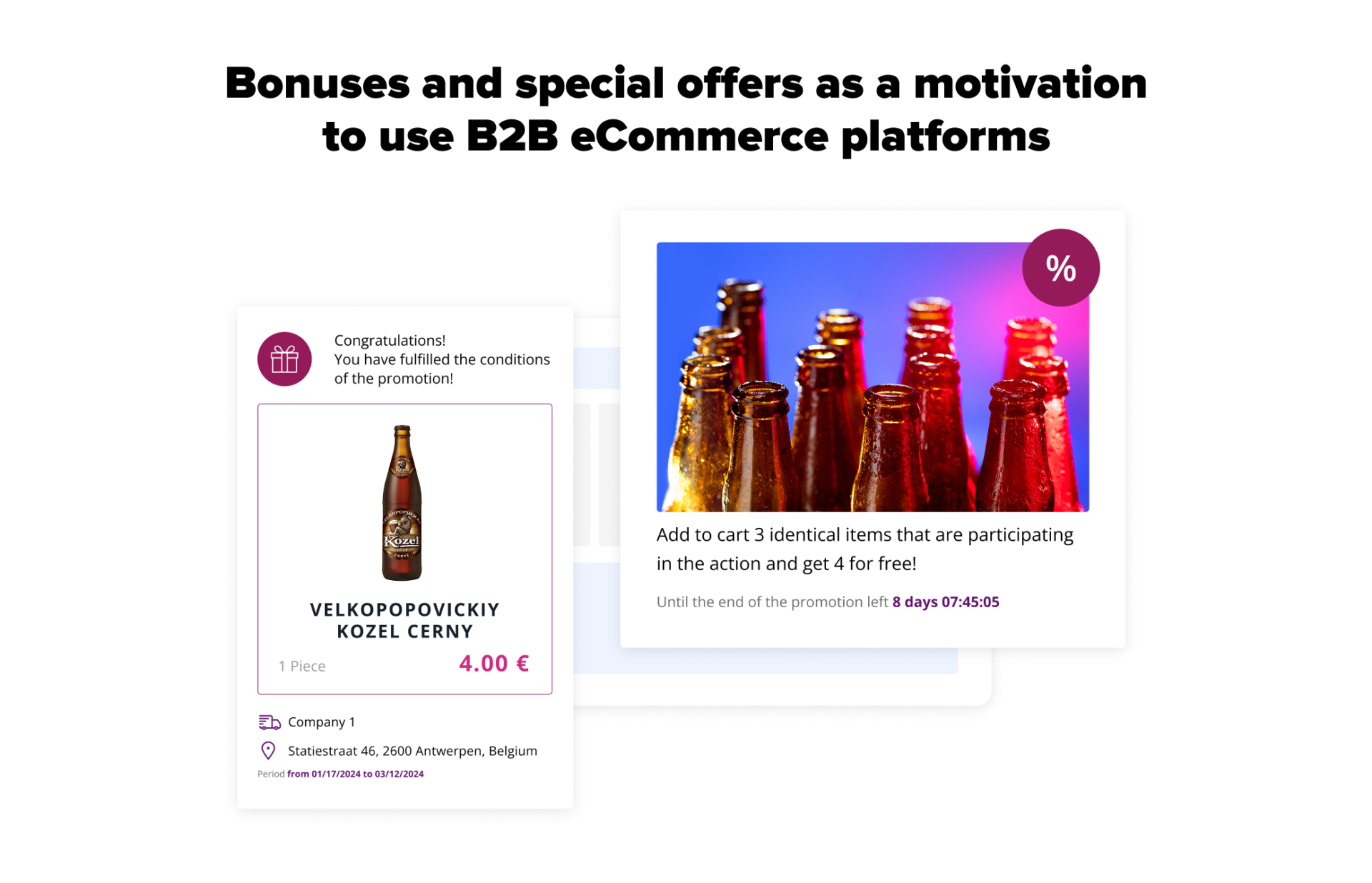
- Profit-driven retailers who respond to discounts, bonuses, and margin-improving offers
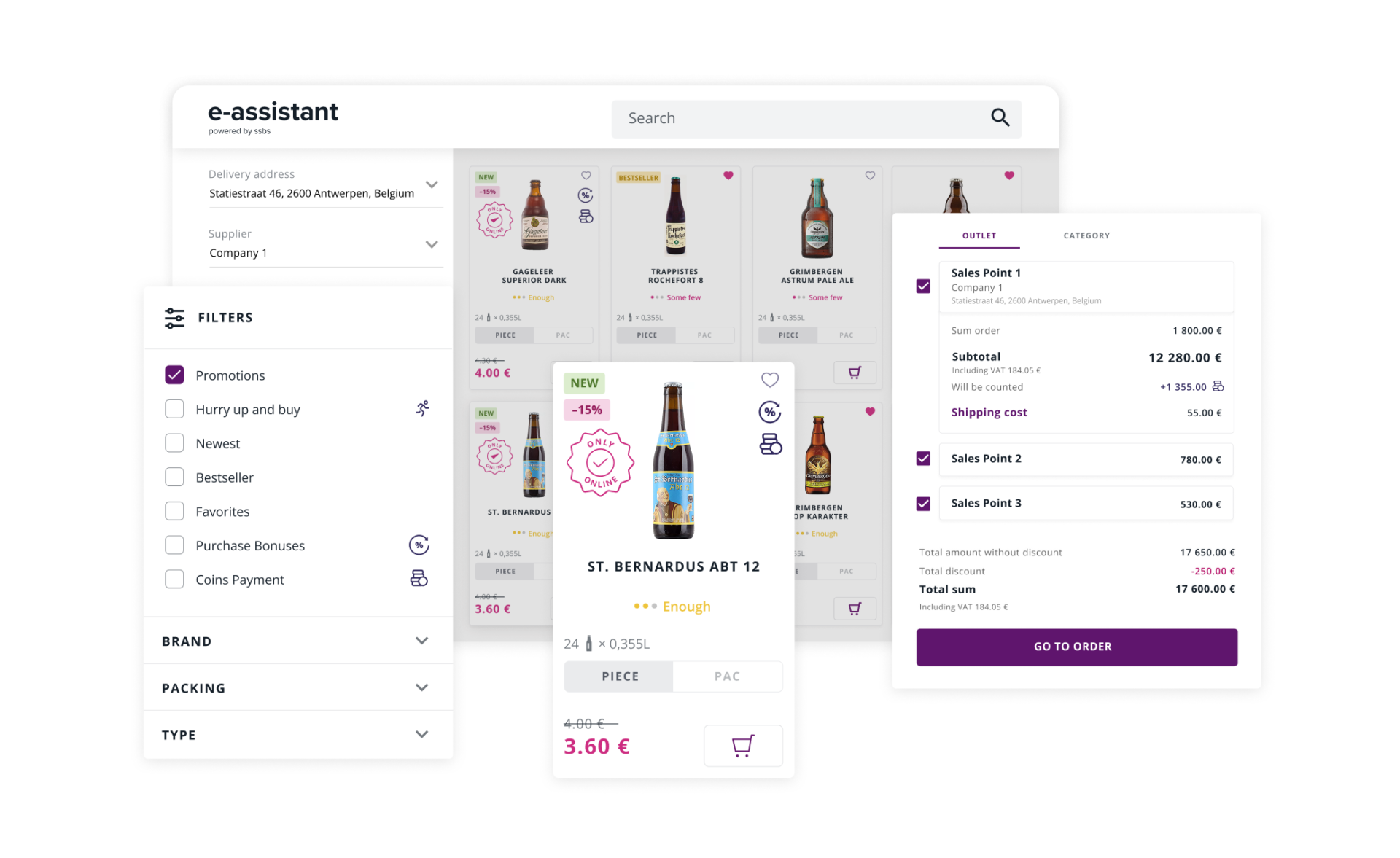
- Insight-driven retailers who value data, benchmarks, and AI-powered recommendations that help them order better, not just faster
- Reduce portal fatigue by evolving the platform into a multi-brand marketplace
Retailers increasingly face “portal overload,” with separate ordering systems for every supplier – leading to fatigue, low usage, and eventual abandonment.
Leading brands address this by opening their platforms to multiple suppliers or complementary categories, allowing retailers to manage more of their assortment in one place.
Challenge 2 within Issues in B2B E-Commerce: Technical and Integration Challenges
Aligning multiple systems, large data volumes, and diverse customer requirements is a complex task. For CPG brands, these technical challenges quickly become commercial ones.
Integrating ERP, CRM, PIM, and Inventory Systems
A B2B platform must seamlessly connect with core business systems to avoid manual work, errors, and delays. This typically includes:
- CRM, SFA, ERP, and TPM/TPO software to ensure data flow, consistent pricing, and automated processes
- Payment gateways that ensure that online orders can be placed and settled securely and in line with agreed commercial terms
Without proper integration, teams face fragmented data, duplicated efforts, and inconsistent customer experiences that fail to meet buyer expectations.
Data Quality, Security and Access Management
Modern CPG B2B platforms go beyond order processing. They rely on:
- Data analytics to track customer behavior, sales performance, and execution quality
- AI-powered recommendations to help retailers discover relevant products and optimize orders
This data-driven approach enhances platform value but also introduces complexity and increased cost. Building such capabilities from scratch requires significant investment in data infrastructure, security, and governance.
To avoid such B2B eCommerce challenges, many CPG brands opt for ready-made, industry-specific solutions that already embed these capabilities.
The Complexity of Scaling B2B eCommerce Systems
Scaling a B2B platform to support thousands of retail customers, large assortments, and frequent updates exposes a few B2B eCommerce problems:
Hard to achieve high performance and reliability
Even short system disruptions can result in lost orders and frustrated retailers. Ensuring high availability demands robust infrastructure, continuous monitoring, and strong vendor support.
Hard to maintain flexible configurations at scale
At scale, the platform must handle various pricing models, commercial terms, and assortments across different customer segments, without compromising performance or usability. That becomes increasingly complex as the number of customers, products, and rules grows.
Challenge 3: Transaction and Payment Challenges in B2B eCommerce
B2B transactions in CPG (don’t mind the FMCG vs CPG distinction) are complex. Orders often involve high volumes, multiple payment methods, credit terms, and internal approval workflows – common B2B eCommerce problems for brands trying to scale digital sales.
Not all platforms handle these aspects directly. Sometimes, payments, approvals, or credit management are processed separately through external systems or finance teams.
In this paragraph, we’ll focus specifically on financial managerial issues in B2B eCommerce, such as transactions and payments, and what it takes to handle them effectively.
Complex Payment Processing and Multiple Payment Methods
Retailers may pay via bank transfer, direct debit, invoice, or promotional credits. Some platforms handle payments directly, but many rely on integration with external payment gateways, ERP systems, or finance tools to process and reconcile transactions.
Proper integration ensures that orders, credits, and payments stay synchronized, reduces manual effort, and minimizes errors.
Credit and Risk Management in B2B Transactions
Each retailer has a credit limit and risk profile. Ideally, platforms should enforce these limits automatically. However, some require finance team oversight to prevent overspending and manage risk.
Approval Workflows and Internal Purchasing Processes
Even small retailers have their own informal purchasing rules, such as checking budgets, stock levels, or coordinating with staff before confirming an order. A B2B platform must accommodate these simple approval habits without adding friction.
For example, a shop owner might review an order at the end of the day before submitting it or check that promotions are applied correctly.
Platforms that allow retailers to save, edit, or review orders before final submission align with these natural workflows.
Challenge 4: Supporting Retail Execution and Partnerships Remotely
With a B2B eCommerce platform, the frequency of in-person visits naturally decreases. As do the associated travel costs and time investments, which is the whole point.
While this frees up resources, it also raises concerns about maintaining control and visibility over the point of sale.
Some manufacturers worry that retailers will not follow planograms, misapply promotions, or prioritize other products over theirs.
To address this, successful platforms integrate real-time stock data and offer AI-driven recommendations and alerts. They also provide retailers with the ability to upload shelf photos to their platforms. These tools allow manufacturers to maintain control virtually.
Challenge 5: Highly Fragmented Markets and Local Specifics
In Unilever’s 2024 earnings call, CEO Hein Schumacher emphasized that “future volume and penetration gains will be largely driven by winning in the world’s fastest-growing consumer markets.”
For B2B eCommerce, fast-growing markets are both an opportunity and a challenge. In mature markets, such platforms are primarily used to serve the HoReCa channel – that’s where the number of independent partners is substantial compared to retail.
Fast-growing markets typically have a high share of small, independent retailers (corner shops, kiosks, and mini-supermarkets) rather than large, centralized chains.
Serving this long tail of outlets at scale is the primary purpose of B2B eCommerce platforms. However, each market has its own unique product requirements, pricing structures, regulations, and buying behaviors. As a result, manufacturers must manage country-specific catalogs and tailor promotions to different retailer profiles, often at a massive scale.
Unilever’s B2B system in Asia demonstrates what scale truly entails. It connects approximately 500,000 small retailers, 600 distributors, and 6,000 sales representatives, processing around 75,000 orders daily.
At the same time, manufacturers want to run personalized promotions for individual retailers or market segments, offering discounts and incentives tailored to their purchasing behavior.
A B2B platform must dynamically adjust catalogs, prices, and recommendations for each logged-in user to make these campaigns effective and maximize B2B eCommerce ROI.
Challenge 6: Sales Team Resistance and Channel Conflict
Before implementing an eCommerce platform, sales representatives typically have well-defined KPIs, territories, and workflows. Naturally, they may worry about how the new platform will affect their role, income, and relationships with retailers.
Therefore, CPG B2B businesses often assign a separate, dedicated team to drive the eCommerce channel.
This new team focuses on onboarding retailers, supporting digital ordering, and optimizing the platform’s performance without disrupting existing sales responsibilities.
Over time, the digital team works closely with field sales to align incentives and processes.
How Leading Brands Solve B2B Ecommerce Challenges
Let’s take a look at the journey of several of our clients as they adopt our eCommerce platform, the challenges they faced, and how they managed to overcome them.
We’ll start with Kormotech.
Freeing 75% of Sales Team Time While Scaling Store-Level Personalization
Kormotech is an international pet food producer, delivers over 100,000 tonnes annually to 50 countries.
The company has been a long-time user of our SFA solution, which features territory management functionality. Data from the SFA showed that Kormotech’s sales team spent up to 75% of their time at specialized pet stores on manual order-taking.
Considering that a single store visit typically lasts no more than 25 minutes, this left very limited time for higher-value activities.
As the number of pet stores continued to grow, this operating model became increasingly difficult to manage without hiring additional sales staff.
That’s where our B2B FMCG eCommerce platform came in.
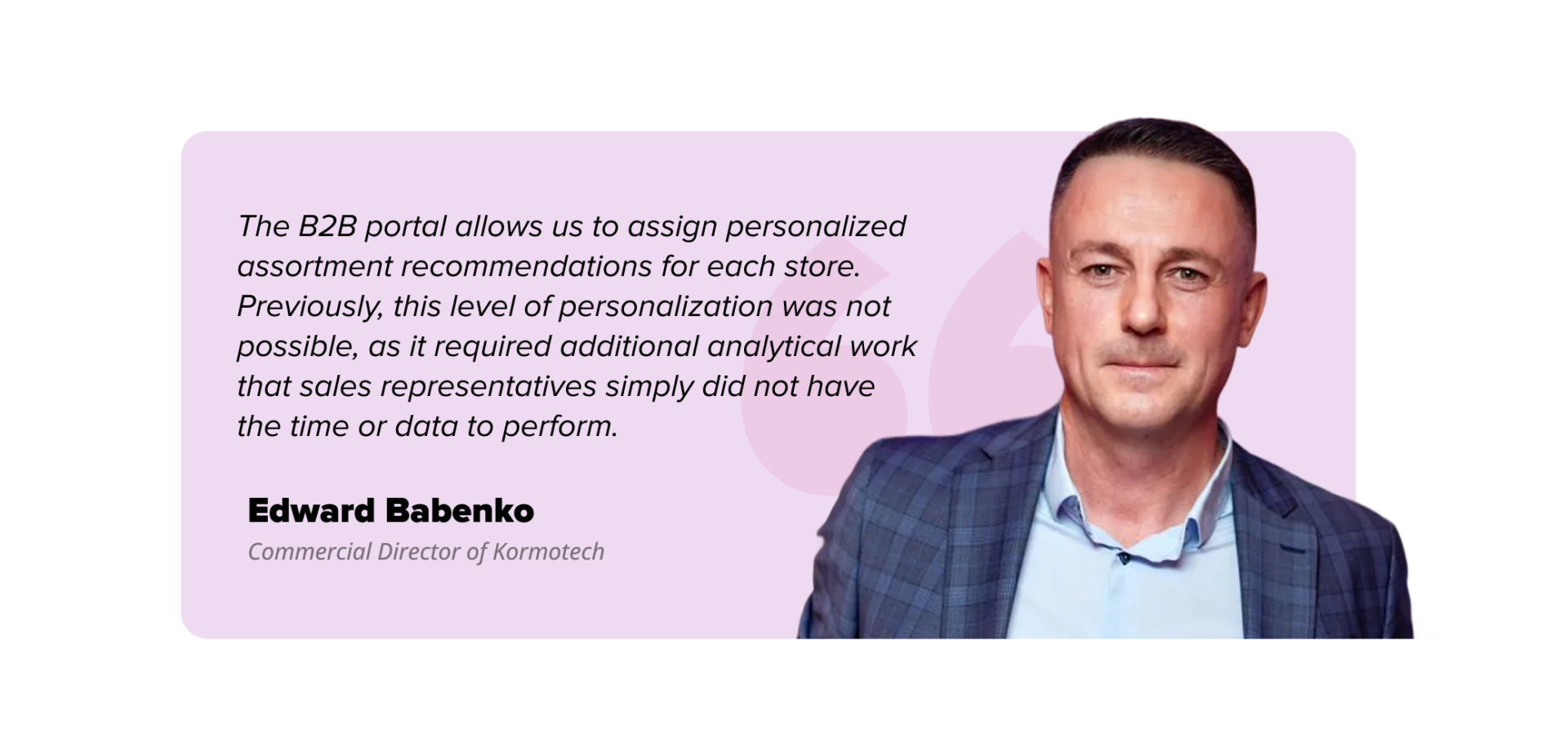
The solution helped to:
- Automate routine order processing and reduce manual workload for sales representatives
- Provide self-service access to assortments, promotions, and product information for stores
- Enable store-level personalization through data-driven recommendations
- Free up sales teams to focus on higher-value activities such as planning, collaboration, and identifying growth opportunities
- Standardize communication and access to marketing materials, promotions, and KPI tracking
Challenges Kormotech faced in adopting the B2B platform and how they overcame them
- Sales team resistance: Some representatives were hesitant about the new platform. Solution: A dedicated sales team was established to support adoption and guide reps as well as partners through the transition.
- Targeting the right stores: Not all retailers were ready to use the portal. Solution: Kormotech created a target customer list and focused first on stores that understood the platform’s purpose and benefits.
- Educating partially aware partners: Some stores were potentially open but lacked a full understanding. Solution: These retailers received focused education and support before being transitioned onto the B2B portal.
- Not pressuring non-engaged stores: Stores that do not understand or are unwilling to use the portal may reduce the success of adoption. Solution: These outlets were deliberately not onboarded, ensuring the initial rollout focused on high-potential users. They were given the flexibility to join later at their own pace.
- Integration with existing systems and workflows: Aligning the B2B portal with SFA and sales processes required careful planning and coordination. Solution: The platform was deployed in phases – preparation (1 month), deployment and SFA integration (3 months), and launch/pilot with training (1 month). It allowed a controlled, step-by-step rollout.

Driving 20% Customer Adoption in 6 Months by Overcoming B2B eCommerce Resistance
Our client, a beverage manufacturer operating across Europe, was excited to implement the B2B eCommerce platform from SSBS due to its benefits, including 24/7 ordering and reduced costs.
In particular, the CPG B2B platform helped the company with:
- Increasing average sales per outlet on a monthly basis.
- Reducing time spent on field visits.
- Enabling future innovations, including marketplace expansion, next-generation loyalty programs, trade promo management support, and AI-powered tools like image recognition and predictive analytics.
However, every B2B eCommerce has a business challenge to solve. In this case, the adoption was difficult due to customers‘ hesitation to switch from traditional in-person ordering to a new digital channel.
For the client, the biggest problems in B2B eCommerce were integrating the platform into partners’ daily routines and showcasing its convenience, personalized product suggestions, and faster access to offers.
What the client did to overcome the challenge of customers’ resistance:
- Adopted a customer-centric approach, prioritizing convenience and usability, recognizing that resistance is one of the marketing issues in B2B eCommerce.
- Maintained close communication with clients to understand their needs.
- Selected a purpose-built B2B platform for FMCG, supporting complex client structures, omnichannel integration, loyalty programs, and AI/ML capabilities.
- Leveraged commercial expertise alongside the platform’s features to deliver a smooth and relevant buying experience.
As a result of convincing clients to try the platform and demonstrating its usefulness:
- Over 20% of on-trade customers were actively using it within six months.
- Customers praised the platform, describing it as “extremely convenient” and “the best on the market.”
Shared Patterns: A Practical Blueprint
Across these client stories, some clear patterns emerge in how leading brands successfully adopt B2B eCommerce platforms.
| Pattern | Key Action & Result |
| Customer-Centric Design
| Tailor platforms to retailer workflows; improves usability and adoption |
| Phased Rollouts | Start with high-potential customers; build momentum and confidence
|
| Tech + Expertise | Configure platforms and integrate systems; smooths transition and reduces resistance |
| Show Immediate Value | Demonstrate quick wins (time saved, personalized recommendations); boosts adoption |
| Continuous Support | Provide training and guidance; helps retailers adopt confidently |
Where to Start: A Roadmap for Commercial Leaders
Based on our experience deploying B2B eCommerce, we recommend five best-practice principles for successfully implementing a B2B eCommerce strategy.
1. Digitize and Create Real Value for Retailers
Retailers are often overwhelmed with manual processes and multiple platforms. By digitizing ordering and providing personalized recommendations, prompts, and scheduling, you save their time and reduce errors.
Integrating financial services, such as credit limits, further simplifies transactions and builds trust.
2. Provide Excellent Support
Even the best platform will fail without responsive support.
Set ambitious service standards: 85%+ first-contact resolution with response times under 30 minutes ensures common issues in B2B eCommerce are resolved quickly, helping retailers adopt the platform confidently.
3. Transform your Traditional Sales Team
Sales teams spending 40-50% of their time on manual order-taking miss opportunities for high-value work. By creating a dedicated digital sales team to manage the B2B eCommerce platform adoption, traditional reps can focus on strategic selling and customer relationships.
4. Focus on Customer Engagement
Digital ordering should not replace personal relationships. Maintain daily touchpoints, highlight relevant promotions, and use data-driven insights to show value. Engaged customers adopt the platform faster, place orders more frequently, and remain loyal.