Inconsistent in-store execution, poor shelf visibility, and a lack of real-time insights – thank goodness those old days in FMCG merchandising are long gone. For most companies, at least. But why bother recollecting? Because progress is rarely random, and patterns show us directions.
The reasons behind past changes, like the shift to real-time data, automation, or shelf recognition, can help predict what the next significant phase in FMCG merchandising might look like.
This article will discuss exactly that. We will reflect on how the current situation differs from that of a decade ago and talk about modern ways to stay up to date.
Key Aspects of FMCG Merchandising
Merchandising is not a monolithic process. It consists of seven crucial areas, so let’s take a quick look at the progress of each of them over the past 10 years.
Visual Merchandising in FMCG
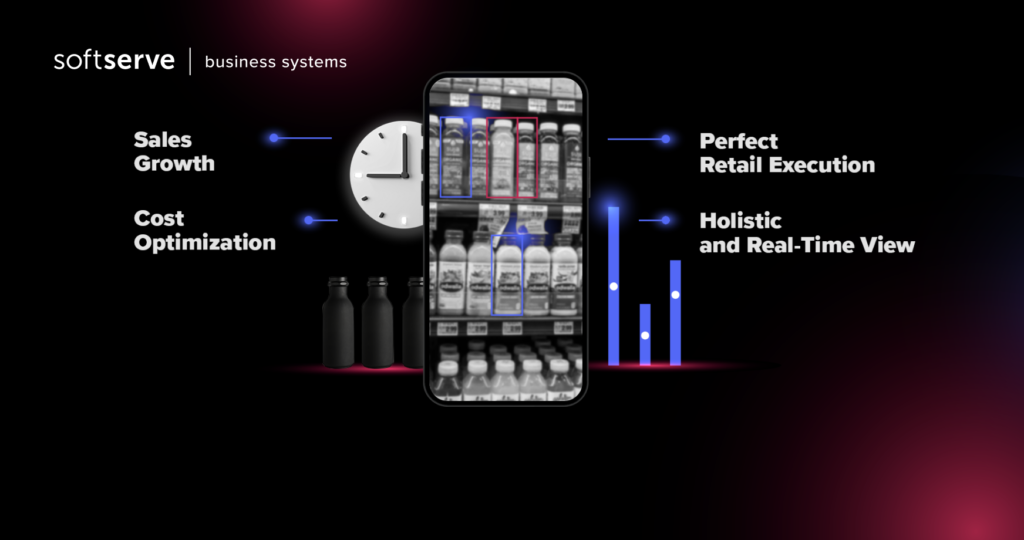
Visual merchandising in FMCG has always depended on people: what they notice and prioritize. Now, AI and technologies like Image Recognition and Computer Vision in the FMCG industry serve as an extra set of eyes. They help to ensure displays and product placement of fast-moving consumer goods brands are aligned with the plan.
Shelf Management
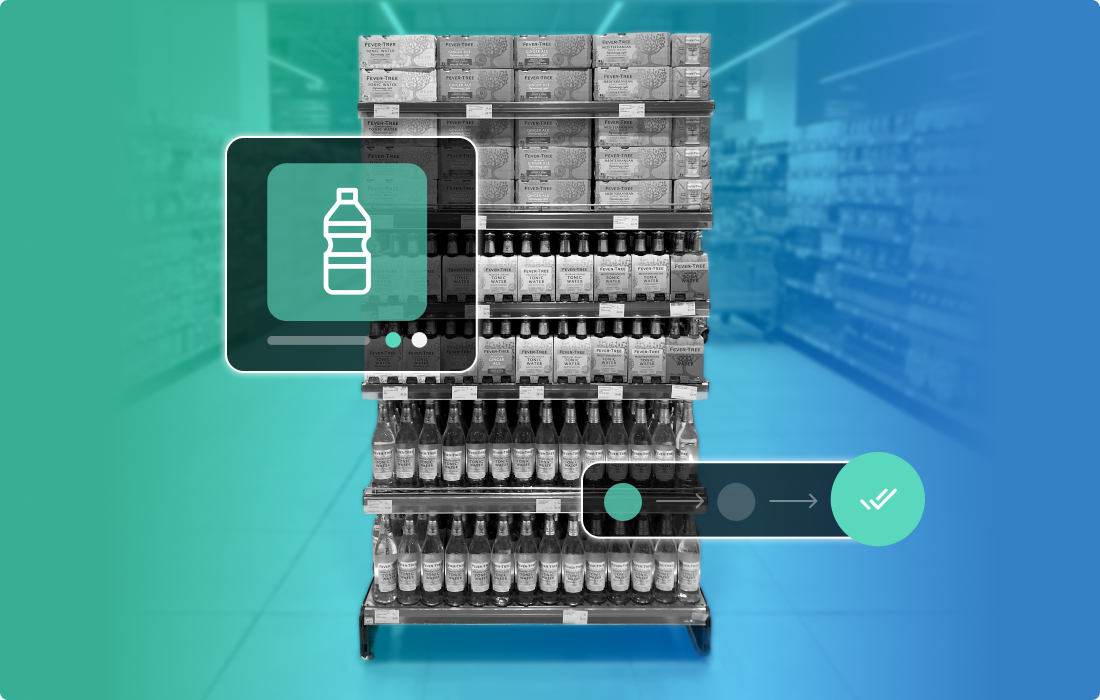
Picture a sales rep scribbling notes and snapping photos on their phone, trying to report out-of-stocks and estimate shelf share manually. Today, FMCG Image Recognition software scans shelves in seconds. It flags gaps, automatically calculates the share of shelf, and optimizes shelf management. Thus, with such real-time insights, teams can act instantly.
Promotional Compliance
A promotional poster might arrive late or be forgotten entirely, and no one would notice until the campaign was over, and the sales bump never came. Now, brands track every display, signage, and execution point through mobile apps and dashboards, ensuring campaigns launch on time and in full, store by store.
Point-of-Sale (POS) Materials (POSM)
Boxes of unused POS materials often sat in stockrooms because store staff didn’t know what to do with them. Or the materials arrived too late. With real-time usage tracking and performance analysis, POSM is now tightly managed via digital catalogues and demand planning tools.
In-Store Experiences
Engagement in FMCG merchandising has always been a goal, but the opportunities to bring it to life weren’t as vast as they are today. Now, we talk about interactive touchscreens, augmented reality try-ons, and app-connected experiences that turn the shopping experience into a brand-driven event and influence customer behavior.
Trade Show Displays
Trade shows haven’t changed at their core – they’re still about connection. But now, digital channels are being added to strengthen that connection. Printed brochures and casual follow-ups are joined by digital lead capture, smart booth layouts, and live product demos that are streamed or shared instantly.
Digital Merchandising in FMCG
Online presence was often limited to a product photo and a generic description on a retailer’s site. On one hand, FMCG merchandising involves brands curating content, interactive applications, and engaging IoT solutions.
On the other hand, merchandising principles in FMCG evolved into fully-fledged eCommerce platforms, where brands can engage both modern and traditional trade customers. But hang tight, we will get back to the engagement part in a moment – there’s plenty to unpack!
Why FMCG Merchandising is Important
Understanding why FMCG merchandising matters is another key point in recognising where and how it’s changing.
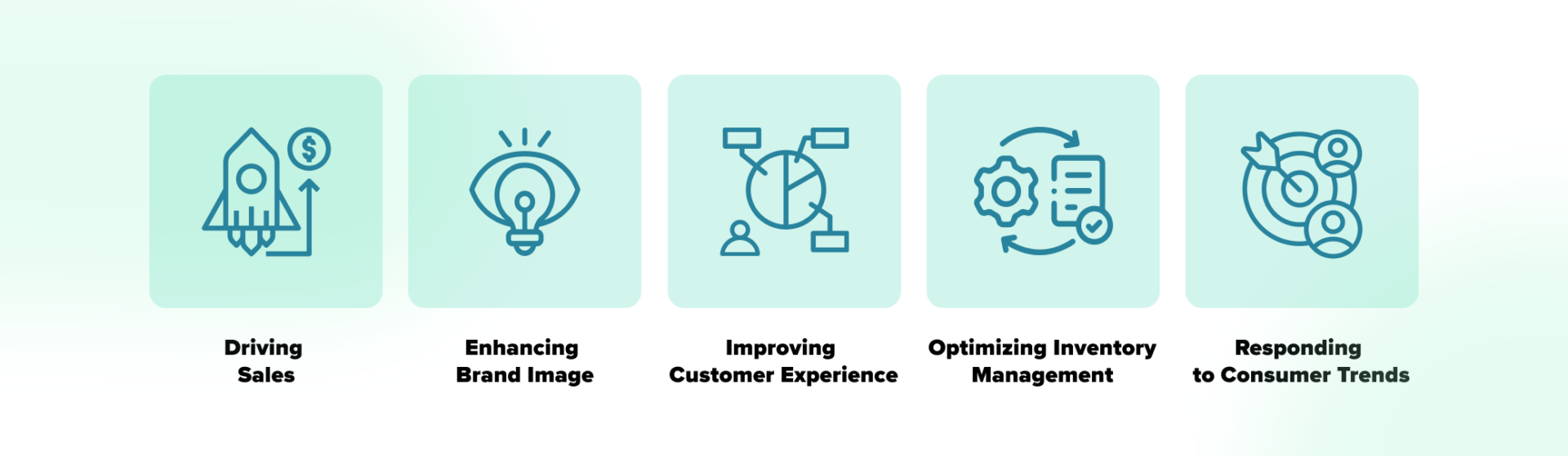
Driving Sales
To influence shopper behavior both in-store and online, brands fight for eye-level shelves for their SKUs. Those shelves must be kept fully stocked and well-organised, with strategic product placement and clear signage to catch the customer’s attention.
Promotions also play a critical role. Whether it’s a limited-time discount or a bundle offer, they must grab attention and create urgency. This way, promo planning CPG software solutions became the new go-to for modern brands.
Enhancing Brand Image
Brand presence in-store used to vary wildly. One shop might have a beautiful setup, another a messy or outdated display. With software like IR, it is easier now to adhere to one visual standard for displays, banners, and product arrangements across thousands of outlets to maximize brand awareness.
Improving Customer Experience
Brands these days have all the instruments to understand who their real buyers are and how to keep them engaged. For example, with the customer engagement tools that we will discuss in detail a bit later.
Optimizing Inventory Management
Overstocks and out-of-stocks were common a decade ago. Thus, the industry moved towards real-time inventory management and predictive analytics to balance supply and demand more efficiently.
Responding to Consumer Trends
Even when trends were changing more slowly 10 years ago, it was challenging to launch new products before the hype had passed. Now, testing, launching, and promoting trending products can be done at the speed of culture.
As you can tell from the previous paragraphs, merchandising in FMCG (or CPG, depending on the terminology used in your region – see FMCG vs CPG) isn’t just about simply stocking shelves. It’s about interacting with customers and consumers through both physical and digital channels. And the decision on how, where, and when to do that is more data-driven than ever.
Remember, we’ve promised to discuss some solutions and tools? Now is finally the time.
Ways to Improve FMCG Merchandising Today
Working closely with FMCG leaders to help them stay ahead of the curve, we have seen that modern brands should focus on three key areas: on-shelf visibility, promotion execution, and insight-driven data use.
On-Shelf Visibility
According to statistics, a 3% improvement in on-shelf availability drives a 1% increase in sales. That’s quite the payoff, isn’t it? Just think of the results you could get from technology that can speed up the shelf audit process by 30%! A major advantage when building an effective FMCG sales strategy. So, let’s talk about the tech.
Image Recognition Software
AI product recognition isn’t a novelty for modern merchandising in FMCG. However, such solutions offer a huge range of functionality.
For example, some would be challenging to integrate with different SFAs, so they would be used as a separate solution; hence, the data from such tools would be isolated. Others would undergo integration and become a great source of data for many departments.
Modern merchandising standards in FMCG require companies to use the most progressive shelf image recognition.
What should you look for in the modern IR that wouldn’t appear outdated after a year or two?
1. Convenience for the End-user – your Field Team
Image Recognition software should integrate seamlessly with the team’s existing tools. For instance, it should be accessible on the same device and through the same SFA they use to log their visits and view their daily routes assigned by their manager.
2. Adaptivity and Innovations
A modern Image Recognition needs to learn how to recognize not just your own shelf assortment and promotional materials, but also price tags and even competitors’ products if needed.
Once you provide the necessary data, like product images, price tag formats, and promo examples, the system should be ready for a pilot launch within two to three weeks. That’s how fast it should be able to learn and start delivering value.
3. Insights that Drive Actions
Image Recognition is a great tool, but the real value comes from how you use the data it provides.
With traditional systems, a manager might review the data later and decide what exactly a sales rep or an FMCG merchandiser should fix after store audits. But when Image Recognition’s capabilities are extended into easy-to-do steps to improve the current situation here and now, those insights become instant, on-the-spot instructions.
Take, for instance, our Recommended Steps of the Visit. It tells field staff how to adjust the shelf to maximize visibility and improve performance while they’re still in-store. There are no delays or guesswork – just clear guidelines based on real-time data that a sales rep or a merchandiser in FMCG can act on immediately.
Promo Campaigns
Promo investments in the FMCG sector are always rising, with some companies reporting a 15% promo budget increase in 2024. Meaning, the competition for customers’ attention is growing, and FMCG merchandising needs the right tech solutions and strategies to prepare, track, and adapt their promo campaigns.
Customer Engagement Solutions
Every product is designed with a specific target audience in mind. But one of the key challenges for the FMCG industry is understanding who actually buys your product, why they choose it over competitors, and how to engage with them to drive more sales. The answer lies in customer engagement solutions. Those are the instruments that not only help you collect more data about your buyers but also turn that data into actionable insights for improving in-store environment and building lasting relationships.
Here are two examples of how it works:
- For one of our clients, a global drinks and brewing company, we built a gamified loyalty program that rewarded customers for participating both in-store and online. The result: a 40% increase in repeat purchases.
- In another case, we helped boost engagement across retail stores, bars, and restaurants by implementing a platform that allowed the client to create and update promotions in real time. This led to a 25% increase in customer interaction.
Trade Promotion Management Tools
FMCG companies running multiple brands with online and offline campaigns need specific software to keep everything on track. This means being able to plan, monitor performance, and make timely adjustments.
Thanks to AI, it is easier to forecast which promotion will bring required ROI, as well as analyse why others didn’t performed as planned.
It is also crucial to keep everyone aligned so they know their role at every stage. Our TPM tool, for example, not only provides accurate trade promotion analysis but also ensures that sales reps receive instructions and notifications on the SFA they are using.
Furthermore, the leading FMCGs are always actively seeking opportunities to strengthen their relationships with customers, which could be easily done with B2B eCommerce platforms. Such platforms are a great tool to offer personalized deals to outlets without needing to actually visit each point of sale.
That’s why integrating only with SFA and Image Recognition software is no longer enough – modern promo management must also connect with eCommerce platforms to achieve even better promo execution and product availability.
Also, learn how the Route to Market strategy FMCG can improve your merchandising approach.
Better Data and Analytics Availability
Each tool in the FMCG tech ecosystem generates a large amount of data, whether for sales, retail execution, promotions, or supply chain management. The real challenge isn’t just collecting this data but making sense of it: connecting it across systems, analysing it effectively, and using it to drive better business decisions.
One of the most progressive modern approaches to achieve data transparency is to build a data platform. It pulls data from multiple sources, cleans, processes it, and delivers clear, standardized reports. This gives teams across sales, marketing, trade marketing, and supply chain access to consistent insights they can rely on. And even more, it enables AI, which can be used to find hidden trends and insights.
Of course, integration is key for a platform like this to work. Take SSBS’s approach, for example. Our Data Platform fits seamlessly into our ecosystem, collecting data from our SFA, TPM, B2B eCommerce platform, and other solutions.
Not every FMCG company uses a single provider. Many of them work with systems from different vendors. That’s why we prioritize compatibility – no matter where the data comes from, it needs to move freely and be processed efficiently.

Read next: How we built the Data Platform for AB InBev
Ready for What the Future Brings Us?
Over the past decade, merchandising principles in FMCG has undergone a dramatic transformation. From manual data gathering and analysis to real-time, tech-enabled precision.
The rise of AI, FMCG automation, and data platforms has not only improved execution but fundamentally reshaped how brands think about the shelf space, the shopper, and the store itself. What was once reactive is now predictive. What was once fragmented is now connected.
Looking ahead, the pace of change isn’t slowing. Success in the next phase will depend on how quickly and effectively companies process data, build lasting relationships with both customers and consumers, and adapt to new digital channels and solutions.
Fortunately, the tech market serving the industry has a lot to offer. However, the solution to each business need can be found at different levels of maturity. That’s why, in this article, we didn’t just highlight which types of solutions are worth your attention. We also looked at how to recognize whether a tool is truly up-to-date or already falling behind.
Hope that’ll help you make more confident tech decisions – choosing solutions that not only meet your current needs but also support your growth in the long run.