
Approximately 10-20% of a CPG company’s revenue is consumed by trade spends, and 59-72% of trade promotions (a significant share of that budget) are not even profitable. Imagine the waste!
Before advanced algorithms and end-to-end trade spend management became accessible and widespread, most companies were in the same boat – struggling to track, measure, and optimize such investments.
With modern tools and data-driven insights, some businesses now analyze every trade coin, predict outcomes, and optimize spending for maximum ROI.
Others – are still rely on slow manual calculations, leaving significant potential on the table.
No longer want to be among the brands losing money on every promotion? Read on to understand where to start with the changes.
What Is Trade Spend Management and Why It Matters for CPG Companies
Trade spend is the money manufacturers invest in promoting products to retailers (sometimes through distributors) and end consumers.
Trade spends typically include:
- Promotions (discounts, buy-one-get-one, coupons)
- Placement fees (paying for premium shelf space or endcap displays)
- Joint marketing campaigns (co-branded advertising with retailers)
- Trade allowances (rebates or incentives to retailers for meeting sales targets)
- In-store merchandising (displays, signage, product demos)
- Sampling programs (free product samples for consumers)
- Non-working trade (spoilage allowances, admin fees, fines)
The entire process of planning, executing, tracking, and analyzing these investments is known as trade spend management.
Understanding Trade Spending Management in Consumer-Packaged Goods in 2026
Modern trade spending management works on two levels:
- Management of transactional trade spending (basic level)
This involves the day-to-day execution of trade activities – when a team or trade spend manager creates, approves, implements, and reports on each promotional event.
- Trade spends strategy and optimization (advanced level)
This focuses on long-term, data-driven initiatives aimed at improving efficiency and increasing ROI across multiple markets and retailers.
For example, a company analyzes two years of promotion data to identify which types of discounts drive the highest incremental sales in specific regions. Then it reallocates budgets to focus on those activities.
Let’s break down the entire process of trade spending management, from basic operational activities to the more advanced, data-driven trade promotion strategies.
Strategic Planning and Budgeting for Trade Promotions
The process begins long before any discount hits the shelf. The sales trade spend management team reviews last year’s promotion results, retailer plans, and market trends to design an annual trade calendar. Budgets are then allocated across channels.
For instance, allocating 40% to modern trade, 30% to traditional retail, and the rest to eCommerce and special campaigns.
The goal is to balance between investments and the expected lift in sales.

Trade Promotion Execution with Retailers
The team negotiates trade spends and promo mechanics with retail partners (discounts, in-store displays, secondary placements, placement fees, etc.) and ensures flawless execution on the ground.
Example: A snacks manufacturer agrees with a key retailer to run a “Weekend Crunch Sale” campaign, supported by branded shelves. During the promotion, field representatives use shelf image recognition. The IR technology automatically verifies planogram compliance and display quality. The collected data is automatically synced with the SFA, from which it is forwarded to the advanced TPM system, providing managers with real-time visibility into all trade spend activities, not just promotions.
The speed of communication and automation is critical at this stage, as even a one-day delay in approvals can mean lost visibility and lower sales.
Sales Trade Spend Deduction Management
After promotions end, retailers submit claims for reimbursement – discounts, bonuses, or marketing contributions. This stage ensures every deduction is valid, documented, and approved.
Example: A retailer might claim $15,000 for a promotion. After successful TPM rollout (if the tool has such an advanced feature), the finance team uses the solution to match the claim with actual sales data and promotional terms before approving payment, preventing duplicate or incorrect deductions.
Without automation, such reconciliation often results in lost revenue or strained retailer relationships.
Performance Measurement and Analytics to Optimize ROI
Once data is collected, analysis begins. Teams assess which promotions delivered incremental volume and which merely eroded margins. A B2B unified commerce approach helps bring together data from distributors, direct sales, and retail partners.
Example: A dairy brand discovers that one of the campaigns in discount stores boosts volume but hurts profit, while trade spend on loyalty programs in supermarkets brings better ROI. Based on these insights, next year’s budget is adjusted.
Cross-Functional Collaboration in Trade Spend Management
Trade spend management connects multiple departments – sales, marketing, finance, etc. Their success depends on unified data and smooth workflows. Therefore, they all need automation in approvals, execution, analysis, and reporting to improve alignment.
For instance, the implementation of Trade Promo Management solution from SSBS, integrated with our or your FMCG Distributor Management and Image Recognition solutions, creates a fully connected ecosystem for trade operations.
Not all TPM solutions are equipped with a trade spend management module – keep that in mind when choosing a provider.
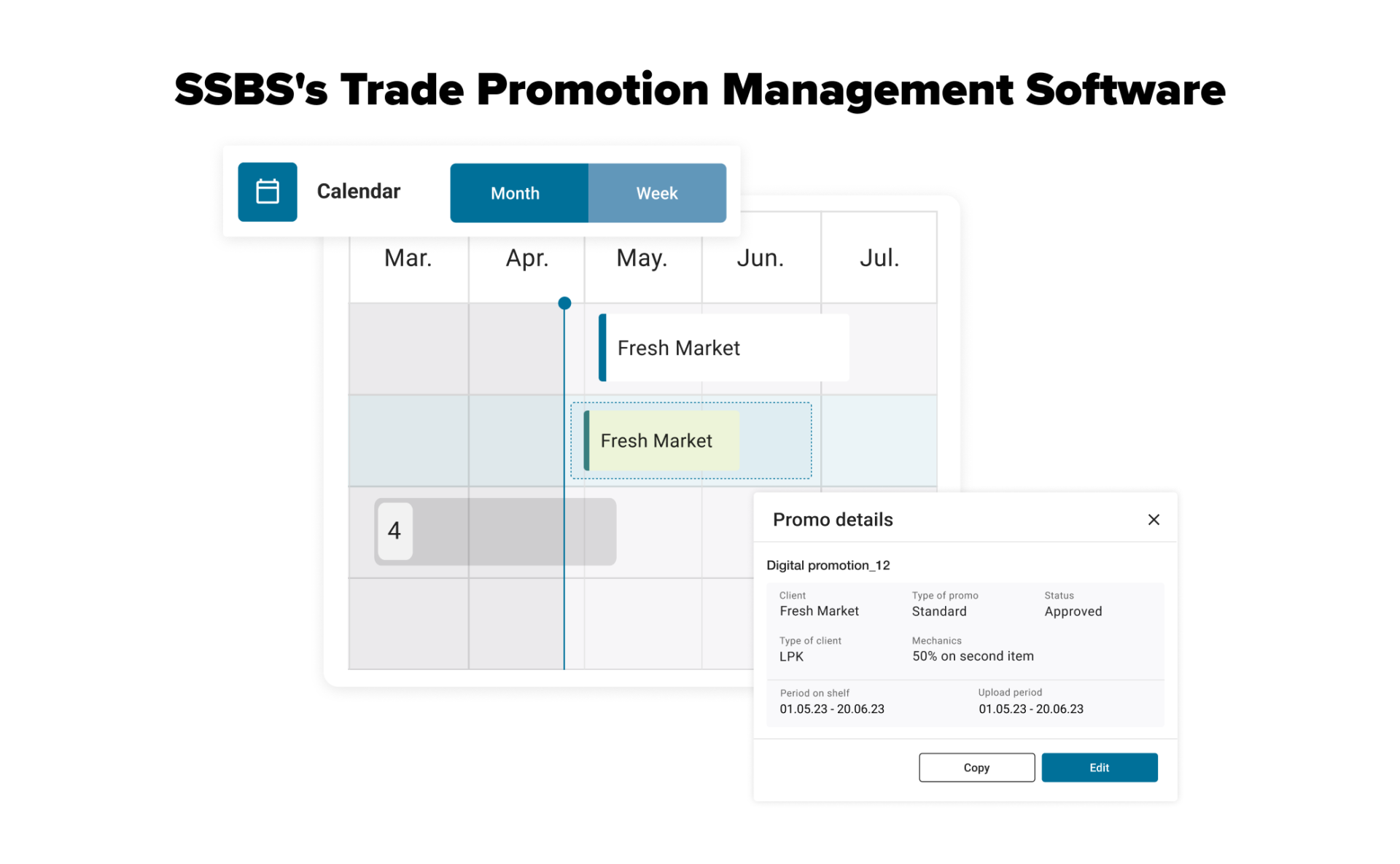
Example: Marketing proposes a new launch campaign, sales validates retailer interest, and finance simulates the impact of the campaign on margins – all within the same digital platform, ensuring everyone works from a single source of truth.
Overcoming Trade Spend Management Challenges in Modern CPG
Trade spend sits somewhere in between gross and net revenue. It is budgeted from gross sales in terms of discounts and partner compensations, but reflected in net revenue. That makes ROI analysis complicated and turns trade spend into a critical component of net revenue management. Let’s see what FMCG challenges impact effective trade spending management.
Navigating Complexity in Multi-Retailer Trade Programs
CPG manufacturers collaborate with dozens of retail chains, each with its own pricing structures, promotional calendars, and compliance requirements. Keeping all of this information in spreadsheets leads to overlapping promotions and data fragmentation.
Adopting Trade Promotion Management software that consolidates all trade activities in one place is the only way towards centralized control in this regard.
Establishing Robust Tracking and Accountability Systems
Without automated approval workflows, real-time dashboards, and document validation tools, it’s nearly impossible to maintain complete visibility into where trade budgets are going and how effectively they’re being used. Manual processes increase the risk of errors, delays, and even compliance issues.
Measuring True ROI Across Promotional Activities
Calculating the true ROI from trade investments also involves understanding incremental lift, cannibalization, and baseline sales trends to distinguish genuine growth from temporary spikes.

To measure it properly, a sales trade spend management team needs data that is accurate, granular, and synchronized across systems. This includes not only fees and discounts data but also shipment data, point-of-sale (POS) results, promotional calendars, and even shelf execution reports. Not all companies are prepared to invest in an ecosystem that integrates all these elements.
Balancing Trade Budgets for Maximum Market Impact
Overspending on one account can mean missed opportunities elsewhere.
Effective budget balancing relies on historical performance data, retailer collaboration, and simulation tools that enable marketers to test different spending scenarios.
Benefits of Effective Trade Spend Management for Your Business
When trade spend management is handled strategically and supported by technology, the results go far beyond operational efficiency. Let’s discuss what this approach delivers.
Driving Increased Sales and Market Share Growth
Effective trade spend management ensures that every investment (from discounts and placement fees to co-marketing and in-store visibility) is directed toward the channels and activities that genuinely drive incremental sales and expand market share.
Improving Product Visibility and Consumer Awareness
Data-driven retail execution helps secure prime shelf space and a stronger in-store presence, directly connecting marketing spend to shopper behavior.
Building Enhanced Retailer Relationships and Partnerships
Transparent, consistent data builds trust with retailers, simplifies joint planning, and makes future negotiations smoother.
Achieving Optimized ROI from Trade Investments
Advanced analytics and TPO tools reveal which investments work best, helping teams optimize spend in real time and increase profitability.
Reducing Deductions and Financial Losses
Automation and clear records reduce duplicate deductions and unnecessary payouts, improving financial control.
Specifics of Trade Spend Management in Emerging Markets
When we talk about trade spend, we usually think of the modern retail channel. However, in many emerging markets, especially in Latin America and the Asia Pacific, the share of traditional retail (small neighbourhood stores, kiosks, and open markets) remains quite high.
Managing trade spends across so many small, scattered sales points brings its own set of challenges. One real-life case illustrates this perfectly.
Case in Point: Managing Trade Spend Across Tens of Thousands of Small Retailers
One of our clients, a global chocolate bar producer, for example, has around 30,000 such sales points in a single regional market. It’s almost half of the company’s total retail presence in that region.
Imagine the challenge of having each sales point with its own commercial terms and conditions for promotions. Keeping track of all this manually in Excel is virtually impossible.
We approached SSBS with a request to help, and they adapted PromoTool specifically to meet this need. We were very impressed by their proactive approach.
– the client shared.
We developed an additional module within their TPM system to digitize and automate this process. The system not only tracks all trade agreements but also flags the percentage of clients where the manufacturer is losing money.
With this data, the company can analyze the causes (whether it’s the channel, the location, or a specific sales manager) and take corrective action.
Conclusion: Advanced Technologies and Tools for Trade Spend Optimization

Automation of trade spend management is crucial for a successful digital transformation in FMCG (or CPG, the difference between FMCG and CPG isn’t that significant in this context).
Our PromoTool, for example, includes a dedicated trade spend management module, combined with TPM and TPO capabilities – a feature that sets it apart from most tools. This combo transforms the platform into a comprehensive solution for managing all of a company’s trade activities.
One of our clients, a leading poultry producer and exporter called MHP, implemented PromoTool specifically for trade spend management, but eventually discovered even more benefits, including:
- improved cross-department collaboration,
- streamlined promotional planning,
- enhanced visibility into contract terms and investments.
– Yurii Bebel, Head of Business Model Efficiency and Commercial Policy at MHP.
What else do our clients appreciate in the solution:
- Ecosystem integration
PromoTool is part of a wider FMCG solutions ecosystem, connected via our SFA platform, SalesWork. The integration allows automatic data flow from field sales, retail execution, and promotional activities into the TPM/TPO modules.
- Enhanced visibility and control
The solution provides full visibility into the performance of every promotion. It enables teams to quickly identify effective campaigns and make timely adjustments to maximize ROI.
- Advanced trade promotion forecasting and optimization
ML models predict which promotions will be most effective in driving sales. They identify top-performing products in specific channels and show where to optimize trade spend for maximum impact and efficiency.
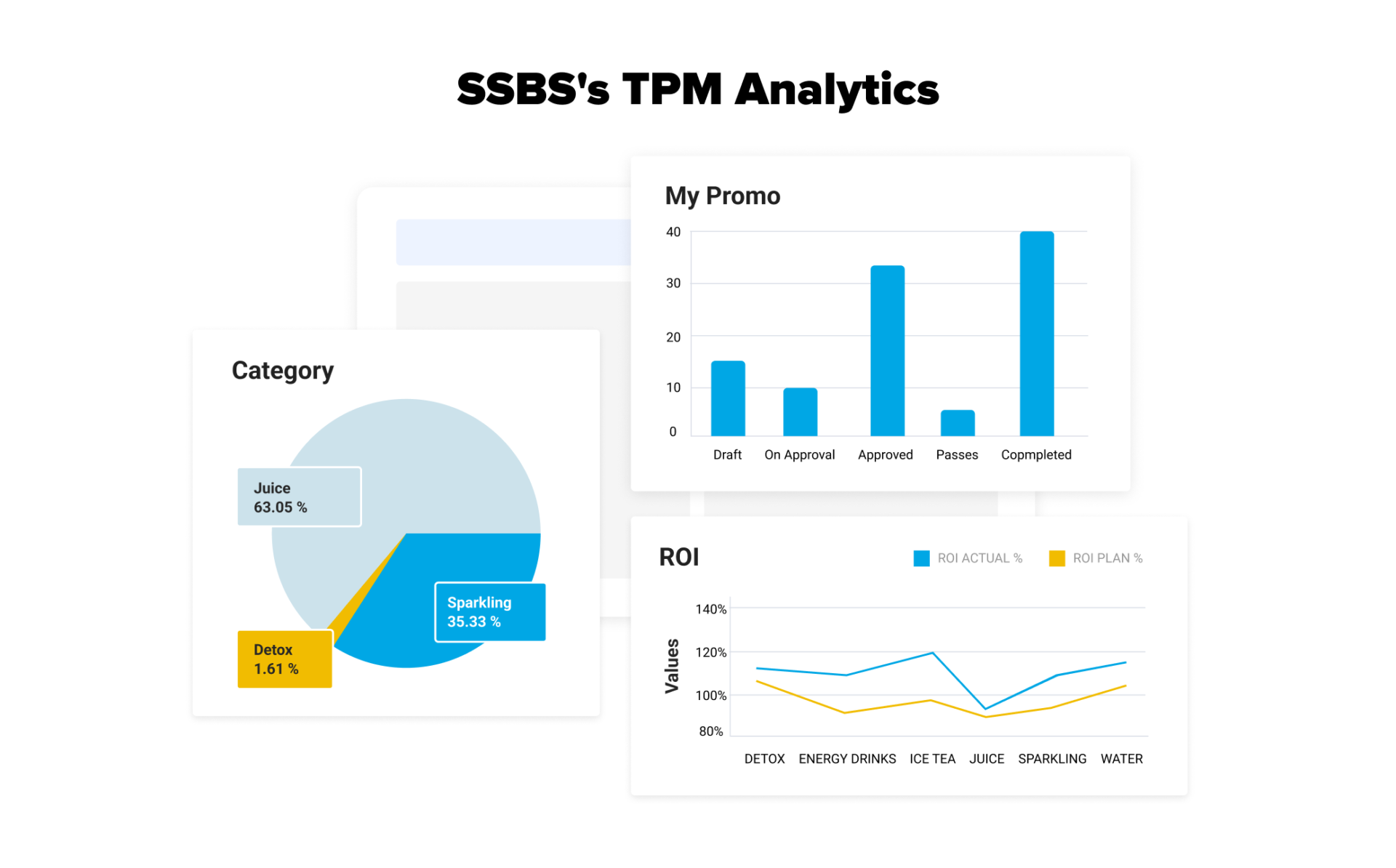
Ultimately, companies that modernize their trade spend processes gain sharper control, stronger alignment across teams, and significant financial impact. With the right digital backbone, trade spend becomes not only manageable but also highly profitable.