How many products do your distributors have? Which SKUs go to which selling points, in what volume, and how much gets returned? For fast-moving consumer goods companies, this information is crucial. It shapes everything from production planning to sales strategy.
While contracts set expectations, they don’t guarantee execution and real-time data.
FMCG distributor management solutions are the way to bridge the gap between what’s on paper and what’s actually happening in the field. The only questions are what the solution should look like and what basic functionality it should have.
That’s exactly what we will discuss in this article. But before diving into some specific software features, let’s talk about some of the key aspects of FMCG distributor management.
Key Aspects of FMCG Distributor Management
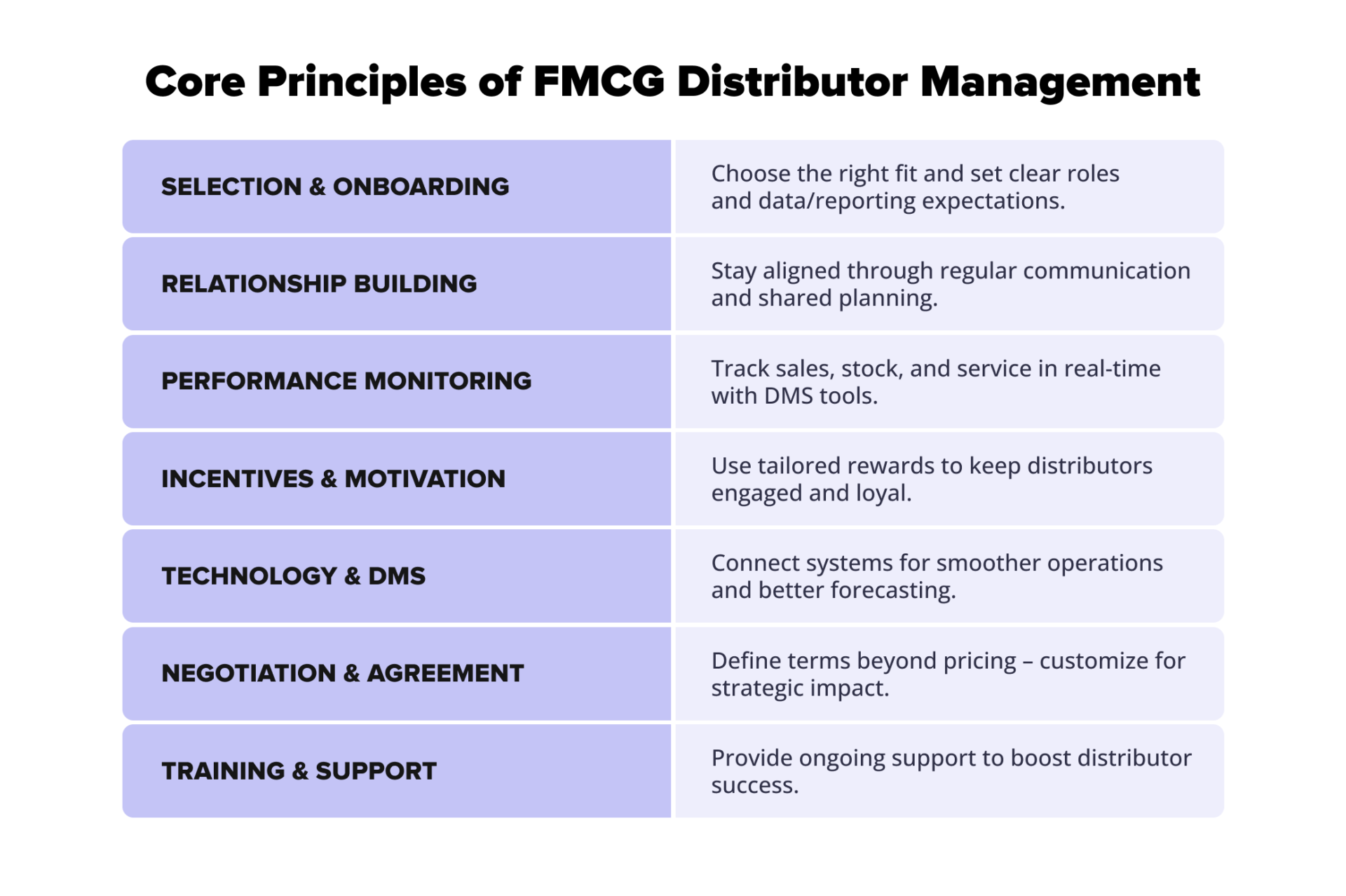
Distributor management in the FMCG sector (or CPG sector, depending how it called in your region. Here’s more on FMCG vs CPG) starts with choosing trustworthy partners who are willing to participate in transparent data sharing and consistent reporting. So, we will start with the selection part.
Selection and Onboarding
Market coverage, local influence, past performance, and alignment with brand values are the most popular criteria FMCG companies use to choose future partners.
Businesses that use an FMCG sales and distributor management system also need to figure out how it will connect with the distributor’s own inventory and sales systems. This part can get tricky, but we’ll come back to it later.
Relationship Building
Brands build strong relationships with distributors through consistent communication about future planning, promo campaigns, and distributors’ KPIs regarding data sharing. They also enhance these aspects with CPG software solutions (like FMCG distributor management systems or trade promotions planning tools) and special offers with incentive discounts.
Performance Monitoring
You can’t improve what you don’t measure. That’s why performance monitoring is critical. A solid distributor management system for FMCG allows manufacturers to track secondary sales, stockouts, overstocking, return rates, delivery accuracy, and territory coverage in real time. Some vendors of DMS for FMCG, like SSBS, even offer a data quality monitoring feature.
Incentives and Motivation
Distributors are far more likely to stay engaged when there’s something more for them in the collaboration than just making sales and hitting targets. That’s why incentive programs play a crucial role in FMCG distributor management. Such incentives can be volume-based bonuses, priority access to new products for long-term partners, marketing support, or exclusive selling rights.
Technology and DMS
The impact of a distributor management system in the FMCG sector can be multiplied by integration with an SFA and a data management solution. This way, you’ll get better planning, fewer out-of-stock issues, and more rule-abiding behaviour from distributors.
Negotiation and Agreement
When signing a contract, there are a few essential things that may be challenging to agree on.
For example, the distributor may have exclusive rights to supply a specific region or sales channel. The same goes for service expectations (such as minimum delivery frequency or order fulfilment timelines) and acceptable return volumes.
In such cases, instead of taking the copy-paste approach, manufacturers customize terms based on how critical the specific distributor is to them.
Training and Support
The best FMCG distributor management system is the one distributors don’t even see. Let us explain.
When developing our Distributor Management System, we were extremely causes so the solution would bring maximum value while being almost invisible for manufacturers’ partners. Since distributors don’t need to manually interact with the solution, they don’t face extra workload, new tools to learn, or disruptions to their existing processes. Basically, it means better data with less pressure.
The ultimate goal regarding the training is to keep it minimal by using systems that work quietly in the background.
But we’ll get to the specifics of what a strong DMS should include a bit later. For now, let’s take a step back and look at the bigger picture – what effective FMCG distributor management actually delivers when done right.
Benefits of Effective FMCG Distributor Management
Businesses know their strategy of distribution management in FMCG is leading to success when they see the following results.
Increased Sales
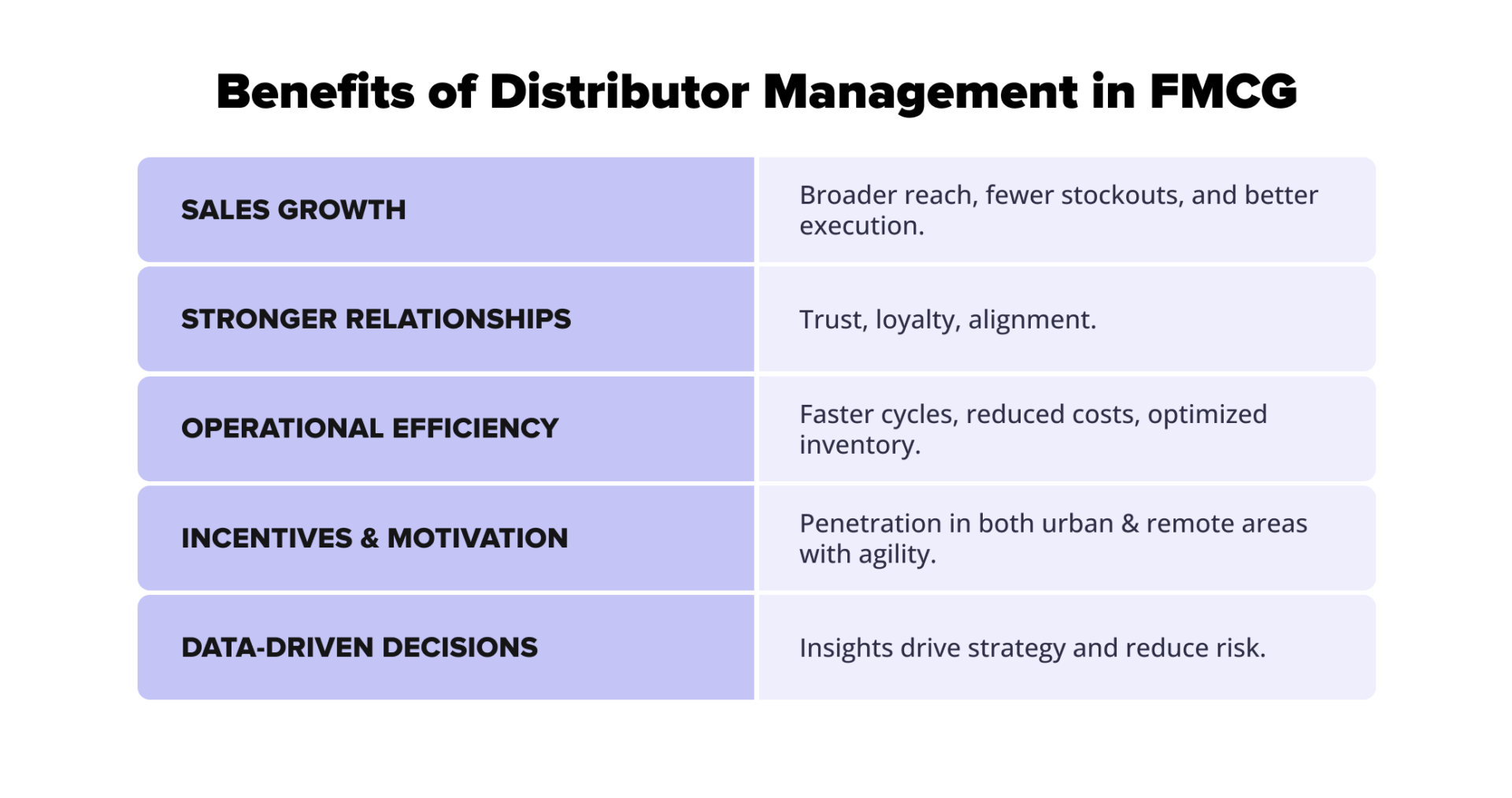
Whether operating across general trade and modern trade or expanding into new outlets, a well-managed distributor network ensures consistent product availability and promotional support, leading to a measurable increase in sales across all channels.
Improved Efficiency
Manual processes slow things down and invite mistakes. When an FMCG sales and distributor management strategy is well established and works as planned, manufacturers see fewer stockouts, less waste, and improved efficiency in their inventory control.
Read also: Computer Vision in FMCG Industry: What Goes Wrong Before It Goes Right
Enhanced Relationships
With regular check-ins through a distributor management system in FMCG, fair incentives, and fast payments, businesses streamline the building of trust. It’s simply easier to work with a partner who’s clear about expectations and has solid processes in place. When distributors push your brands ahead of others, you know the partnership is working.
Better Market Coverage
The right distributors open doors to new markets and retail points that would be tough or expensive for manufacturers to reach on their own. Especially those without B2B eCommerce platforms to scale direct sales. With local expertise and relationships, products land in more places and earn better shelf spots.
Data-Driven Decisions
Distributors generate tons of valuable data. Sales numbers, stock levels, delivery records, and returns is crucial to reach for improved forecasting and more effective campaigns.
Now, it’s finally time to discuss some specific challenges of FMCG distributor management and how businesses in general and our customers in particular solve them with the proper technical support.
Data Quality as a Main Limiting Factor
Even the most advanced distributor management system for FMCG won’t deliver results without high-quality data from distributors. But what makes data quality “high” or “low”?
SKUs might be assigned inconsistent codes across different systems, or retail outlets might be named differently even by the same distributors – “Market 1,” “Mrkt1,” or “Market One” could all refer to the same location. When the DMS receives this kind of fragmented data, it can’t match it correctly. That’s a low-quality data.
In a perfect scenario, data from distributors’ inventory systems is actually transferred to the brand’s DMS for FMCG. Then it can be used by other tools within the brand’s tech ecosystem.
However, in practice, this flow is often disrupted by those issues we’ve mentioned.

That’s why it’s so important to outline in an agreement between the sides the “clean data” requirements.
Let’s look at how our FMCG Distributor Management System addresses data quality, integration, and other challenges for the FMCG industry mentioned throughout the article.
How SSBS’s FMCG Distributor Management System Works
Data inconsistency nullifies the benefits of even the most progressive tools. But how much time should manufacturers and distributors spend aligning the data requirements? And what happens when an FMCG distributor management system still receives inconsistent data?
We’ll share how we address these issues.
First, our system includes a centralized directory – a single source of truth where every product and sales point has the correct name, spelling, and code. When distributors sign the contract, they also agree to follow this standard, and our clients can expect to receive data in that exact format.
But what if a distributor still uses their own naming internally? Our system detects any mismatches or “fragmented” data and sends an alert. At that point, our support team steps in to notify the distributor and help correct the issue.
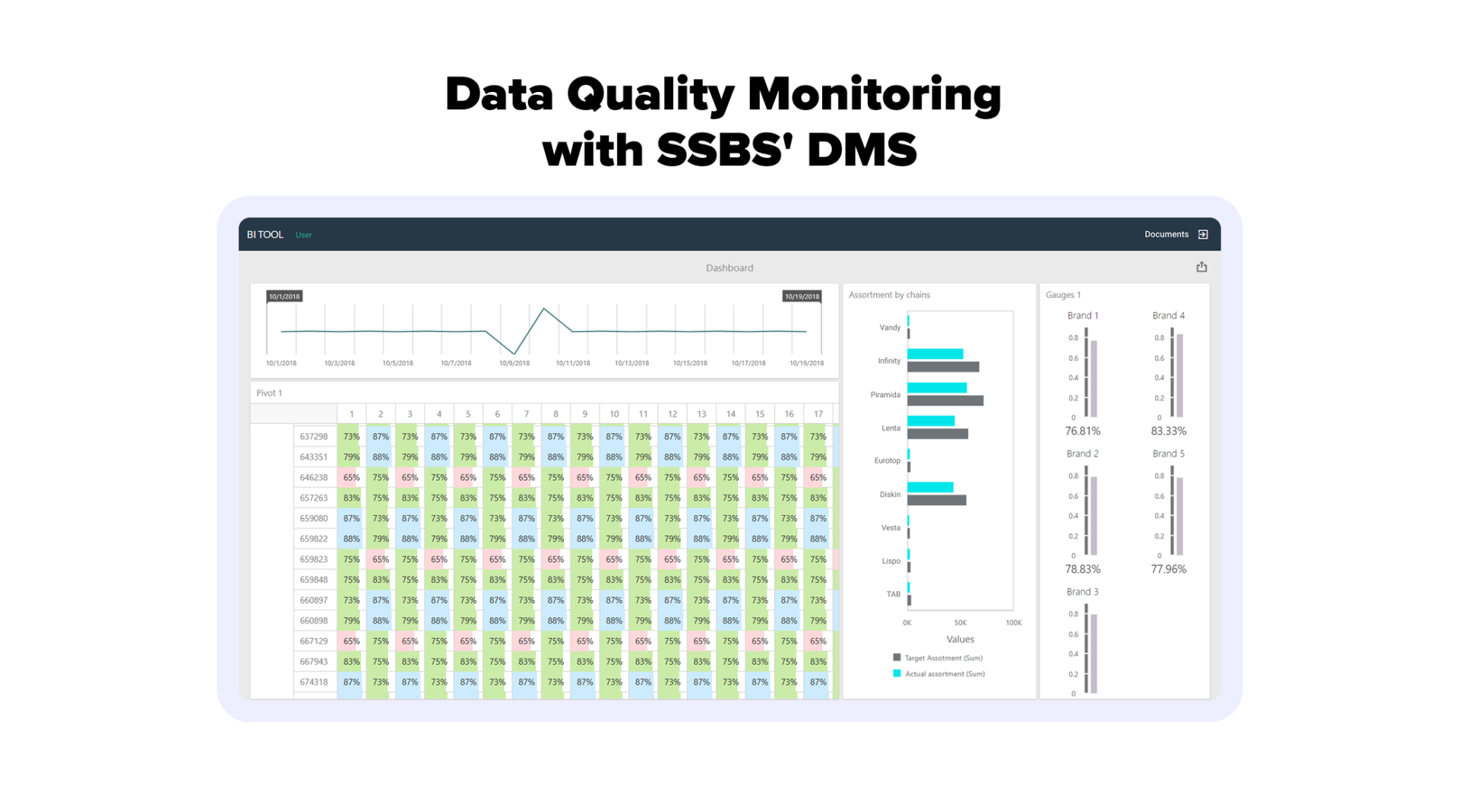
Why our team? Because we don’t just provide the platform, we commit to ongoing support. That includes helping with integration, coordinating directly with distributor IT teams, ensuring smooth integration and running.
And when it comes to updates, how often can manufacturers receive new reports through the Distributor Management System for FMCG? As often as they need it. Most clients choose daily overnight updates, but if you want fresh reports every 15 minutes, that’s exactly what you’ll get.
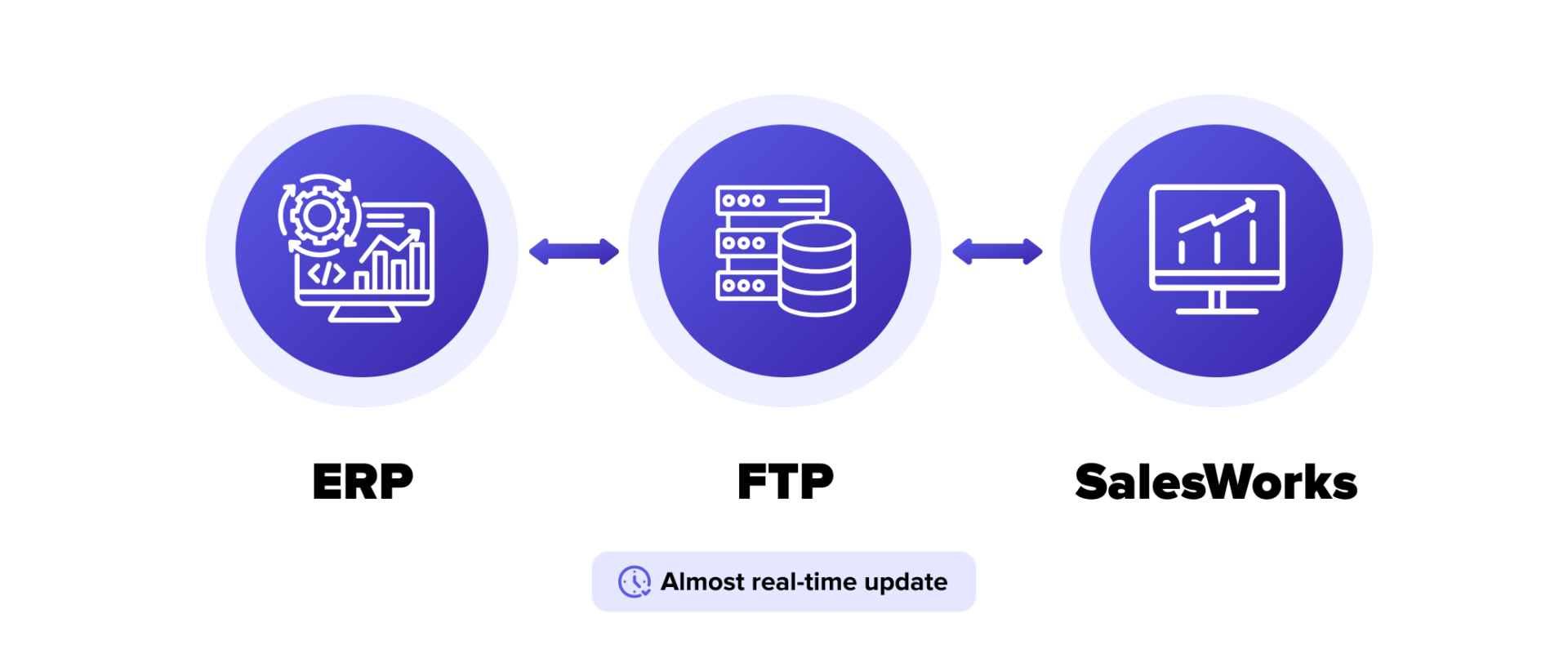
So far, we’ve discussed how to collect valuable data through the Distributor Management System. But its value goes far beyond just tracking sales dynamics. This data must be connected to other solutions within the manufacturer’s tech ecosystem.
Distributor Management System for FMCG as a Part of AI-Driven EcoSystem
Using one vendor tech infrastructure means stepping into a completely new level of digitalization and FMCG automation. It is especially true for AI-powered ecosystems, since interoperability for them means more than just connecting tools. It means real-time data exchange between separate departments and hence better predictive capabilities.
Why improved predictions? Because there’s no technology more dependent on data volume than AI. And when AI has access to all the data within organization it can better identify patterns, correlations, and anomalies that would otherwise remain hidden in silos.
In the case of SSBS’s AI-Driven EcoSystem, having one vendor infrastructure for our customers means that our DMS for FMCG, an SFA called SalesWorks, Trade Promo Management, FMCG Image Recognition, and other solutions all work on top of a shared, unified data foundation.
As a result, AI doesn’t operate in isolation – it learns from sales reps’ in-store reports, distributor stock levels, planogram compliance, and promotional outcomes at once.
Read also about the 5 steps before piloting AI product recognition.
Let’s look at how data flows in practice from our FMCG distributor management solution to different software within the ecosystem.
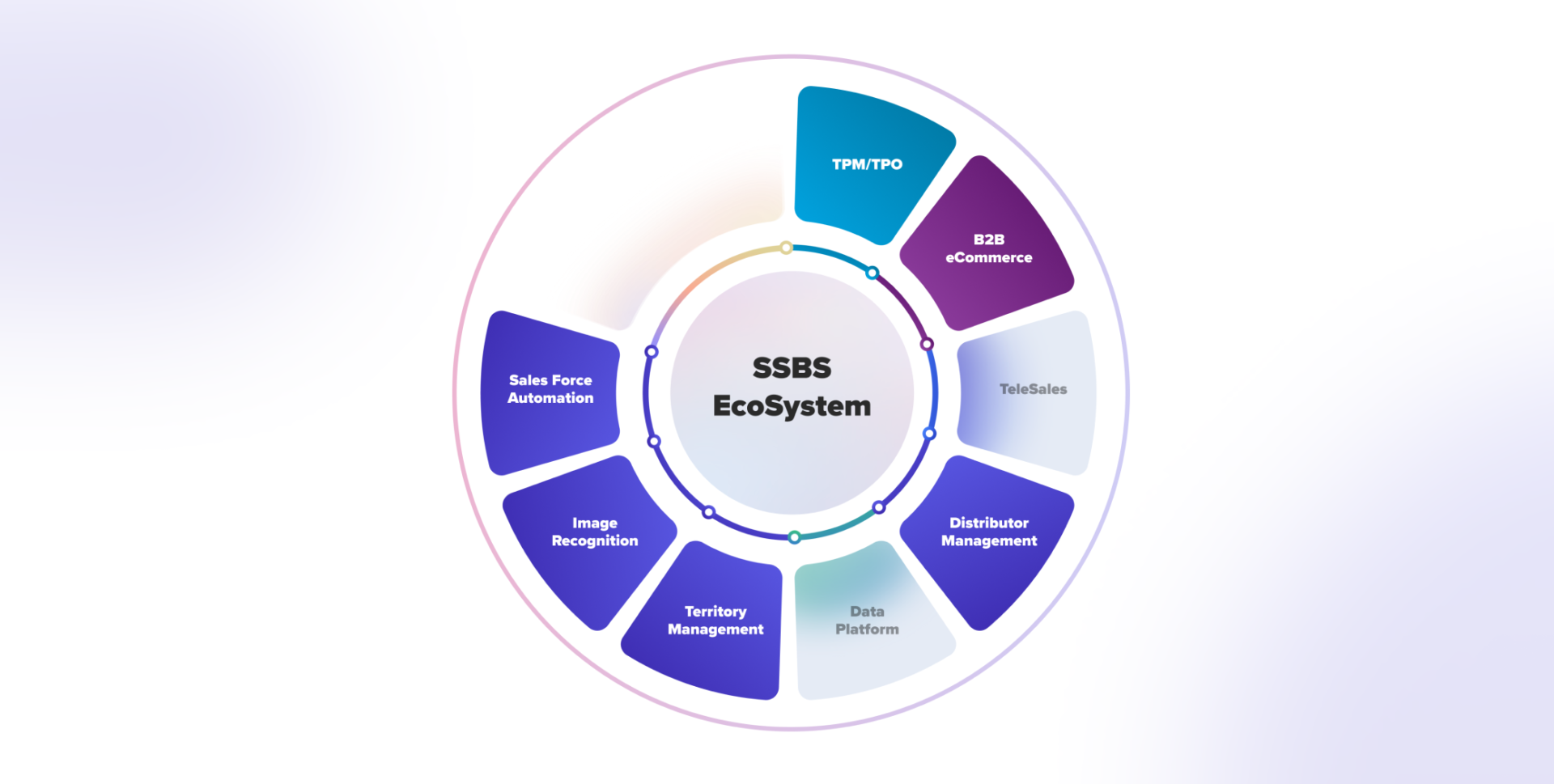
For instance, the data flows into the tool used for planning promotional campaigns – Trade Promo Management. From there, a trade marketing department can analyze real sell-out volumes by selling points and check how promotions are performing in the field.
The same happens with the B2B eCommerce platform and the B2B TeleSales solution, from which customers’ orders are automatically sent to the DMS through SalesWorks. This gives the supply chain and sales teams up-to-date insights into demand without any manual effort.
Read also about how manual, photo, and augmented reality shelf image recognition differ from each other.
Pretty smooth system, isn’t it? Your FMCG sales and distribution management strategy thrives when all technologies in your ecosystem are interconnected.
Conclusion
Every FMCG sales and distribution management strategy includes tons of work. Like choosing the right partners. Or preparing contracts that would allow you to gain access to high-quality real-time data, or building the right ecosystem to use the data efficiently.
Gaining data from distributors may seem like the biggest challenge in the field of FMCG sales and distribution management. However, due to solutions like our Distributor Management System, this is no longer the case. The real challenge now lies in connecting a DMS software to other systems and acting on that data promptly and efficiently.
If you’re looking to future-proof your FMCG sales strategy, as well as distribution strategy, now’s the time to invest in the system that connects it all – and in the team that offers constant support and guidance every step of the way.