Your field sales rep closes an order on Monday morning. The order management system confirms it. The warehouse picks it on Tuesday and discovers through WMS that the inventory had already been allocated to a different account.
Nobody flagged the conflict. The two systems that should have been exchanging data weren’t.
This isn’t a people problem. It’s a data problem. And it’s exactly the kind of problem B2B unified commerce is built to solve.
What Is B2B Unified Commerce – and Why It Matters Now
The B2B unified commerce definition states that this approach involves every sales channel (from field reps to self-service portals) running on a shared data layer. Thus, product, pricing, inventory, and order information are always the same everywhere. Instantly.
If you’ve been dealing with the challenges of B2B eCommerce in your organization, fragmented data is probably one of the biggest headaches.
After buyer behavior has shifted in CPG/FMCG, ignoring the issue any longer is simply impossible.
What’s with the behavior shift? According to McKinsey’s 2024 B2B Pulse survey:
- 1/3 of B2B buyers prefer face-to-face interaction
- 1/3 favor remote engagement
- 1/3 expect digital self-service throughout the entire buying journey
You may have already noticed, but retail buyers often aren’t choosing a single channel. They’re using all of them, sometimes on the same day.
If your systems aren’t connected behind the scenes, every switch between channels creates room for delays and mistakes.
How the Selling Models Compare
Some companies use multichannel and omnichannel interchangeably and treat them as a B2B unified commerce approach. Even though they solve very different problems.
Let’s compare them before moving further into what unified B2B commerce actually changes operationally.
| Selling models comparison | |||
| Model | What it means | Where the data lives | The core limitations for FMCG |
| Single-channel eCommerce | One online ordering channel, typically a web portal or EDI feed | Isolated: the eCommerce system holds its own data | No connection to field sales, telesales, or distributor networks |
| Multichannel eCommerce | Multiple channels operating in parallel: web portal, EDI, sales rep app, telesales | Siloed: each channel maintains its own records | Buyers get different prices, stock figures, or order histories depending on which channel they used last |
| Omnichannel eCommerce | Multiple channels coordinated at the front end so the buyer experience feels consistent | Integrated via middleware: systems share data through connectors and scheduled syncs | Back-end data still lives in separate systems; syncs break, lag, or conflict under volume |
| Unified commerce | All channels operate against a single shared architecture, with every system reading and writing to the same record instantly | One source of truth: updates are immediate and universal | The real-world limit is implementation: unification requires a deliberate data strategy before any platform decision |
Before going further, here’s the key difference:
- Omnichannel improves the customer experience by connecting the channels customers use.
- Unified commerce connects the systems behind those channels, so the business runs from one shared set of data and processes.
Your Data Strategy in Three Steps: Before You Touch a Platform
Most platforms can only unify data that is already clean, consistent, and connected across systems.
According to SSBS implementation data, 64% of CPG companies still struggle with unreliable trade partner data after deploying new tools. Adding another platform does not solve that problem. Fixing the data does.
Let’s discuss how to do that.
Map Where Your Data Lives Today
Identify where you store:
- Product data
- Customer and distributor records
- Pricing information
- Fulfillment data
Most CPG companies manage this data across several disconnected systems. These systems were often never built to work together.
Next, find the conflicts between systems. For example:
- The same SKU appears under different names
- A distributor has multiple account records
- A promotional price does not appear in the field sales app
These inconsistencies eventually affect your buyers. Map them before you change your architecture.
Define Your Single Source of Truth
Once you identify the conflicts, define a single source of truth for each data type.
Some ideas what it could be:
- Your ERP should own pricing and inventory data
- Your CRM or DMS should own customer relationship data
- Your product catalog should have one owner whom all other systems reference
Apply the same approach to customer records. Each account should have one authoritative profile that includes pricing, contacts, credit limits, and delivery preferences. When every system reads from the same record, inconsistencies and distributor complaints drop quickly.
So, in practice, you don’t necessarily need to buy a single unified B2B commerce platform. It’s better to decide which system owns each type of data and ensure every other system stays aligned.
Build the Ecosystem Around the Data – Not the Other Way Around
Many CPG companies make the same mistake: they choose a platform first and organize their data around it afterward.
A stronger approach is to define your data model and integration logic first. Then connect the tools that support it.
SSBS follows this approach with its AI-Driven EcoSystem. Instead of replacing every tool, the ecosystem connects SFA, B2B eCommerce, TeleSales, Distributor Management, and Trade Promotion Management through a shared data layer.
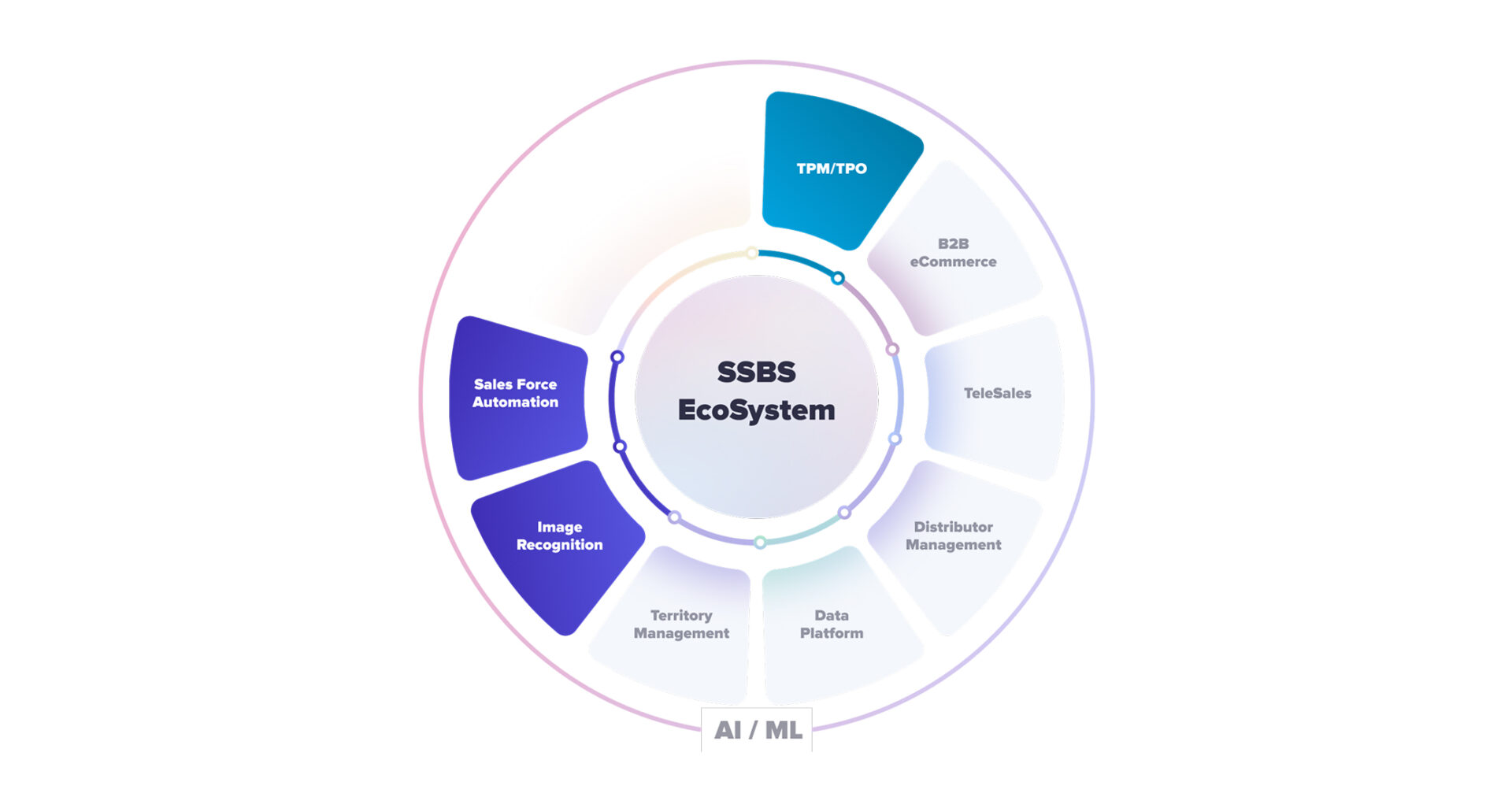
The Data Platform acts as the backbone, so every module reads from and writes to the same records.
As a result:
- A field rep visit updates the same records as a telesales order
- Distributor portal submissions stay synchronized
- Promotional activity reflects across all commercial systems in real time
This is what B2B eCommerce unified solutions are supposed to look like: a connected ecosystem where data moves smoothly across commercial functions. The capabilities of AI in B2B eCommerce (such as forecasting, recommendations, and anomaly detection) only work well when that foundation is clean and unified.
One signal to watch:
If more than two systems maintain separate customer master records, make that your first integration priority. Fragmented customer data creates more downstream issues than any other data problem in unified commerce.
Case in Point: One Source of Truth Across Departments
MHP shows what a single source of truth looks like at scale.
The company manages trade partner contract terms centrally in its TPM system. That system serves as the authoritative source across departments.
As a result:
- Field reps see the correct terms for every store
- Managers can verify execution against agreed conditions in real time
- Teams no longer rely on calls, spreadsheets, or delayed reports
This is the practical impact of a single source of truth. The benefit is not only cleaner data. It is consistency.
When every team works from the same record, the question “What are the terms for this account?” has a single answer, regardless of the system or department.
What Makes B2B Unified Commerce Work in Practice
| Core B2B unified commerce platform features | ||
| Capability | What it means in practice | Business impact |
| Connected systems and unified data | All commercial tools share the same customer, pricing, and order records | Reduces data conflicts and improves coordination across teams |
| Real-time inventory and pricing visibility | Buyers see live stock levels, pricing, promotions, and order status | Reduces support calls, order disputes, and lost sales |
| Seamless buyer journeys | Sales reps, portals, and telesales use synchronized account data | Creates a consistent customer experience across channels |
| Personalized self-service | Buyers access account-specific pricing, assortments, and reorder history | Increases portal trust, adoption, and order value |
| Operational efficiency | Orders, inventory, and promotions update automatically across systems | Reduces manual work, errors, and operational delays |
| Scalability for complex commerce models | The system supports multiple sales channels, pricing rules, and workflows | Helps you expand distribution without rebuilding systems |
Connected Systems and Unified Data
B2B eCommerce unified solutions work when every commercial tool shares the same data.
This means your SFA, DMS, B2B FMCG eCommerce portal, and trade promotion system all read from and write to the same records. When a field rep updates delivery preferences, the Telesales team sees the change immediately. When a distributor confirms an order in the portal, the field rep’s visit plan updates automatically.
This shared foundation enables the most important B2B unified commerce platform features:
- Real-time data across every channel
- Automated workflows between systems
- A single customer view for every team
Without connected data, even strong individual tools create friction between teams and channels. That friction leads to missed promotions, lost orders, and inconsistent customer experiences.
Maslodel (the largest processor of oilseeds and dairy products in Kazakhstan) experienced this after implementing SalesWorks, SSBS’s SFA solution.
Before implementation, field reps had to report issues to managers and wait for instructions. After unifying KPIs, outlet priorities, and visit workflows in one system, reps could complete actions immediately and capture data on the spot.
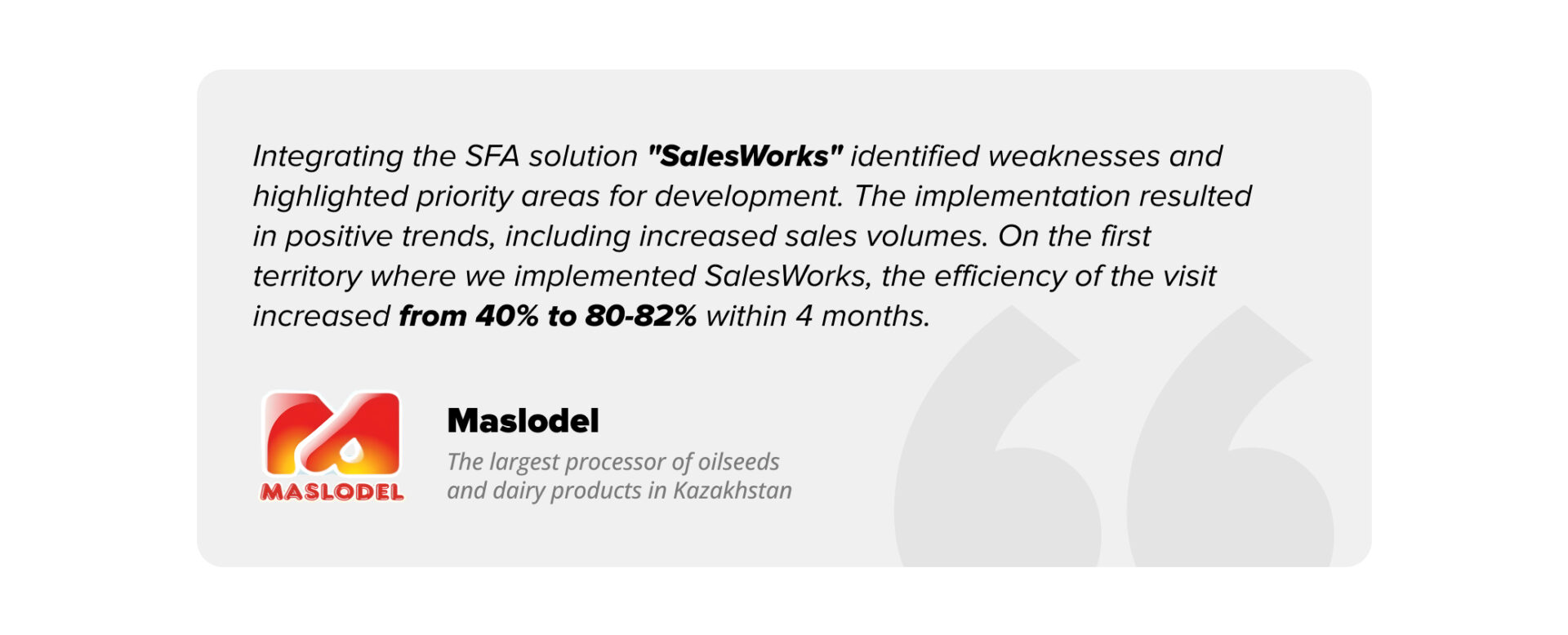
Visit efficiency increased from 40% to 80-82% within four months. The system did not change the work itself. It removed delays between identifying an issue and acting on it.
Real-Time Inventory, Pricing, and Order Visibility
B2B buyers now expect the same real-time visibility they get in consumer eCommerce.
Forrester projected that more than 50% of B2B deals over $1 million would close through digital self-service channels by the end of 2025.
We don’t yet have the most recent data to confirm the forecast. However, based on what we see across the market, the percentage of self-service definitely increases.
Buyers want to contact a rep to check product availability less and less.
Real-time visibility means for them:
- Inventory updates immediately
- Price lists stay current
- Promotions reflect instantly in the portal
- Buyers can track order status from placement to delivery
For distributors managing warehouse and retail planning, this visibility reduces support calls and order disputes.
Seamless Buyer Journeys Across Sales Reps, Portals, and Offline Touchpoints
Distributors less often buy through a single channel.
A buyer may place a routine order in the portal, have it adjusted with a field rep, and confirm the changes through telesales before delivery.
Yes, that may sound like omnichannel. However, if these channels use different data, the experience breaks down behind the scenes.
For the brand that creates operational friction:
- Orders get duplicated or overwritten
- Pricing and promotions become inconsistent
- Sales teams work from conflicting account information
- Customer support volume increases
Therefore, the features of a unified commerce solution for B2B that matter most here are the ones that protect consistency:
- Shared account history
- Synchronized open orders
- Consistent pricing and credit terms
- Unified promotional visibility
Another Story From Our Clients
This time, a global pet food brand, Kormotech.
The brand saw how important channel coordination was after analyzing real-time SFA (our SalesWork) visit data. Sales reps spent nearly 75% of their in-store time taking orders. Because visits were short, reps had little time left for promotions or in-store execution.
The company did not solve the problem by hiring more reps. Instead, it shifted most order placement to the B2B eCommerce channel. That change freed field teams to focus on activities that required in-store presence.
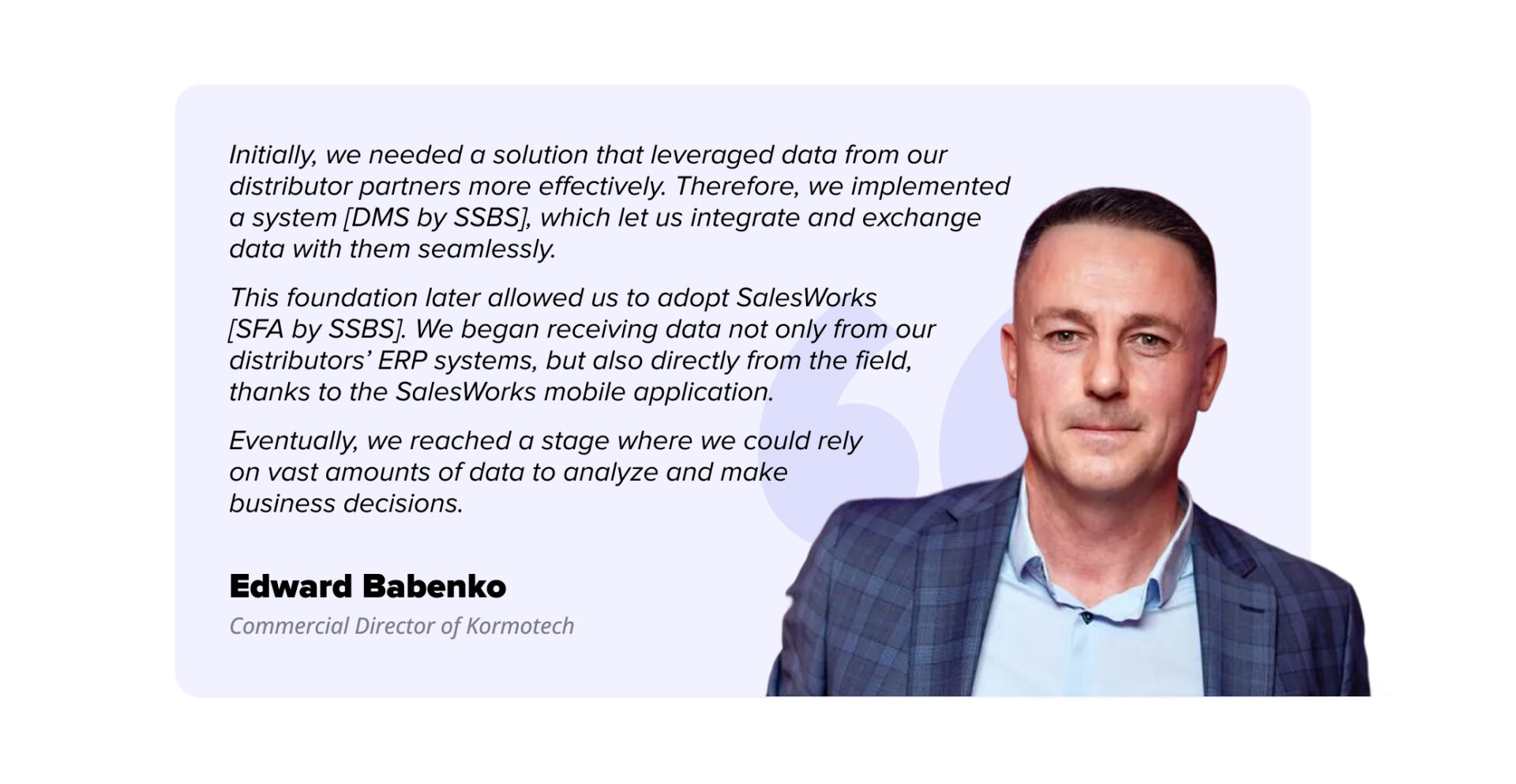
The company continued using field data to guide priorities and redesign visits around higher-value work instead of transaction processing.
Personalized Self-Service with Custom Pricing and Reordering
B2B self-service portals only work when retailers trust the data.
If a portal shows the wrong price or unavailable inventory, buyers stop relying on it. They contact sales reps instead.
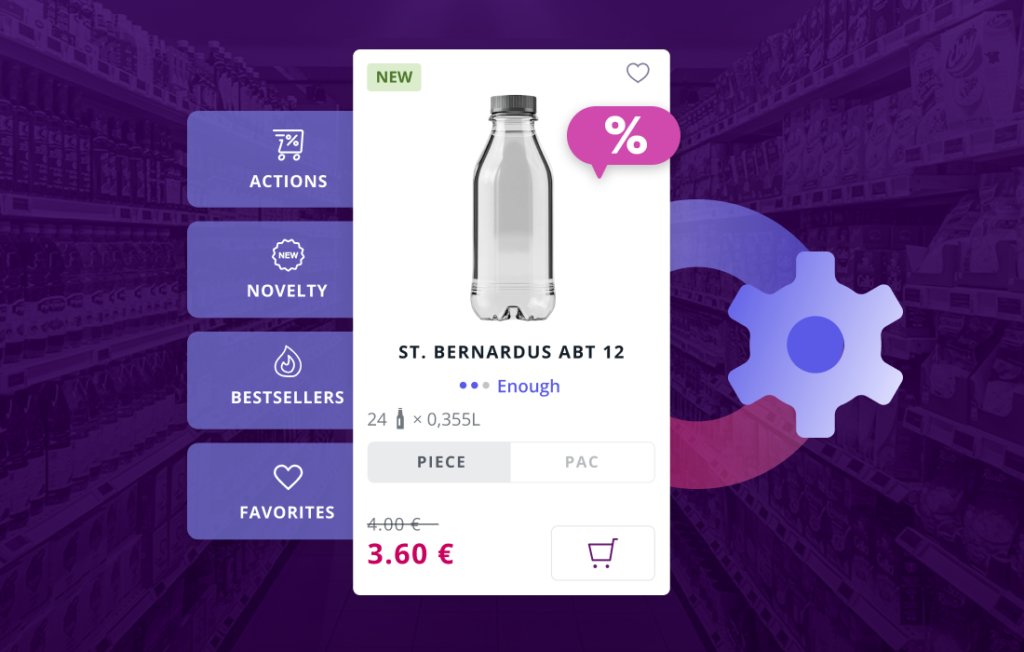
E-assistant, a B2B eCommerce platform from SSBS, provides personalized self-service to solve this problem. It shows each buyer:
- Account-specific pricing
- Approved product assortments
- Promotional eligibility
- Reorder history
- Loyalty programs
- Seasonal pricing
- Account-specific SKU lists
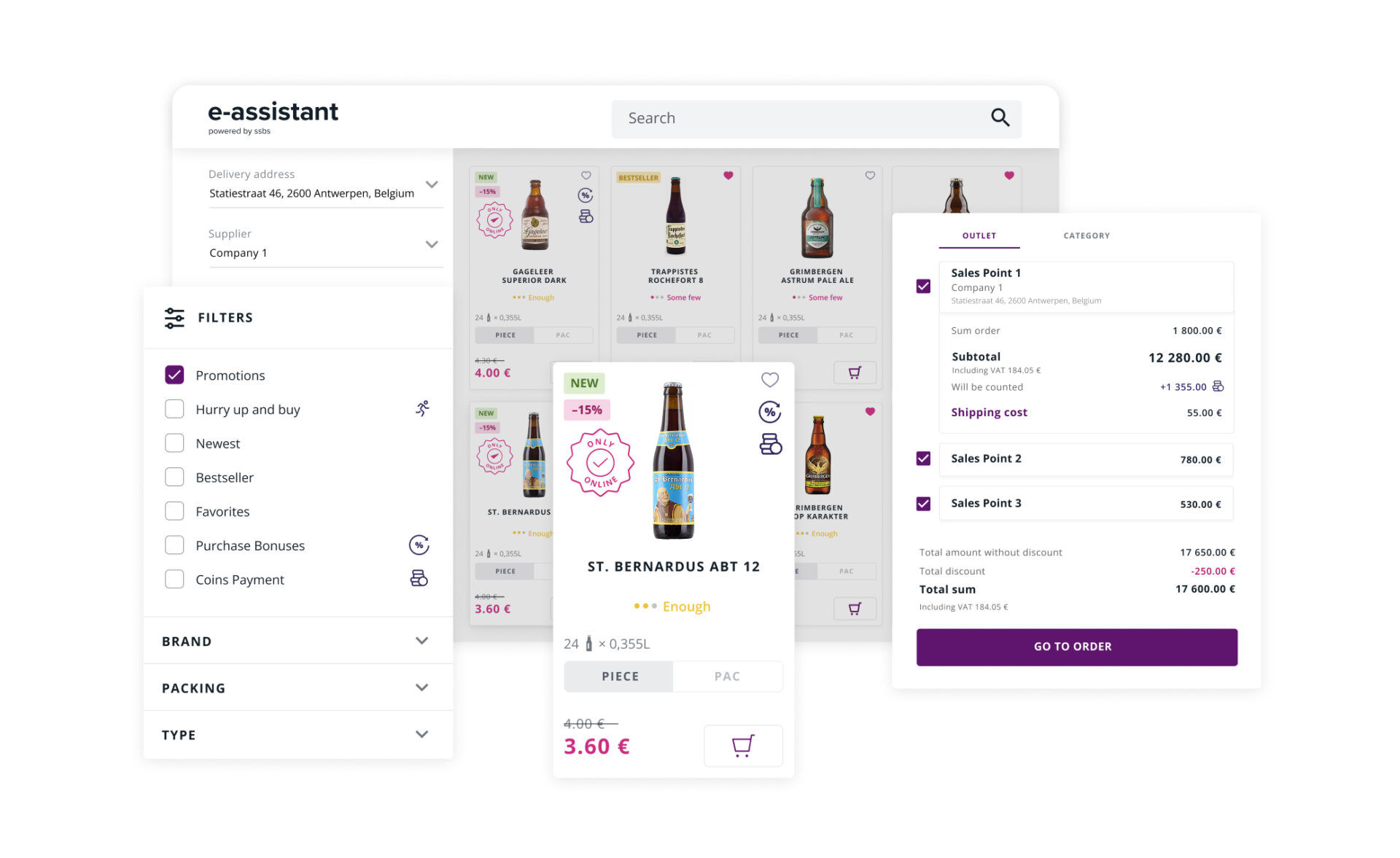
When this information stays accurate and up to date, retailers use self-service channels more often.
Operational Efficiency in Ordering, Fulfillment, and Inventory Management
Manual work between disconnected systems creates major operational cost.
Teams often re-enter orders manually, update inventory and replenishment data outside the system, and review promotional compliance only after the promotion ends.
These delays increase labor costs, create errors, and slow decision-making.
B2B eCommerce unified solutions remove much of this manual work.
When your systems share data:
- Orders flow directly into fulfillment without re-entry
- Inventory updates across all channels in real time
- Promotional terms apply automatically based on account eligibility
Another story From Our Clients
One of the clients, a global confectionery brand operating across tens of thousands of traditional retail outlets, faced this challenge with trade spend management.
The company tracked commercial agreements manually, which made visibility slow and unreliable. Managers could not identify loss-making outlets until it was too late to respond.
After digitizing trade agreements in the SSBS TPM system, the company gained near-real-time visibility into promotional costs and outlet profitability.
The system automatically flagged loss-making agreements, allowing managers to identify root causes and act quickly.
The company also changed how field teams prioritized visits. Instead of spreading effort evenly across the network, reps focused on outlets where intervention could improve performance the most.
Scalability for Complex B2B and Hybrid Commerce Models
Some companies often sell through multiple channels at once.
A unified commerce (B2B commerce) platform manages this complexity through shared rules and centralized data. Pricing, catalogs, payment terms, and approval workflows apply automatically based on the account and sales channel.
As you add new distributors, channels, or markets, the system scales without requiring a rebuild.
Three Technology Approaches to B2B Unified Commerce
FMCG brands reach unified B2B commerce in different ways. The right approach depends on your existing systems, internal resources, and implementation speed.
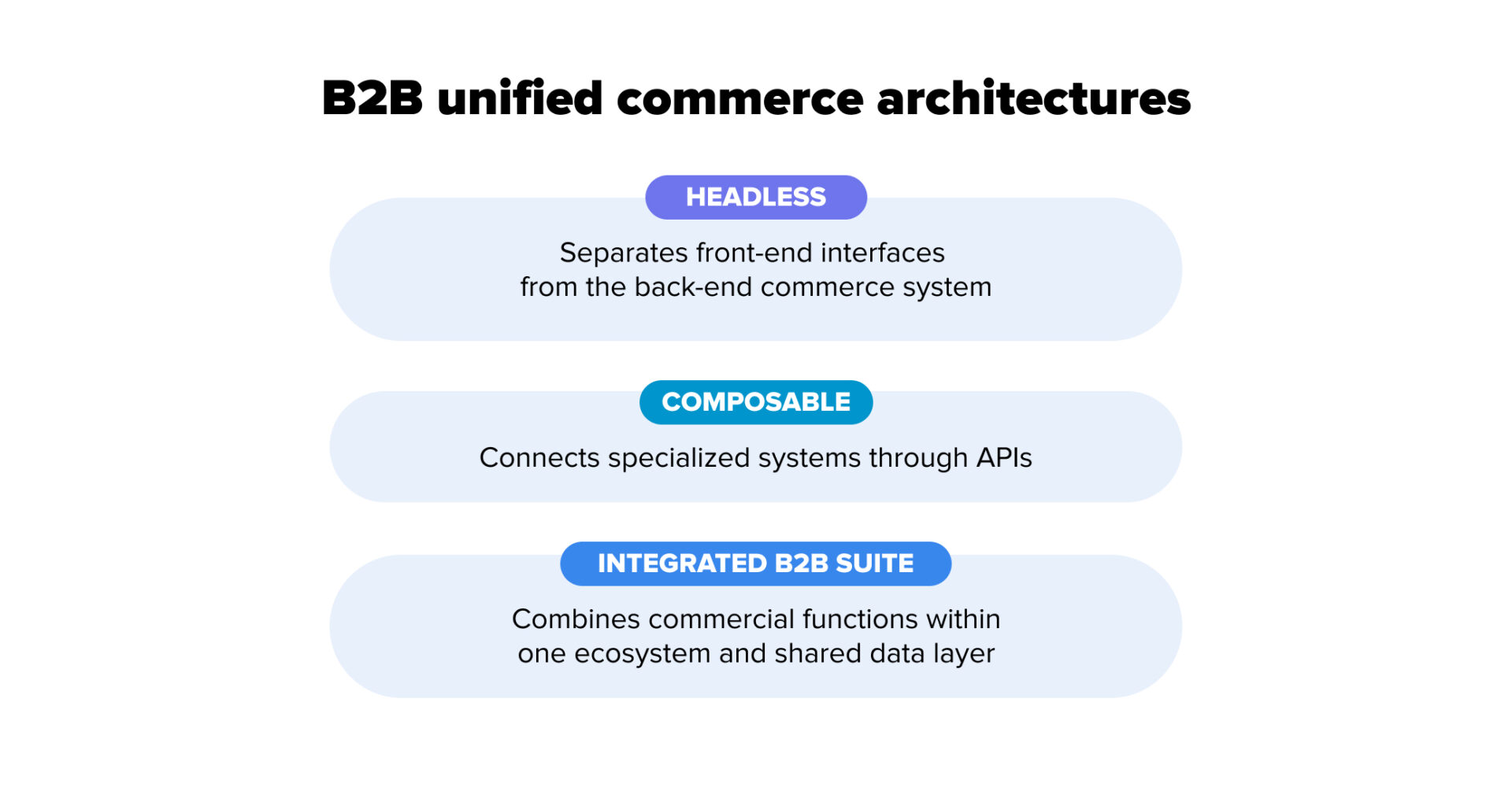
Headless
A headless architecture separates the customer interface from the back-end commerce system.
This allows you to customize portals, rep apps, and telesales interfaces independently while keeping the same core data underneath.
This flexibility supports multiple sales channels at once. However, headless systems require strong API management and experienced development teams.
Composable
Composable B2B unified commerce connects specialized tools through APIs.
You can combine separate systems for product data, order management, pricing, and customer portals instead of relying on one unified B2B commerce platform.
This approach gives large organizations more flexibility and vendor choice. However, it also increases integration complexity, maintenance effort, and governance requirements.
Integrated B2B Suite
An integrated suite connects major commercial functions within one ecosystem.
eCommerce, SFA, telesales, distributor management, and trade promotion systems already share the same data structure and workflows.
This approach usually provides the fastest path to unified commerce with lower integration effort and lower long-term operating cost.
The SSBS AI-Driven EcoSystem follows this model.
SFA, B2B eCommerce, TeleSales, DMS, TPM/TPO, Image Recognition, Territory Management, and the Data Platform work together through a shared data layer.
This reduces the need for custom integrations and simplifies connections with external systems such as SAP or Salesforce.
The benefits of an integrated ecosystem become more visible in large, distributed operations.
Where to Start
Commercial unification in CPG is not a one-time project. It is an ongoing process.
Start by understanding your current data structure, defining a clear source of truth, and choosing systems that stay connected without constant reconciliation.
The sooner you build a reliable data foundation, the faster you can unify your commercial operations.
If you are evaluating your current stack, the SSBS team can help. We support FMCG companies at every stage, from data audits to full ecosystem deployment. Book a discovery call to discuss your next steps.