FMCG digital transformation often promises clarity, but in the majority of cases, the first thing it delivers is discomfort. Things might start to look worse than they actually are. Long-trusted processes might start to unravel. It may feel like the technology is exposing failure. In reality, it is simply removing the blind spots that have been built into daily operations for years. That’s especially true when implementing computer vision in the FMCG industry.
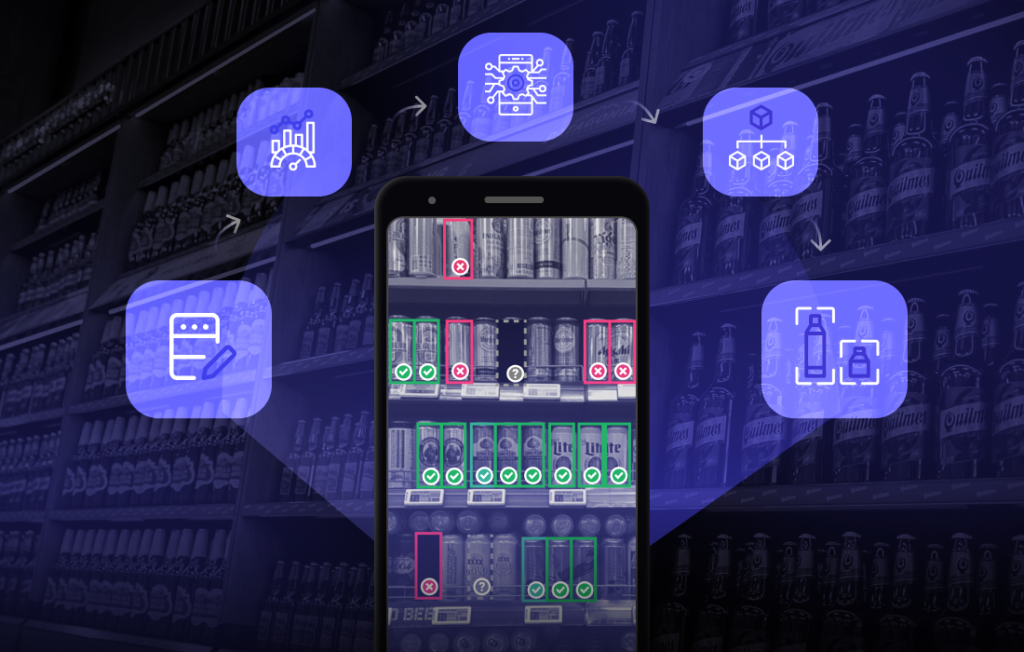
Even though Сomputer Vision (CV) in FMCG in the form of an Image Recognition solution is made for fast, clean, and reliable shelf data gathering, the reality it brings to the table could be impactful. KPIs drop. In-store execution looks worse than expected. Field teams feel scrutinized. What felt like a well-oiled machine suddenly looks broken. But here’s the truth: the machine wasn’t working perfectly; you just didn’t have a clear view of it.
Businesses should be prepared for the new reality and take it with a cold head. In this article, we’ll try to help you and your team be prepared by revealing a full list of things that usually go “wrong” when Image Recognition is taking place.
“Our KPIs suddenly look bad”
One of the most common reactions after implementing computer vision for FMCG is the shock that comes from looking at your numbers. Facings drop, Perfect Store ruined, and planogram compliance plummets. From a distance, it may seem like performance is collapsing overnight.
But what’s really collapsing is the illusion of performance.
Many Fast Moving Consumer Goods companies still rely on manual reporting, subjective store audits, or outdated audit snapshots to track execution KPIs. These approaches were introduced in an era when 50-60% visibility was considered good enough and no other option was available. So naturally, when computer vision is used in FMCG environments to measure shelf-level execution with 95%+ precision, the results can feel brutal.
The same goes for promo execution failure. The common story of “we’ve been told that the promo is active” might continue to work for small, local FMCG organizations, but the higher the investment, the more precise compliance is required. So, AI in trade promotion, particularly AI Image Recognition for FMCG, demonstrates this reality, and naturally, promo execution numbers go down.
That was exactly the case with one of our clients, a regional leader in a few categories, in 2020. Previously, the company was focused on collecting data from the shelves manually, and the results they were getting seemed to be fair enough. However, the Artificial Intelligence powered Image Recognition for retail quickly uncovered the reality.

A giant drop in matrix and promo consistency, as well as an overall shift in KPIs (with a need to review the system overall), appeared. It took around 4 months to get back on track and stabilize the picture. But the picture afterwards is different.
Afterwards, the business sees reality without any distorting lens. In the short term, it gives an opportunity to rearrange the team, increase SKU availability, and improve retailer relationships. In the long term, it gave the company a scalable, reliable tool for shelf performance analysis and understanding the response to any campaign or adjustment in real time.
With FMCG computer vision embedded in the commercial routine, the company could finally plan with confidence, knowing that every promotion, change, or product strategy would be backed by accurate, real-world data (which could also be used for SKU-level forecasting if needed).
“Sales Reps Feel Like They’re Being Watched”
When shelf Image Recognition is rolled out across the field force, it’s not uncommon for sales reps to feel like they’re under pressure. Every photo they take, every product they track, every display they document, suddenly becomes part of a real-time, traceable feedback loop. And that can make even the best reps feel uneasy.
Sales teams often worry they’ll be judged by a machine or lose control over how their performance is evaluated. What was once a flexible, relationship-driven routine becomes structured, measurable, and, at first glance, rigid.
That’s exactly what happened with a large dairy manufacturer we worked with. The field team initially resisted the rollout, arguing that their day-to-day work couldn’t be captured by photos or converted into checklists. The resistance was so high that the company was forced to say goodbye to some of the team members, who were against the change and did not want to cooperate.
However, within weeks, the shift began.
Reps started using FMCG Computer Vision not as a threat, but as a tool. Instead of arguing over compliance, they had evidence. Instead of spending time on manual reporting, they had auto-validated shelf data. And instead of being micromanaged, they had a way to prove their value without debate. So, the discomfort didn’t last. It has been replaced by a stronger sense of professionalism and alignment, both in the field and across the organization.
Read also: FMCG Industry Challenges that No One Pays Attention To.
“We’ve Been Rewarding the Wrong Customers or Teams”
It’s easy to assume that top-performing stores and teams are doing everything right, until the data proves otherwise. Many FMCG companies tie incentives to reported success, not verified in-store reality. When Image Recognition is rolled out, it often exposes a disconnect between who’s getting rewarded and what’s really happening on the shelves.
One of our UK-based clients experienced this firsthand. For years, their field sales team was evaluated using a KPI tied to the number of facings without additional packaging. On paper, results were consistently strong. But once AI Product Recognition was implemented, it revealed a different picture: many SKUs were being counted despite non-compliant displays, wrapped in sleeves, misplaced, or incorrectly presented.
The fallout was immediate. More than 50 percent of KPI targets were no longer met. Teams felt blindsided. Incentive structures no longer made sense. And yet, the problem wasn’t the data, it was that the old system was rewarding visibility, not accuracy.
With FMCG computer vision, the company was able to reset. It redefined execution KPIs using objective shelf data, adjusted bonus schemes accordingly, and introduced clearer, measurable benchmarks tied to actual in-store conditions. Implementing CPG Image Recognition not only resulted in fairer recognition but also improved merchandising, better store-level performance, and more focused investments in high-potential territories.
Yes, the transition was uncomfortable. But over time, aligning rewards with reality created a culture of performance based on facts, not assumptions. And that’s when incentive programs start working for the business, not against it.
«Our Devices Are Not a Good Fit»
One of the first technical hurdles companies face during a large-scale computer vision for FMCG rollout is something deceptively simple: the devices in their reps’ hands. On paper, everything seems compatible. But in practice, low-end or aging smartphones often struggle with camera quality, processing speed, or app stability, especially when working with newer technologies like Augmented Reality.

This is where the discomfort kicks in. Field teams start missing tasks, apps run slowly, or photo validation fails. It creates friction, slows down adoption, and raises internal questions about whether the tech is “worth it.”
But what’s really happening is that the rollout is surfacing an issue that was already there: a fragmented, outdated mobile infrastructure that was never built to support AI for CPG or other next-generation tools.
This isn’t just a hardware problem — it’s a strategic opportunity. Implementation gives companies the insight they need to reassess their entire device ecosystem and make smarter, more future-proof decisions.
For example, we’ve seen clients move away from iOS entirely due to high cost and limited flexibility in configuration, instead choosing upper mid-range Android devices with better long-term value. Others shifted from a “lowest cost” procurement model to a performance-based standard, factoring in implementation efficiency, user experience, and support cycles.
There’s also the macroeconomic angle to consider. With global device pricing affected by supply chain shifts, tariffs, and regional regulations, investing in smart, scalable mobile hardware now can prevent costly delays or system conflicts later.
Yes, upgrading hardware is an investment, but it’s one that pays off. A strong mobile foundation improves rollout speed, user satisfaction, and long-term platform compatibility. And more importantly, it ensures that the technology your teams rely on can keep up with the performance and precision that computer vision is used in FMCG to deliver.
Read also how to improve on-shelf availability
Implementing computer vision in the FMCG industry doesn’t just reveal shelf data; it reveals the truth. And if the truth is harsh, it’s not a sign of failure. That’s only the sign that the business is finally dealing with reality. It challenges assumptions, highlights blind spots, and pushes teams to rethink how they measure, motivate, and manage performance.
In the long run, FMCG computer vision doesn’t just fix what’s broken. It elevates how companies plan, execute, and grow. And for organizations ready to lead, that clarity is exactly what drives competitive advantage and revenue.