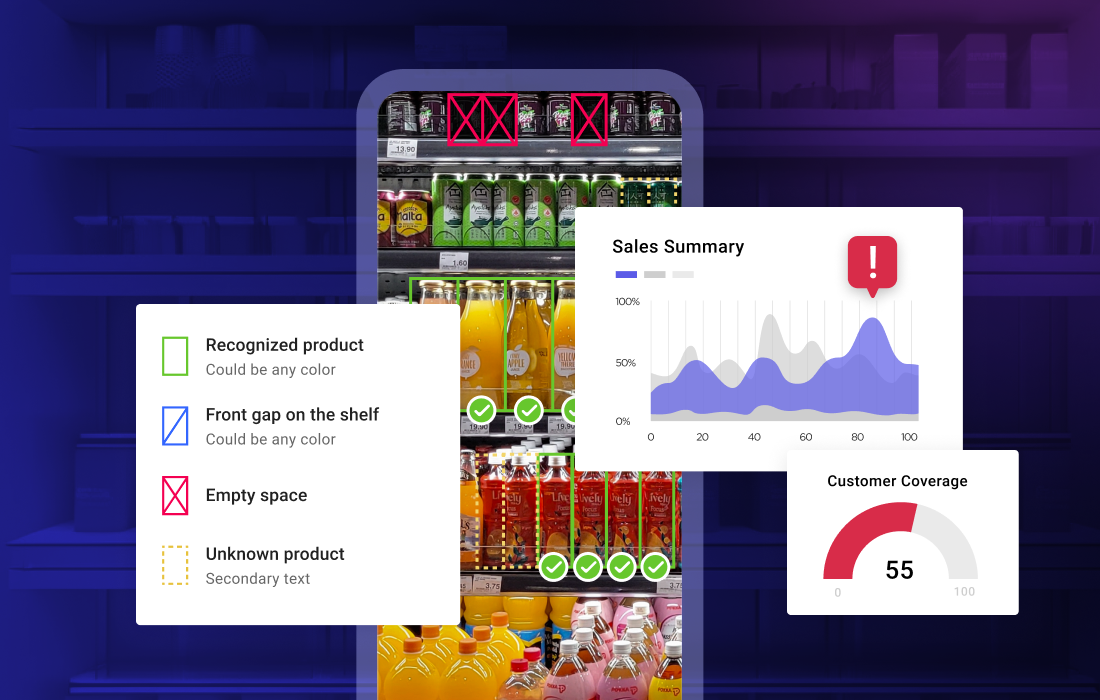
Even with well-trained field staff and clearly defined KPIs, more than 10% of planogram compliance is lost every week.
Within a short time, shelves typically fall back to around 60% compliance. Everyday realities such as replenishment habits, substitutions, out-of-stocks, and competing priorities drive this decline.
These realities are unavoidable. The real issue isn’t a lack of rules or technology, but how planogram compliance is designed, measured, and used within organizations. They treat shelves as static, even though store conditions change daily.
This article examines planogram compliance as both a retail discipline and a brand execution challenge. Furthermore, it explains why businesses in 2026 must rely on real-time data and automation to keep shelves aligned with their goals.
What Is Planogram Compliance?
Planogram compliance is the last mile between a brand’s commercial strategy and what shoppers actually see in-store. But let’s discuss planogram compliance meaning in more detail.
Planogram Compliance Definition
A planogram is the blueprint for how a brand should appear on the shelf.
Planogram compliance refers to the degree to which the real shelf matches that blueprint, SKU by SKU, facing by facing, and position by position.
Key Aspects of Planogram Compliance
The definition is not enough of an answer to the “What is planogram compliance?” question. Therefore, we’ll look beyond theory and focus on the practical elements that influence real execution in retail – where planograms are applied, challenged, and either followed or ignored.
Purpose of Planogram Compliance in Retail
The goal of planogram compliance for a brand is simple: protect the assortment and shelf space they have planned and negotiated. Without it, their strategy stays on paper instead of showing up on the shelf where purchase decisions are made.
For retailers, compliance keeps categories consistent and manageable across stores, making it easier for shoppers to find what they’re looking for and for staff to maintain order.
What Planogram Compliance Involves on the Shelf
A simple product presence on the shelf isn’t enough. There needs to be correct SKU placement, number of facings, shelf position, adjacency to other products, and overall share of shelf space.
How Planogram Compliance is Achieved in Stores
It happens when store staff or merchandisers can quickly reset shelves during routine FMCG merchandising tasks (restocking, facing up, or replacing out-of-stocks) without breaking the intended layout.
Even if store staff follow the rules, the layout accuracy is maintained if the original shelf design still works under real-world changes, such as late deliveries or best-selling products running out.
In other words, a planogram must be more than a fixed blueprint; it needs to be flexible enough to adapt to everyday store realities.
Flexibility comes from having backup spots for top-selling items, reserving space for promotions, and giving staff simple guidelines for adjusting shelves.
Additionally, daily insights from real-time data help teams make these adjustments on the spot.
Key Business Benefits of Planogram Compliance
When on-shelf alignment is sustained in stores, it creates clear commercial value:
- Planned shelf positions are preserved over time
Priority SKUs remain in their intended locations and facings instead of gradually losing visibility due to restocking practices or competing products.
- Negotiated shelf space is consistently realized
The shelf allocation agreed with retailers is reflected in-store, reducing unnoticed space erosion that directly impacts sales volume.
- Trade and promotional investments deliver intended results
Promotional and focus SKUs are displayed as planned, increasing the likelihood that trade spend converts into sell-out.
- Sales performance becomes more stable and interpretable
With fewer execution-related variables, sales trends can be analyzed with greater confidence and used to guide commercial decisions.
- Execution data supports better planning decisions
Reliable compliance data helps distinguish between execution issues and structural assortment or pricing problems.
- Retailer discussions are supported by evidence
Documented execution consistency strengthens future negotiations around assortment, space, and category initiatives.
Monitoring and Tracking
Monitoring on-shelf alignment means tracking how closely shelves follow the intended layout over time, not just at launch.
This typically involves store audits, photo-based verification, or digital tools that capture execution drift and highlight where corrective action is needed.
We will discuss the specific planogram compliance systems a bit later in this article.
Why Planogram Compliance Matters for Retailers and Brands
Planogram compliance can be viewed from two perspectives –brands’ and retailers’. Since its impact is tangible for both parties, we’ll look at how day-to-day shelf execution affects outcomes for each.
Impact on Brands: Protecting Commercial Intent at the Shelf
For brands, the shelf is not just a display area but the physical outcome of commercial agreements, category roles, and trade investments.
When planograms are not followed, facings shrink without notice, brand blocks fragment, and priority SKUs lose the positions intended to support visibility and sales.
Over time, this leads to underperformance that is difficult to diagnose. A decline may appear to be driven by demand or pricing, while in reality the product is simply harder to notice or reach.
Impact on Retailers: Maintaining Category Structure and Control
For retailers, planogram compliance affects how predictable and manageable categories are across stores. When shelves follow the intended layout, the category looks familiar from one location to another. Shoppers know where to look, and staff know where products belong.
Without compliance, the same category can feel orderly in one store and cluttered in another.
As with brands, this makes it harder to compare performance between stores and to understand whether differences are driven by demand or by execution.
| Perspective | Why It Matters | What Can Go Wrong Without Compliance |
| Brands | Protects commercial agreements, category roles, and trade investments | Facings shrink, brand blocks fragment, priority SKUs lose visibility; underperformance is hard to diagnose |
| Retailers | Maintains predictable category structure and store-level control | Categories vary between stores, making them harder to manage; staff and shoppers struggle to find products |
What a Planogram Compliance System Needs to Support Execution
Effective planogram compliance depends on three core capabilities working together. Each solves a different execution problem. Let’s take a close look at each one.
Territory Management for Ensuring the Right Store Coverage
On-shelf alignment starts with the right prioritization of store visits and timely reporting – both critical for improving on-shelf availability. This is where territory management systems play a key role.
Such solutions help managers define which stores should be visited first and how often.

Locations with recurring execution issues, high sales potential, or those critical for product launches and promotional activity can be prioritized, while lower-risk stores are visited less frequently. This reduces blind spots where compliance issues would otherwise go unnoticed.
Territory management also supports better execution during visits. Balanced workloads and optimized routes give sales representatives enough time to check planogram compliance properly instead of rushing through stores.
In addition, visit data and photos captured in the system (whether taken manually or supported by image recognition for retail) provide objective evidence of execution.

This data makes reporting more reliable and allows teams to track how visit frequency and quality affect compliance over time.
So, with effective territory management, teams can:
- Prioritize the right stores
- Adjust visit frequency based on risk
- Eliminate coverage blind spots
- Optimize routes and workloads
- Capture objective execution evidence
- Track execution dynamics over time
SFA for Standardization of In-store Execution
Sales Force Automation (SFA) is the base that most FMCG systems must be integrated with.
If territory management defines which stores are visited, how often, and by whom, SFA defines what happens during each visit, which standards apply, and how execution is recorded and reported.
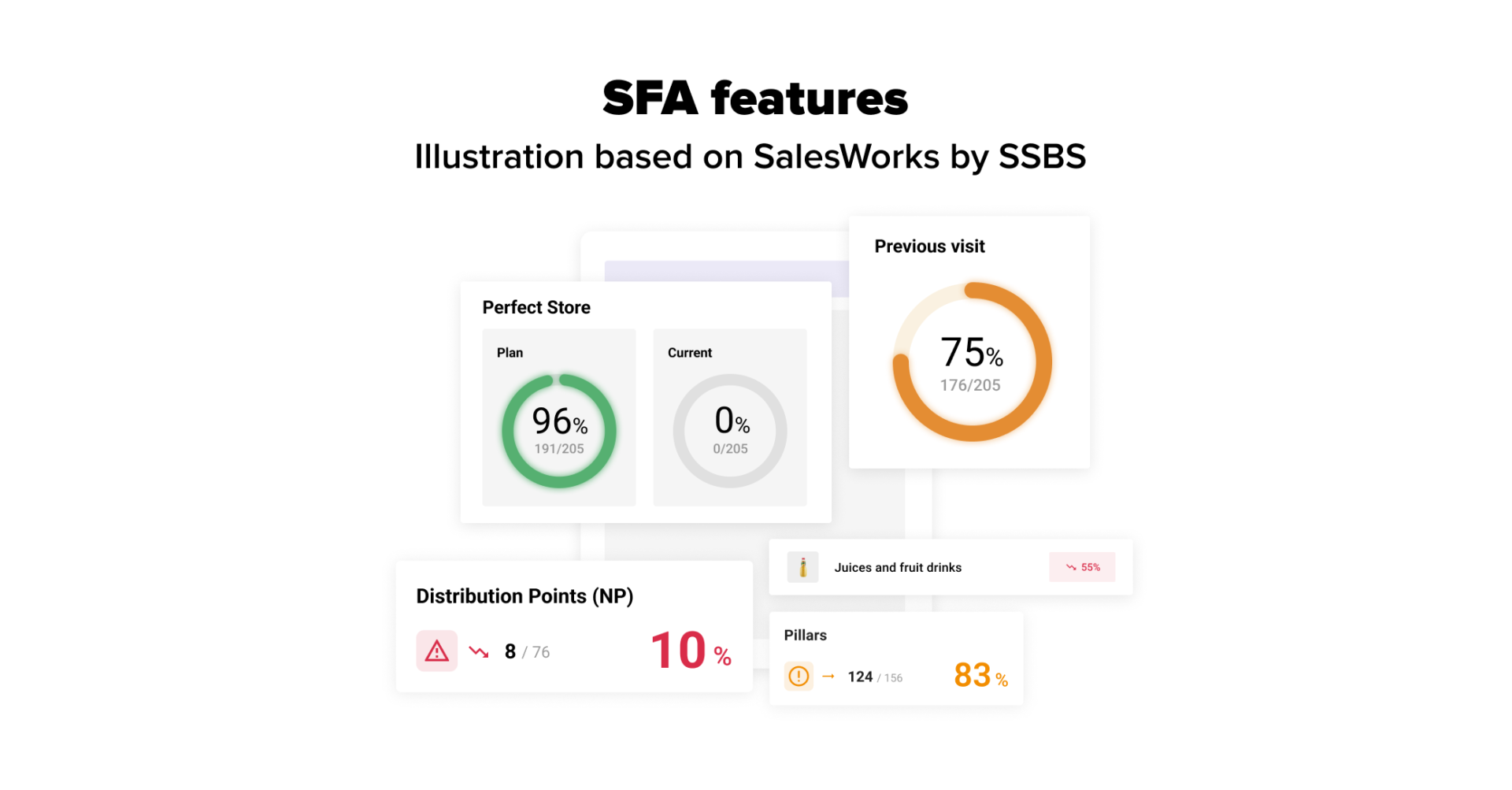
SFA turns planogram requirements into repeatable field actions. Through guided visit flows, task lists, and mandatory checklists, SFA ensures that every rep checks the same criteria in every store.
However, SFA still relies on manual input. It captures evidence – but it doesn’t independently verify whether the shelf truly matches the planogram.
Ultimately, Sales Force Automation allows teams to:
- Standardize execution across all stores
- Follow guided visit flows and checklists
- Capture evidence of compliance in real time
- Track and report on performance consistently
Case in point
For one of our clients, a long-time user of our territory management tool and SFA, the data from these solutions revealed an unexpected insight.
Nearly 70% of their reps’ time in strategically important stores was spent on taking orders rather than ensuring proper execution.
To address this, the company implemented a B2B eCommerce platform to automate order taking.
As a result, the company was able to free field teams to focus on planogram compliance, shelf audits, and corrective actions.
Shelf Image Recognition for Objective Compliance Validation
Shelf Image Recognition FMCG can be a separate application or seamlessly integrated with SFA. In the second case, image capture becomes a natural part of the store visit workflow, requiring no additional steps from sales representatives.

Once photos are taken, the system automatically analyzes the shelf and compares the actual layout with the planogram. It verifies SKU presence, facings, positioning, and shelf share without relying on manual interpretation.

Moreover, AI-driven modules with recommended steps for the visit (like those SSBS offers) allow sales reps to take the right actions without waiting for instructions from a manager.
Case in point
A global FMCG client put our SFA solution in combination with Image Recognition into practice. As a result, they saw:
- 50% increase in sales volume
- 20% wider outlet coverage
- 30% faster shelf audits
- 60% lower cost per visit
- 41% more frequent orders
These data prove that the SFA+IR combo makes in-store execution more efficient and consistent.
How to Improve Planogram Compliance in 2026
Retailers and brands often focus on the design stage – defining rules, goals, and KPIs for each category and store. While this sets a necessary framework, the way teams execute in the field is just as important.
Tools that deliver real-time data, verifiable evidence, and practical guidance ensure planograms are implemented as intended. They help teams:
- Visit stores according to priority and risk
- Follow consistent workflows and checklists in every store
- Identify and correct deviations immediately
- Take informed actions on the spot without waiting for manager instructions
A clear plan alone is not enough; structured execution supported by these tools ensures the planogram’s intent is reflected on the shelf and makes performance measurable.