RGM is not a single software category. Therefore, different digital solutions vendors take different approaches to create the best revenue management software.
One talks about price elasticity modeling and pack architecture simulations. Another leads with trade promotion planning and deduction management. A third promises an end-to-end commercial suite connecting pricing, promotions, and field execution.
How does a brand make the choice?
This article will sort it out. Here, you will find:
- a clear breakdown of the three main revenue growth management vendor types
- what each type actually delivers in practice
- an overview of the most relevant solutions for FMCG brands
- a practical framework to help you define what is the best revenue management software for your brand
Revenue Management Software Is a Confusing Category
| What You Expect “RGM Software” to Mean | What Different Vendors Actually Deliver |
| One system covering pricing, promotions, and trade spend | Often split across separate tools owned by different teams |
| Strong analytics + seamless execution in one place | Usually, either deep analytics or execution, rarely both |
| Comparable feature sets across vendors | Completely different scopes (pricing vs TPM vs full suites) |
| Plug-and-play insights out of the box | Requires very different levels of data maturity and integration |
| Direct vendor comparisons based on the same key features | Misleading – tools solve different problems, not the same one |
Why Vendors in This Space Are Hard to Compare
The problem starts with the definition.
Ask ten RGM practitioners what the software should put in the center, and you’ll hear ten different answers.
Vendors followed that split. Some focus on pricing and pack architecture. Others grew out of TPM, handling planning, approvals, and settlements, then added analytics. A third group tries to cover everything at once.
So “revenue management software” (or “net revenue management software”) ends up describing tools with very different scopes. A pricing engine and a TPM suite don’t solve the same problem, even if both carry the RGM label. Therefore, comparing them feature by feature leads nowhere.
Data makes the issue even deeper. Take any advanced tool from each category – it most certainly would require clean historical data. For brands operating on spreadsheets, they will all be of no use.
The 3 Main Types of Revenue Management Vendors
Typically, RGM specialists consider three types of solutions when seeking software for this framework. What each centers on:
- Pure RGM: pricing, price-pack architecture, promotion planning, and elasticity
- RGM + TPO: promotion optimization and performance prediction
- TPM + TPO + RGM: full commercial flow – from planning to execution and settlement
These types don’t overlap as much as the label suggests. Each solves a different part of the problem and requires a different level of data and process maturity.
Pure RGM Software
Pure RGM platforms focus on analytics and on optimizing the strategic levers of revenue management: pricing strategies (including dynamic pricing that adapts to market conditions), pack formats, promo management, and trade terms.
Though such solutions often have basic Trade Promotion Management Software capabilities, they typically lack Trade Promotion Optimization (the TPM vs TPO distinction: execution vs optimization).
Who Pure RGM Software is Best For
Pure RGM tools are best suited for large FMCG companies that already have:
- a dedicated revenue management team
- strong data capabilities (clean data and people who can work with it)
- an existing system to manage optimization (TPO)
These companies use pure RGM software to make better pricing and portfolio decisions. For such organizations, it is the best revenue management software for driving pricing and portfolio outcomes.
It is not a good starting point for companies that lack reliable data or structured promotion processes.
Let’s look at some of the tools in this sector.
Infor Revenue Growth Management
Infor entered RGM after acquiring Acumen, a CPG-focused consultancy. Its solution combines trade promotion management with broader revenue growth management in an ERP environment. The platform connects commercial planning with financial and operational data.
It is a practical choice for companies already using Infor, as it simplifies integration and data consistency across systems.
| Infor RGM (formerly Acumen): Key Facts and Fit | |
| Positioning | Hybrid TPM + RGM solution within Infor CloudSuite |
| Core strengths | Pricing strategy, PPA, elasticity, promotion analytics |
| Platform | Cloud-native, integrated with the Infor ERP ecosystem |
| Additional services | Revenue growth consulting alongside software |
| Key advantage | Easier integration for existing Infor customers |
| Best fit | FMCG companies in the Infor ecosystem |
Buynomics
Buynomics is an AI-driven RGM platform that simulates consumer responses before decisions are made.
If you’re asking which revenue management software is best for this type of simulation, Buynomics offers the answer through its Virtual Shoppers AI, which models how consumers react to changes in pricing, promotions, pack sizes, and assortment.
Teams use it to test scenarios and inform pricing, promotion planning, assortment decisions, and price-pack architecture.
| Buynomics: Key Facts and Fit | |
| Positioning | AI-driven RGM decisioning platform |
| Core strengths | Virtual Shoppers AI; portfolio simulation; strong in PPA and cannibalization |
| Platform | Scenario engine across pricing, promotions, assortment, and trade terms |
| Additional services | Data integration and model setup |
| Key advantage | Tests decisions before execution with portfolio-wide impact |
| Best fit | FMCG/CPG with mature revenue teams |
RGM + TPO Vendors
This is a middle ground between pure analytics platforms and full commercial suites. These tools focus on analysis and decision support, not execution.
They help companies understand what to do (for instance, how to price, what to promote, which products to prioritize), but they do not manage how things are executed in daily operations.
That means they do not handle tasks like:
- managing promotion budgets
- approval workflows
- processing retailer deductions
- settling promotion payments
Instead, they act as an analytics layer on top of existing systems, often connecting to a TPM tool that handles day-to-day operations.
Let’s discuss one of the prominent examples.
o9 Solutions
o9 is an enterprise platform that unifies demand, supply chain, and commercial strategy in a single system.
In RGM, it focuses on analytics and planning. It supports scenario simulation, P&L optimization, and evaluation of pricing and promotion strategies, linking them with demand and financial planning.
It does not cover the operational side of promotions (no budgeting, approvals, or deduction processing).
| o9 RGM: Key Facts and Fit | |
| Positioning | RGM + TPO within IBP (planning, not execution) |
| Core strengths | Scenario modeling, pricing & promotion optimization |
| Platform | AI-powered, integrates commercial, supply chain, and financial planning |
| Additional services | Implementation and transformation support |
| Key advantage | Aligns commercial decisions with operational and financial plans |
| Best fit | Companies with existing TPM and high data maturity |
Full TPM + TPO + RGM Platform Vendors
Full-suite platforms are the most comprehensive type of RGM software. They integrate planning, execution, and analysis into a single system, combining TPM, TPO, and RGM capabilities.
In practice, this means the same platform supports both operational processes (such as budgeting, approvals, and settlements) and analytical tasks (such as forecasting, optimization, and scenario modeling). This way, there are no data inconsistencies between tools, making it the best software for revenue growth management in fully integrated setups.
Typical capabilities include:
- End-to-end promotion management (from planning to settlement)
- Fund, accrual, and deduction management with ERP integration
- Trade promotion optimization and ROI forecasting
- Pricing and price-pack architecture analytics
- Gross-to-net and P&L visibility
- Annual planning and integrated business planning
- Data integration across sources
- AI-driven recommendations and alerts
Let’s examine some of the real-life tools from this category.
PromoTool by SoftServe Business Systems
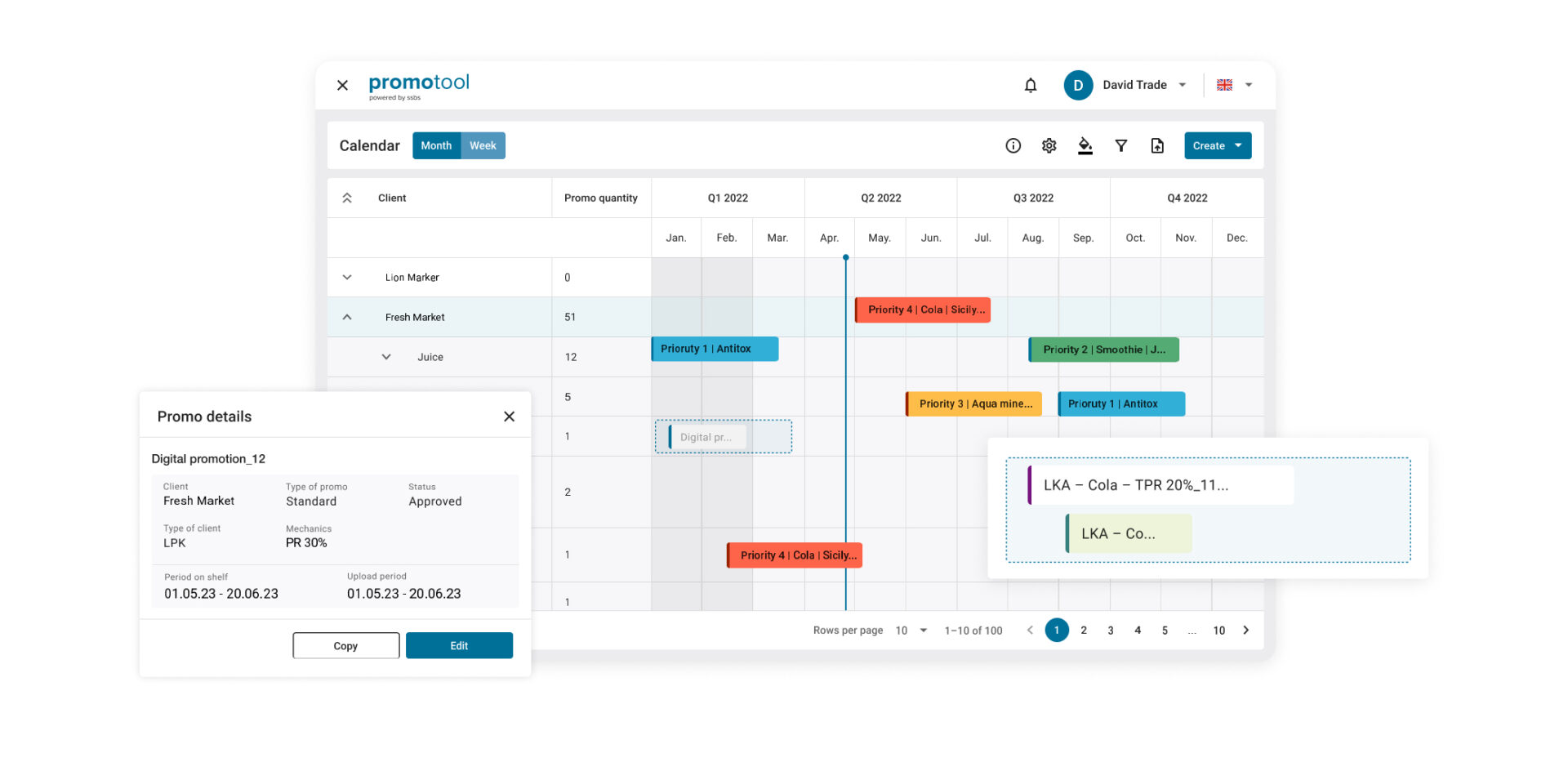
SoftServe Business Systems (SSBS) is a specialized FMCG software provider. One of their flagship products, PromoTool, is a Trade Promotion Management and Optimization platform that extends into RGM.
The system is not limited to structured, centralized retail environments (such as modern trade, like large chains). It is also built for more complex setups where sales happen through distributors, wholesalers, and many small retailers. This approach makes it one of the top revenue management software options for companies operating in such environments.
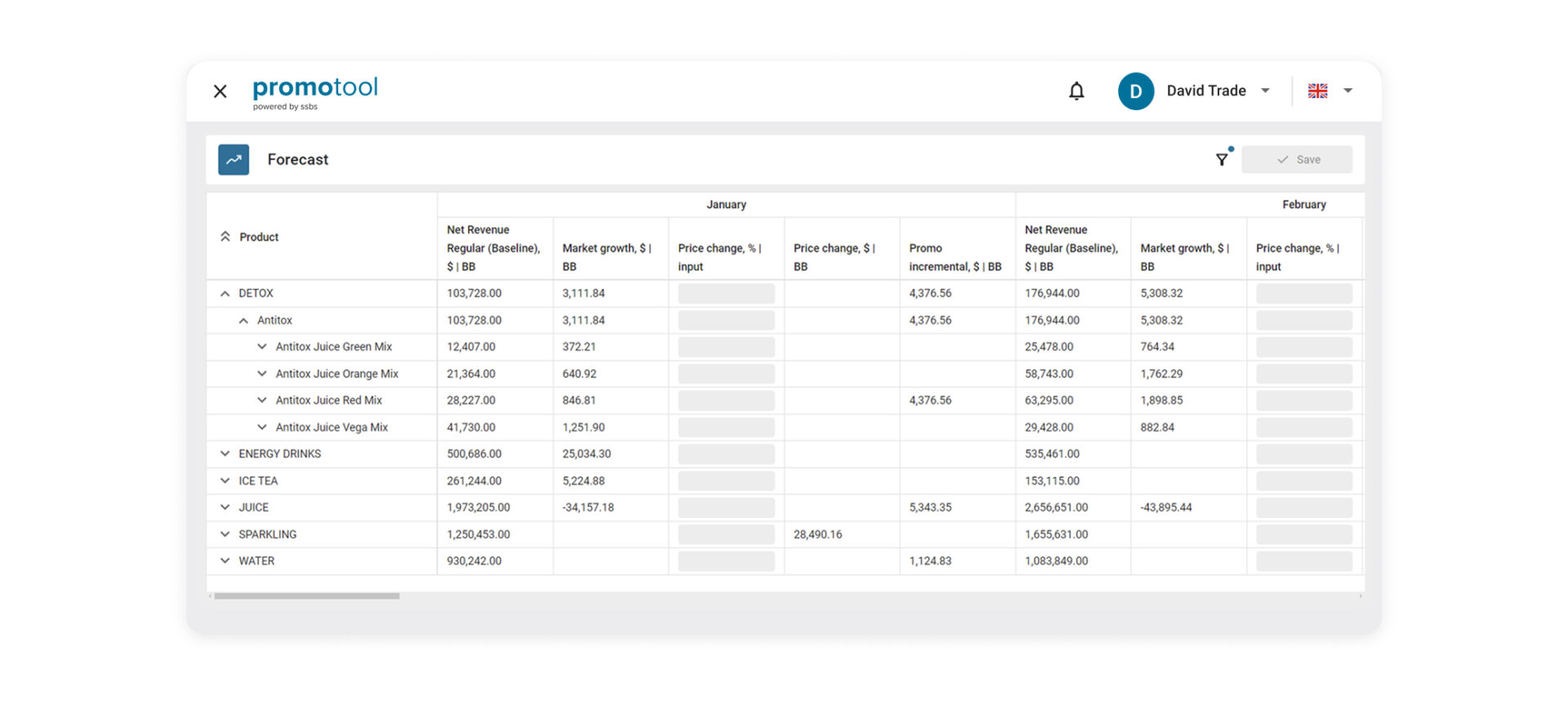
What sets SSBS apart is its combination of strong operational capabilities and ease of use. In addition to standard key features of TPM, PromoTool includes a dedicated module for full trade spend management. It covers not only promotions, but also all retailer agreements and commercial terms.
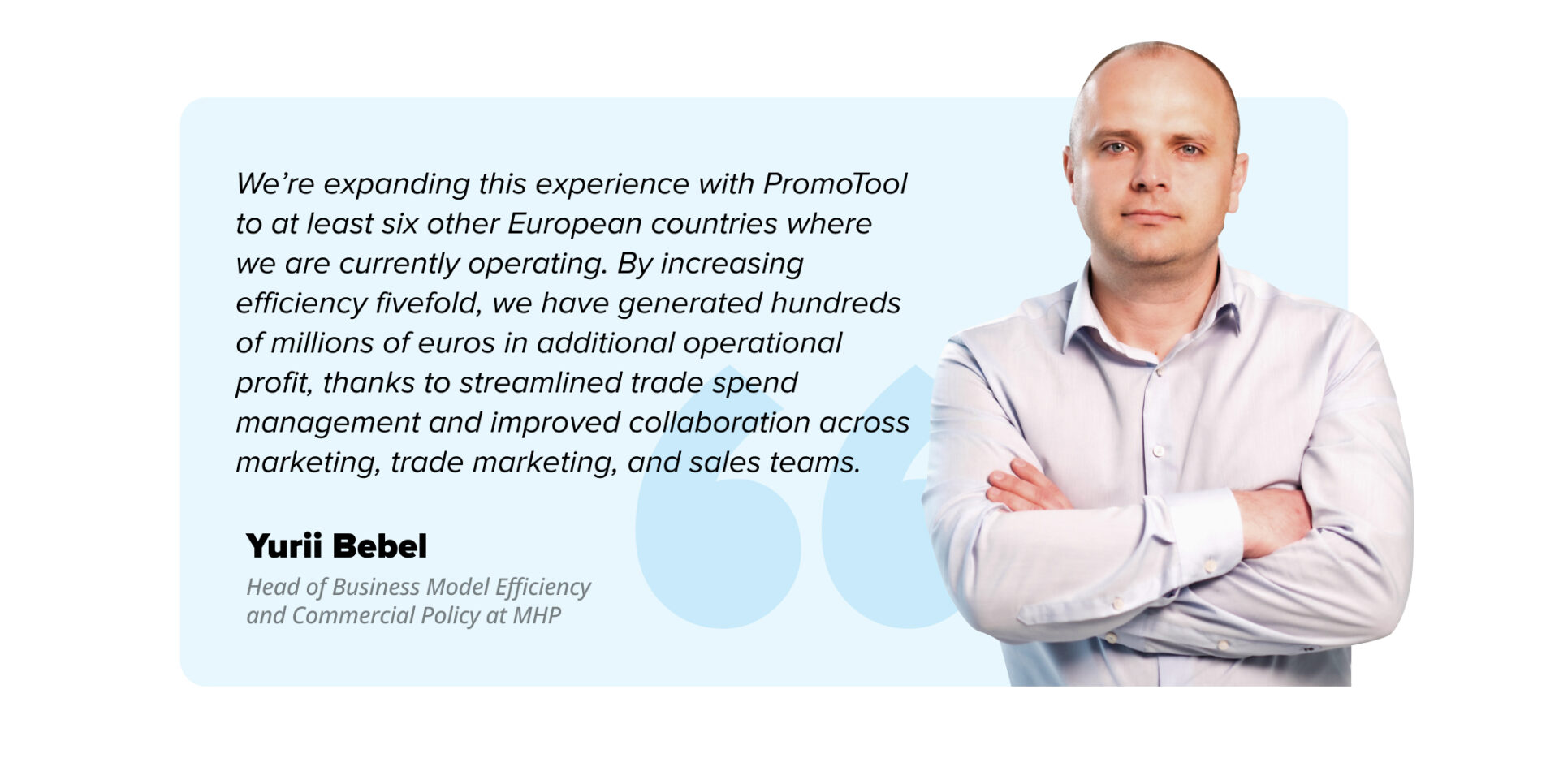
At the same time, the platform is increasingly AI-driven.
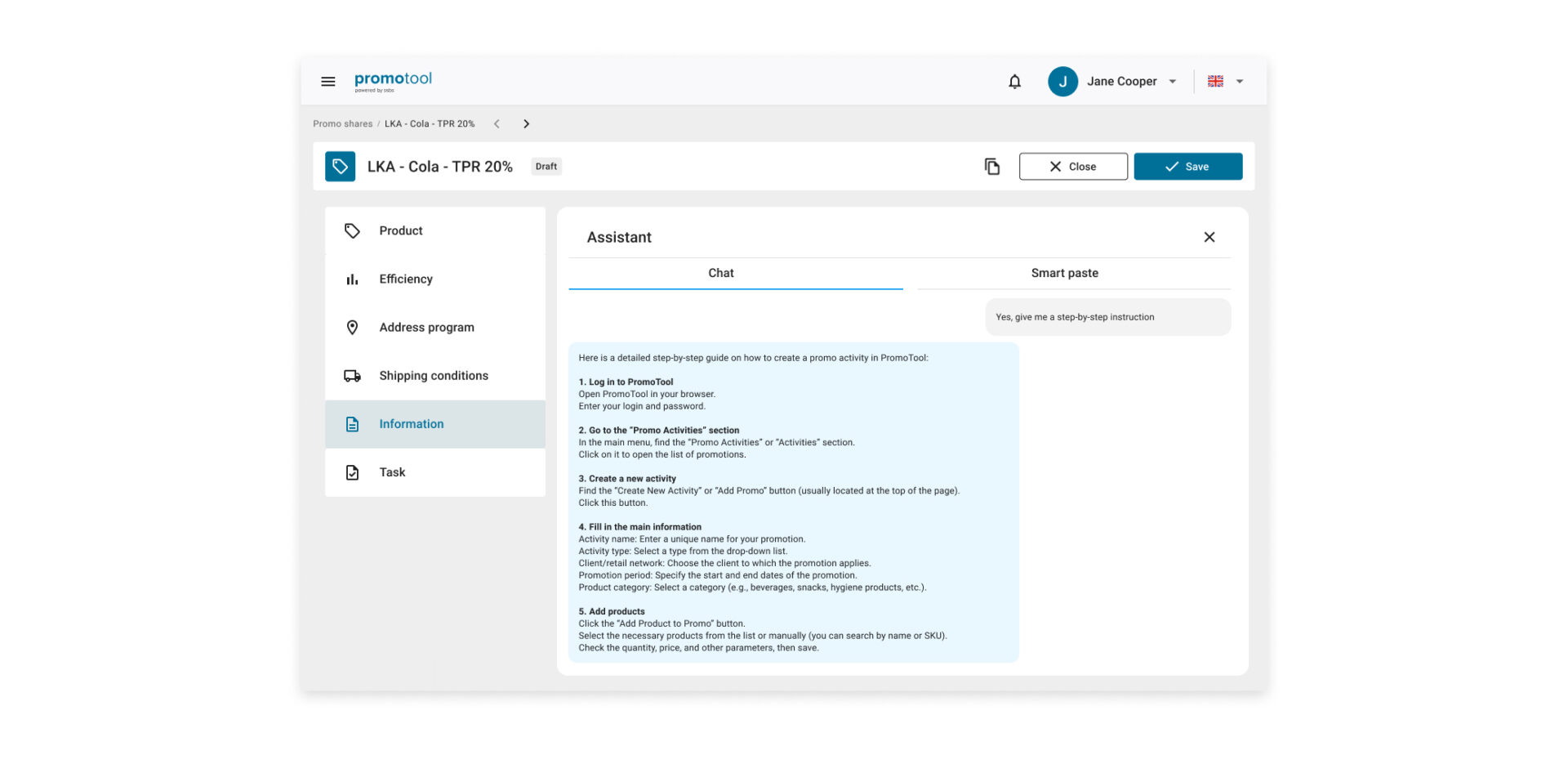
In addition to ML-based forecasting and scenario modeling, it introduces AI agents that turn the user experience into a conversational interface. Users can create campaigns, analyze performance, and complete workflows using natural language, without relying on complex navigation or training.
What PromoTool offers:
- End-to-end promotion planning: calendars, budgets, customer and channel mechanics
- Full trade spend tracking, including non-promo terms and retailer agreements
- Built-in commercial rules: guardrails, approvals, financial controls
- ML-based forecasting, scenario modeling, and ROI tracking
- AI agents enabling conversational workflows and task automation
- Shared data environment across sales, marketing, finance, and RGM
- Native integration with the SSBS eCosystem of solutions, including FMCG Distributor Management (DMS) and Image Recognition for field execution
- Designed for fast implementation without heavy IT overhead
- Strong fit for distributor-heavy and indirect channel markets
| PromoTool by SSBS: Key Facts and Fit | |
| Positioning | FMCG-focused TPM + TPO + RGM platform with strong execution and trade spend control |
| Core strengths | Full trade spend management (not only promos); AI agents for conversational workflows and automation |
| Platform | End-to-end promotion planning and execution with ML forecasting, scenario modeling, and conversational interface |
| Additional services | Integration with DMS and Image Recognition; data setup and model configuration |
| Key advantage | Connects planning, execution, and all trade spends in one workflow with high usability |
| Best fit | FMCG companies across maturity levels, especially those needing to align planning with execution across multiple channels |
CPGvision by PSignite
CPGvision by PSignite is a Salesforce-native TPM, TPO, and RGM platform built on Salesforce. It connects trade promotion management with customer and account data in one system.
It covers the TPM process and offers analytics, scenario planning, pricing insights, and gross-to-net visibility.
It mainly fits companies already using Salesforce, where it avoids adding another separate tool.
| CPGvision by PSignite: Key Facts and Fit | |
| Positioning | Salesforce-native TPM + TPO + RGM platform connecting trade management with CRM and customer data |
| Core strengths | TPM, integrated customer data, promotion analytics, scenario planning |
| Platform | Built on Salesforce with a shared data model across trade and CRM |
| Additional services | Salesforce customization, ERP, and external data integration |
| Key advantage | Aligns trade planning with customer and account management |
| Best fit | FMCG companies using Salesforce, and aiming to unify CRM and trade workflows |
Visualfabriq
Visualfabriq is an RGM, TPM/TPO, and IBP platform focused on analytics and decision support. It combines promotion management, revenue optimization, and ongoing performance tracking.
Its “Assistant Mike” layer surfaces insights, flags risks, and suggests next steps based on current data.
The solution is mainly used by larger FMCG companies looking to move beyond basic reporting.
| Visualfabriq: Key Facts and Fit | |
| Positioning | AI-driven RGM, TPM/TPO, and IBP platform focused on proactive decision support |
| Core strengths | Promotion analytics, in-flight monitoring, scenario planning, and AI-assisted recommendations |
| Platform | Unified commercial planning platform by Visualfabriq |
| Additional services | Integration with DMS and Image Recognition; data setup and model configuration |
| Key advantage | Insights and alerts to manage promotion portfolios |
| Best fit | Companies with advanced analytics needs |
In Conclusion: How to Choose the Right Type of Revenue Management Software
Let’s summarize all the information.
When evaluating top revenue management software, the key is to match the solution to your actual capabilities.
Choose the vendor type based on your data, processes, and team maturity – not on how advanced the solution sounds. Many companies jump too early from disconnected spreadsheets to cutting-edge AI and fail to get the results they wanted.
| Vendor Type | Best For | Use When |
| Pure RGM | Brands with strong data, a working TPM system, and a need for a dedicated RGM team | You focus on advanced pricing, price-pack architecture (PPA), and portfolio optimization |
| RGM + TPO | Companies already running TPM but needing stronger promo analytics | You want to improve promotion ROI and layer advanced analytics on top of your existing system |
| Full TPM + TPO + RGM | Brands looking for an end-to-end solution across planning, execution, and analytics | You need a single platform and want to build or replace TPM with integrated capabilities |