The FMCG market shows slower, uneven, and fragile growth across Europe. It’s not declining, but the slowdown risk is real. Shoppers are changing how they buy. They spend more on essentials and cut back on extras. They also want healthier, sustainable, and convenient products.
The old B2C FMCG customer journey with big TV promotions and static in-store displays no longer works. People expect more personal and flexible experiences.
What exactly does “personal and flexible” mean? In this article, we’ll share five practical examples, each based on real client cases.
But before, let’s outline where the FMCG industry stands today regarding the customer journey – the point from which we step forward.
How On-Trade and Off-Trade B2C Journeys Look Like Today
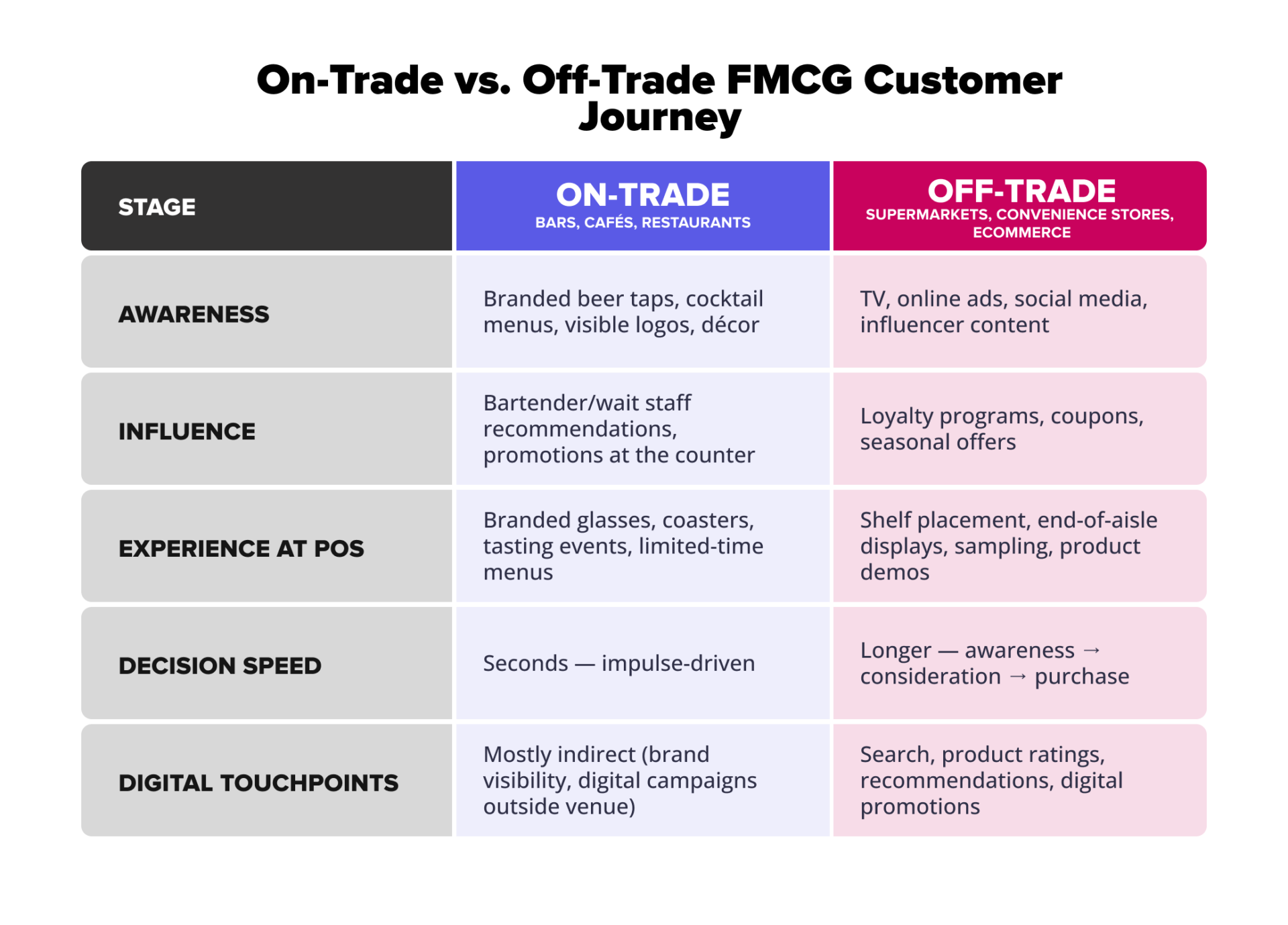
In bars, cafés, and restaurants, the journey is short and often impulse-driven. A customer sees a branded beer tap at the counter, a cocktail promotion on the menu, or a bartender recommending a new drink.
The decision happens in seconds, driven by visibility at the point of consumption, quick promotions from staff, and branded experiences like special glasses, coasters, or tasting events.

In the off-trade, shoppers first become aware of products through TV, social media, or online ads, and may then be influenced by loyalty programs, coupons, or seasonal promotions.
In-store, decisions are shaped by eye-level shelf placement, end-of-aisle displays, sampling stations, or product demos (with AI Shelf Image Recognition ensuring products are placed correctly for maximum impact and providing the accurate execution data needed for trade promotion analysis). Online, it’s search, product ratings, recommendations, digital promotions, and influencer content on social media.
The fact that the system worked for years doesn’t mean it didn’t have weaknesses even before today’s market shift, the accelerating digital transformation in FMCG, and FMCG automation. However, the window for overlooking them is closing. Which weaknesses are we talking about? Read on.
Read in more detail how an FMCG Image Recognition solution works and the impact of Computer Vision in the FMCG industry on short-term goals.
Key Reasons Brands Must Rethink Their FMCG Customer Journey Approach
Following the traditional model of customer journey, FMCG brands lacked the data to truly understand who their real customers were. Therefore, without this information, they had limited ideas on how to contact consumers more directly and achieve omnichannel engagement. As a result:
- Shoppers expect personalized, flexible experiences, but without direct customer data, brands can’t deliver that. The gap between brand and customer is widening every day.
- Digital shopping of consumer goods is booming, yet online retailers (Amazon, marketplaces, grocery apps) control most of the customer relationship, leaving brands in the dark.
- Tighter budgets put everyone under pressure. Shoppers are more selective, and brands can’t afford broad, inefficient promotions that don’t drive real impact.
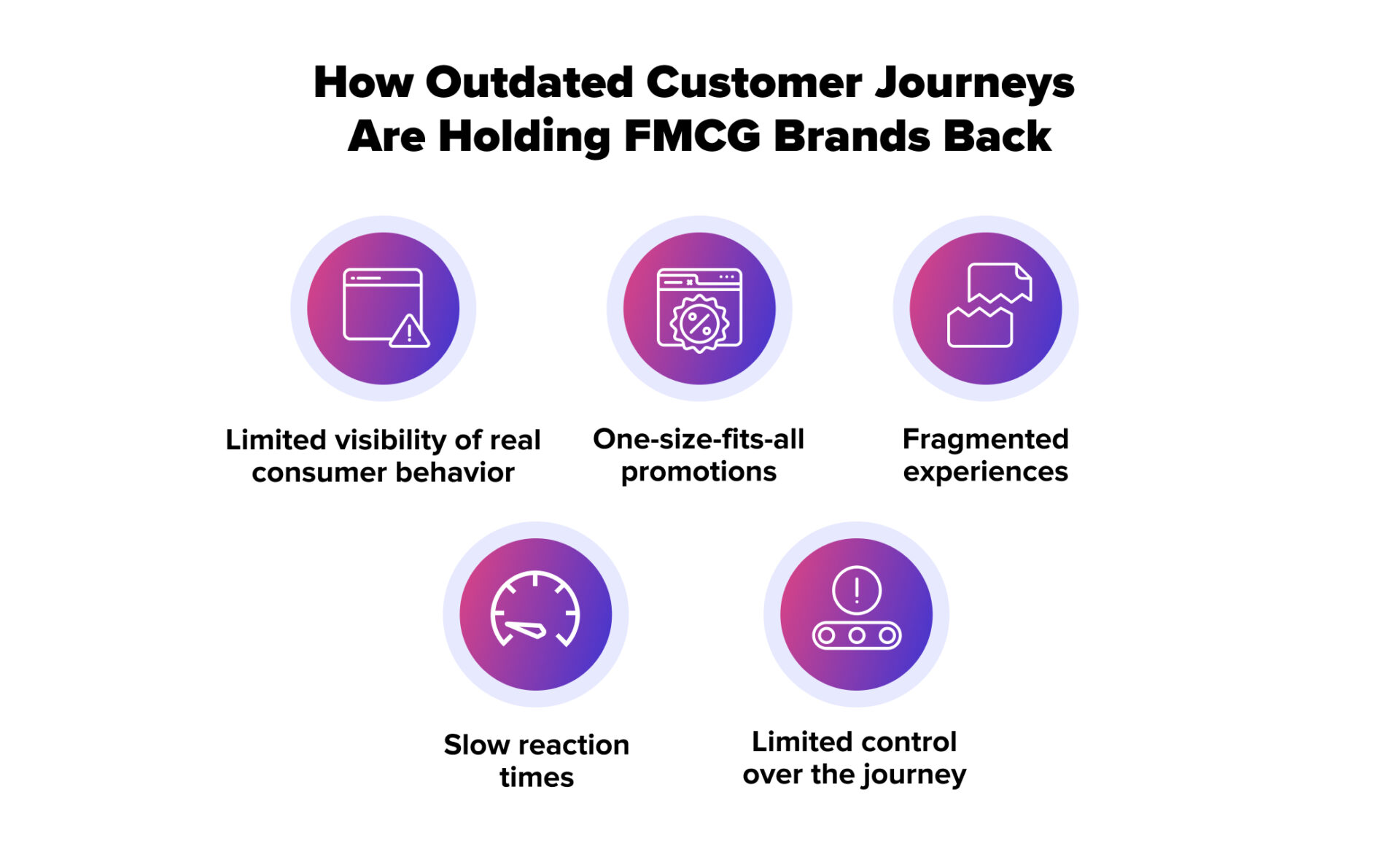
Overall, not adjusting their FMCG customer journey approach is holding brands back and aggravating key pain points:
- Limited visibility of real consumer behavior: Many fast-moving consumer goods companies track sales in bulk. However, without real-time data, they lose sight of the individual customer behind each purchase.
- One-size-fits-all promotions: Broad discounts may not be as effective in engaging shoppers whose needs vary.
- Fragmented experiences: When a discount shows up in an app but not on the shelf, or packaging looks different online than offline, the customer experience feels broken.
- Slow reaction times: If consumer trends change overnight, it can still take weeks for brands to adjust their campaigns, leaving gaps that reduce customer satisfaction.
- Limited control over the journey: Brands often watch from the sidelines as retailers determine placement, discounts, and pricing, shaping the shopper’s choice instead of the brand.
What can you add to the FMCG sales strategy for obtaining that priceless data and engaging consumers in meaningful, personalized experiences that drive loyalty? We are about to reveal not one but five proven ways.
How to Transform FMCG Customer Journey – Just Like our Clients Did
Brands now have tons of opportunities to influence consumer behaviour at key touchpoints. With our clients, we used those opportunities with a digital-first approach and made their FMCG customer journey dynamic, personalized, and adapted to consumers in real time.
How? Here’s what our clients did, and you can do that, too.
1. Make Promotions Dynamic and Personalized
One of our clients, a global beverage company, increased consumer interaction by 25% by optimizing promotions in bars, restaurants, and retail outlets.
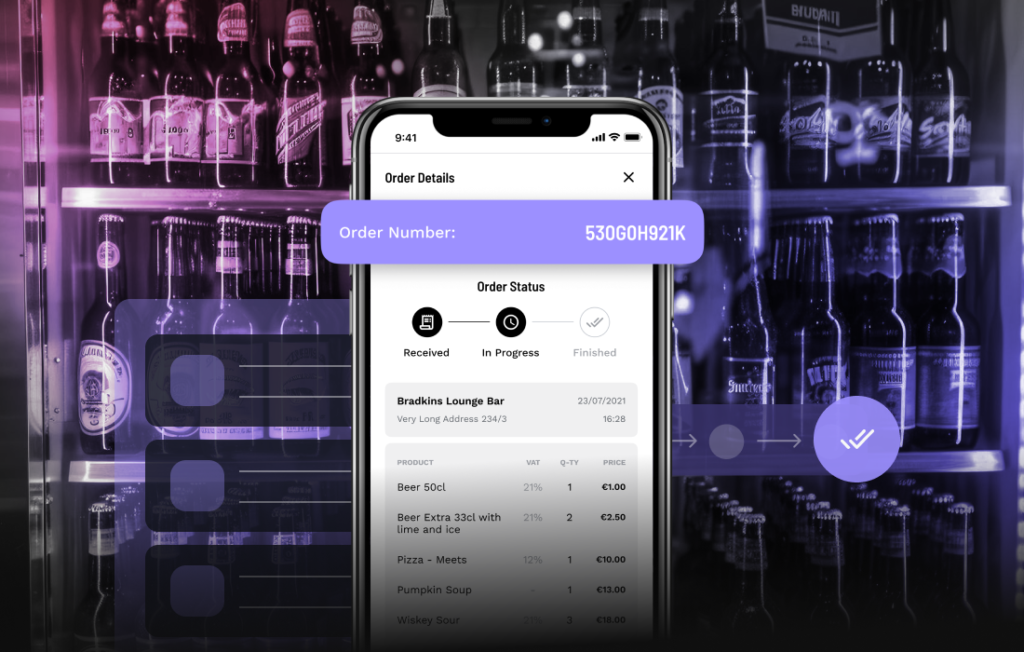
This became possible thanks to a real-time app we developed. Picture a customer opening the app at a bar: in just a few taps, they unlock a discount, claim a free drink, or join a time-limited offer. At the same time, the brand can instantly launch and schedule promotions across thousands of venues worldwide.

With interactive surveys, gamified bonuses, and smart data collection built in, the app not only keeps customers engaged but also gives companies the insights they need to build lasting loyalty.
By the way, about gamification – that’s another area we recommend paying attention to.
2. Turn Loyalty into Engagement with Gamification
Earning points alone isn’t enough to keep consumers hooked. Now imagine a loyalty program where buying a beer could unlock a mini-game, a prize, or a limited-time challenge.
Consumers scan a QR code on a bottle and join instant-win promotions, rate bar service by snapping a photo of their drink in exchange for a free one, or complete a quick survey to instantly see if they’d won a prize.

That’s precisely what our client implemented – and it worked, driving a 40% increase in repeat purchases.
Could it be applied to off-trade? Yes, and with even bigger potential.
In supermarkets or convenience stores, consumers are already used to scanning products or receipts. Imagine a shopper buying a six-pack, scanning the code on the packaging, and instantly joining a weekend challenge, unlocking an exclusive reward, or earning bonus points for trying a new product flavor.
3. Create Seamless Journeys with System Integration
A common yet frustrating problem for many FMCG brands is that their promotions aren’t aligned. Retail partners and internal teams often worked on different information, causing delays, missed opportunities, and inconsistent experiences for consumers.
In one such case, we connected our clients’ CRM, ERP, and POS systems, creating a seamless flow of data and collaboration across every touchpoint. Suddenly, teams could see promotions in real time, adjust campaigns on the fly, and work together effortlessly.
The result? Marketing efficiency improved by 30%, and consumers experienced a smooth, consistent brand journey no matter where they interacted with the company.
4. Scale Consumer Journeys Globally with Cloud Platforms
Our client faced one of the biggest challenges in the FMCG industry: they wanted to run regional campaigns that felt local, yet to keep control at the global level.
We decided to solve it by developing a cloud-based platform for managing campaigns across multiple markets simultaneously. This platform allowed each campaign to be tailored to local audiences without losing the brand’s overall consistency.
The impact was immediate – what used to take months to roll out now took just weeks.
5. Take Control of Transactions to Close the Loop
If you can’t directly manage consumer transactions in on-trade, try developing a solution for consumers to pay instantly. That worked for our client. You can find the full story in our detailed case study, but here’s a quick look at the results.
The brand gained complete control over every transaction, increased order sizes, and turned consumer interactions into actionable insights. Today, the platform manages transactions across 6,000 bars in five countries, with half a million users, and it’s ready to scale even further.
Conclusion
Imagine an FMCG customer journey where every step feels connected. A shopper discovers a promotion, plays a loyalty game, pays instantly, and continues engaging with the brand long after the first purchase.
Behind the scenes, brands can finally follow this journey in real time – seeing how campaigns drive transactions, how consumers behave, and where the next opportunity lies.
It doesn’t matter if it’s one app or several integrated solutions. What matters is that the journey is seamless for consumers and transparent for brands.
The leaders are already doing this – turning fragmented touchpoints into a single, orchestrated journey. The earlier you start, the faster your brand creates stronger connections and lasting growth.