You lose 35% of potential purchases every time there’s an empty spot where your product should be.
20% of shoppers switch to a competing brand in such cases, and 15% postpone their purchase.
And just like that, a single sale hands your competitor the shelf, the basket, and sometimes the customers for good.
That’s why the OSA tools market is expected to grow from $4.8 billion to $11.2 billion by 2034.
Brands are investing in solving this problem at scale. Think your retail execution strategy will keep pace?
Here’s how to optimize retail execution strategy with real-life cases and tools.
What Is Retail Execution?
For consumer goods brands, retail execution is ensuring your products are available, visible, correctly priced, and properly promoted in retail stores.
It covers everything that influences how shoppers find, evaluate, and purchase your products at the point of sale.
What Are Retail Execution Strategies?
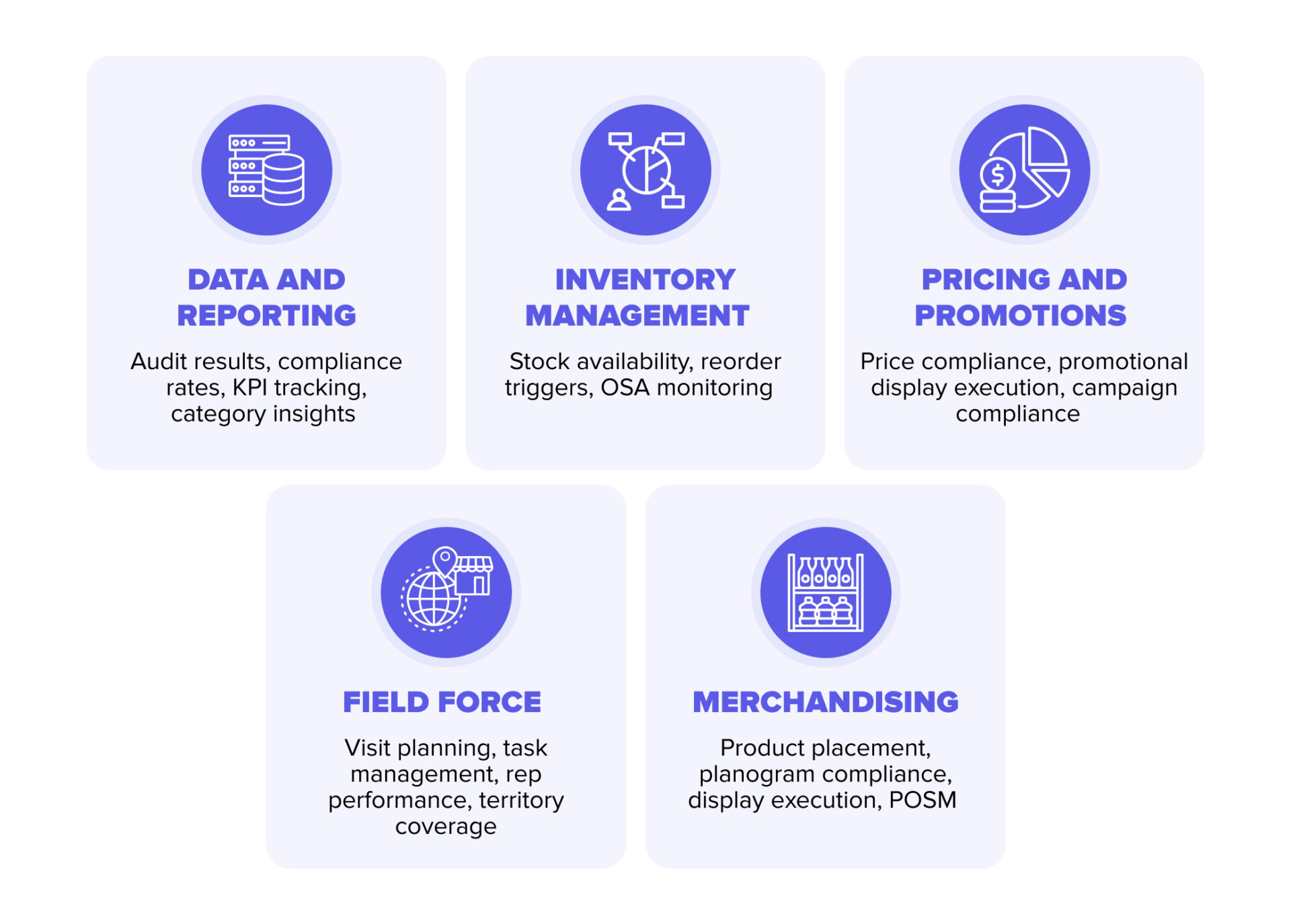
Retail execution strategies are the methods consumer goods companies use to deliver consistent in-store standards across stores, markets, and field teams.
They help ensure that products are available, correctly displayed, accurately priced, and supported by the right promotional activities.
Benefits of Strong Retail Execution
- Increased sales: Higher OSA rates reduce lost sales
- Improved brand consistency: Planogram compliance tools verify execution across hundreds of locations
- Faster decision-making: Real-time store data replaces delayed manual reporting
- Better resource utilization: Integrated SFA can increase coverage without increasing field headcount
Common Components of Retail Execution
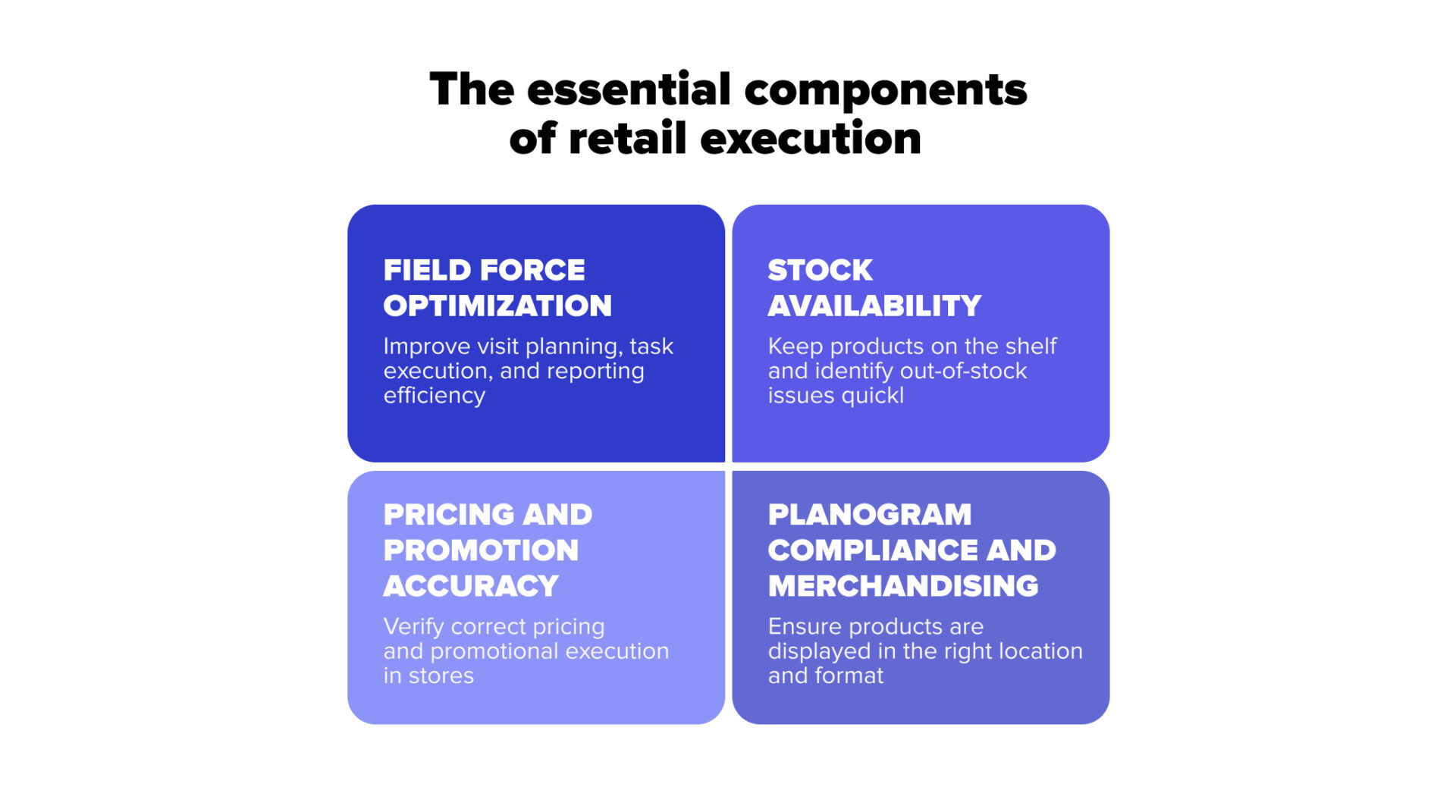
Stock Availability
If you’re wondering how to optimize a retail execution strategy, on-shelf availability is the first place to start. It’s the foundation of retail execution.
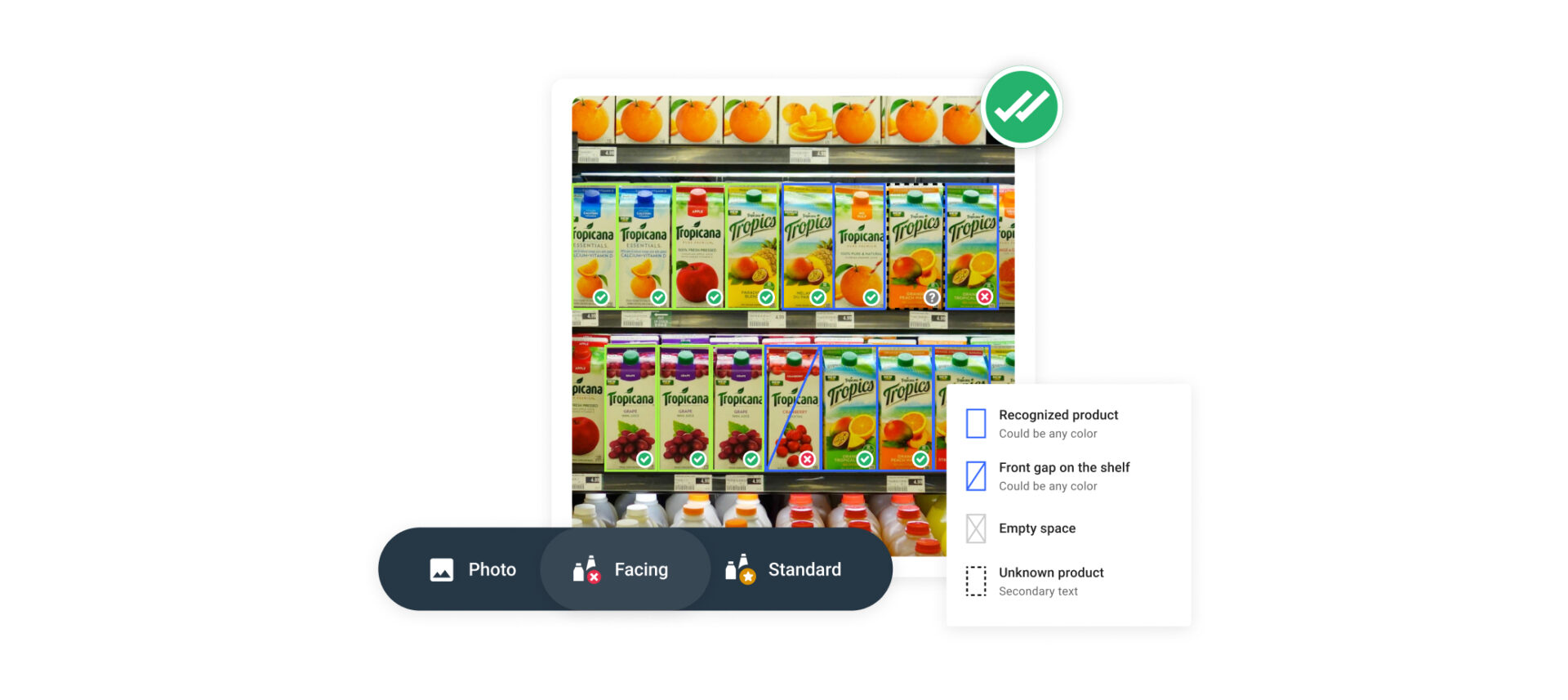
Consumer goods brands often improve this area with AI-powered Image Recognition for retail.
This technology automatically detects missing or misplaced products on the shelf. However, it has a lot more potential when used creatively.
Imagine a warehouse containing thousands of cases stacked on pallets. Traditionally, someone would have to walk through the facility and manually check inventory. Instead, drones capture images of the warehouse, and AI identifies the products from their labels and packaging.
That is exactly what one of our clients, a global poultry producer, did. As a result, the company gets a near-instant view of stock levels. A process that once took most of a working day has become much faster and more scalable.
Planogram Compliance and Merchandising
Planogram compliance ensures products are displayed in the right location, with the correct number of facings and promotional materials.
In terms of automation, it can be achieved through a combination of Sales Force Automation (SFA), Sales Territory Management (used as part of SFA or separately), and AI-powered Shelf Image Recognition.
First, Territory Management helps teams focus on the right stores. High-priority locations are visited more often, reducing the risk that compliance issues go unnoticed.
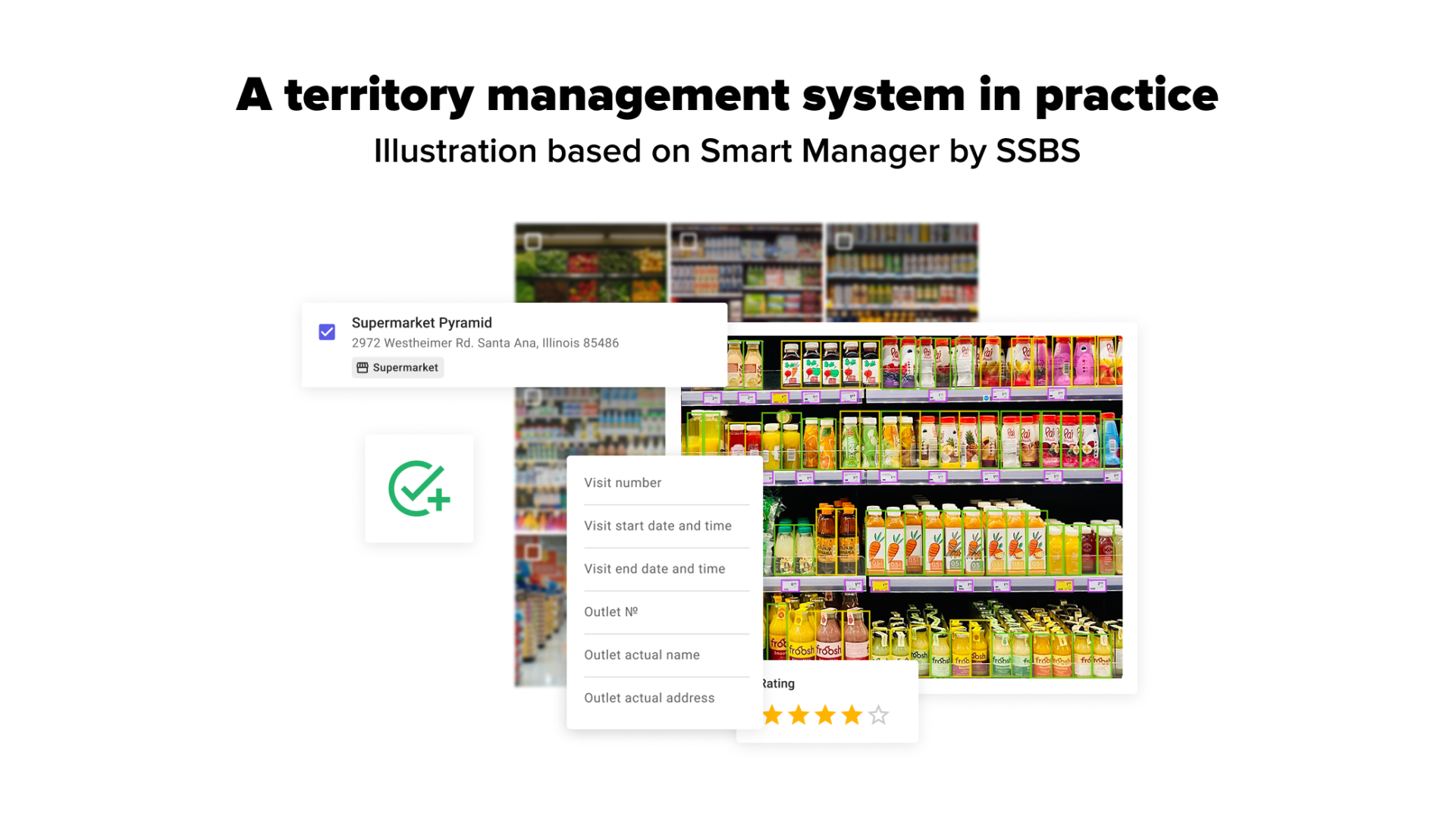
Second, SFA guides reps through store visits. Instead of relying on memory, they follow the same checks and merchandising tasks in every store.
Third, Image Recognition analyzes shelf photos and compares the real shelf with the planned layout. It automatically identifies missing SKUs, incorrect facings, or products placed in the wrong position.
Think of a sales rep standing in front of a shelf. Rather than manually counting products and comparing them with a printed planogram, they take a photo. Within seconds, the system highlights what is out of compliance and what needs to be fixed.
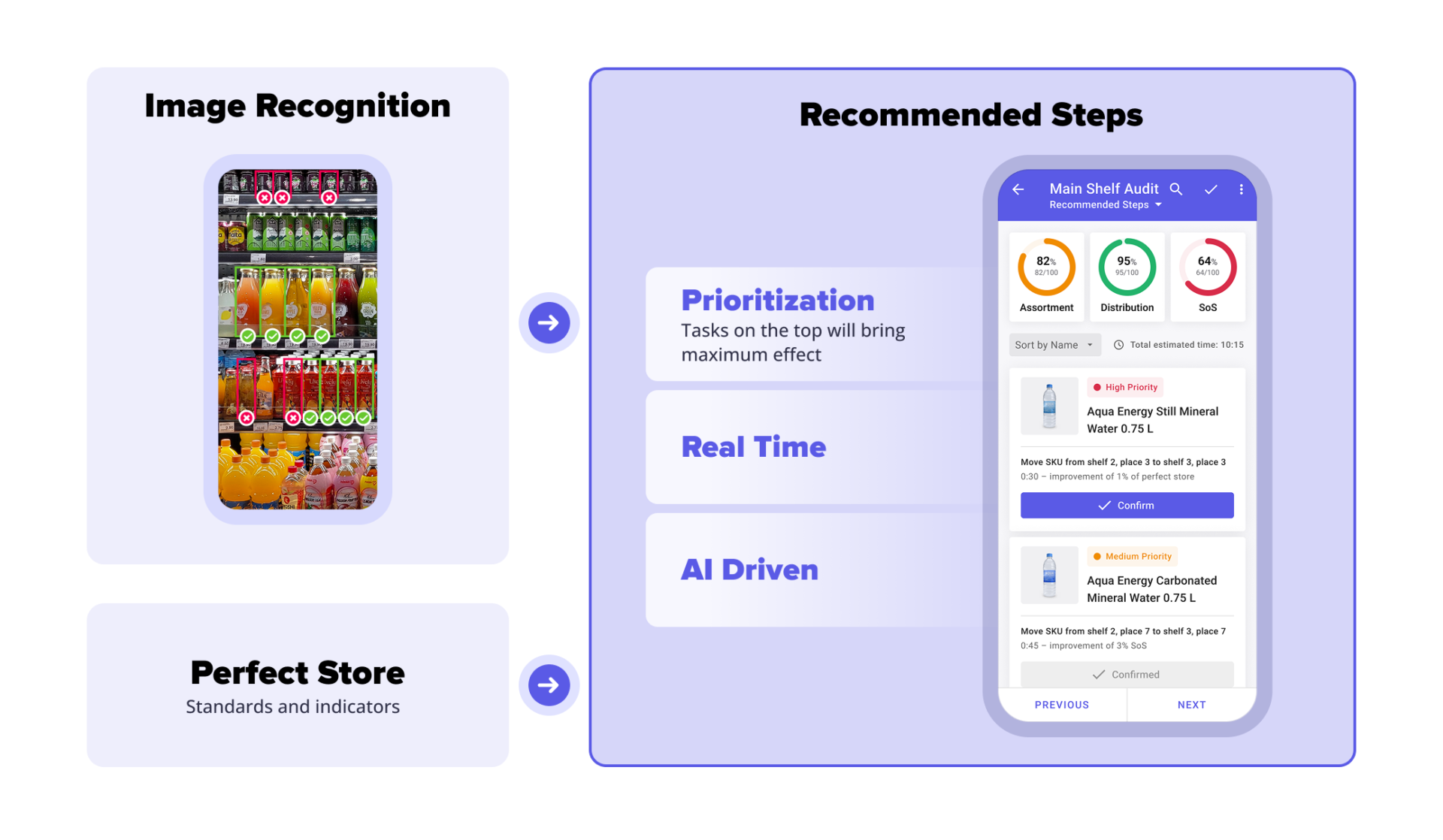
For one of our clients who was looking to improve their retail business strategy execution, the SFA + IR combo resulted in:
- 30% reduction in shelf audit time
- 50% growth in sales volume
Pricing and Promotion Accuracy
Promotions only work when they are executed correctly in-store.
Image Recognition tools verify pricing on both paper and electronic tags and flag discrepancies immediately. That’s a crucial thing for an effective retail campaign execution.
However, Image Recognition only shows what is happening in the store. Solutions such as Trade Promotion Management and Optimization help teams plan, manage, and evaluate promotions before, during, and after execution.
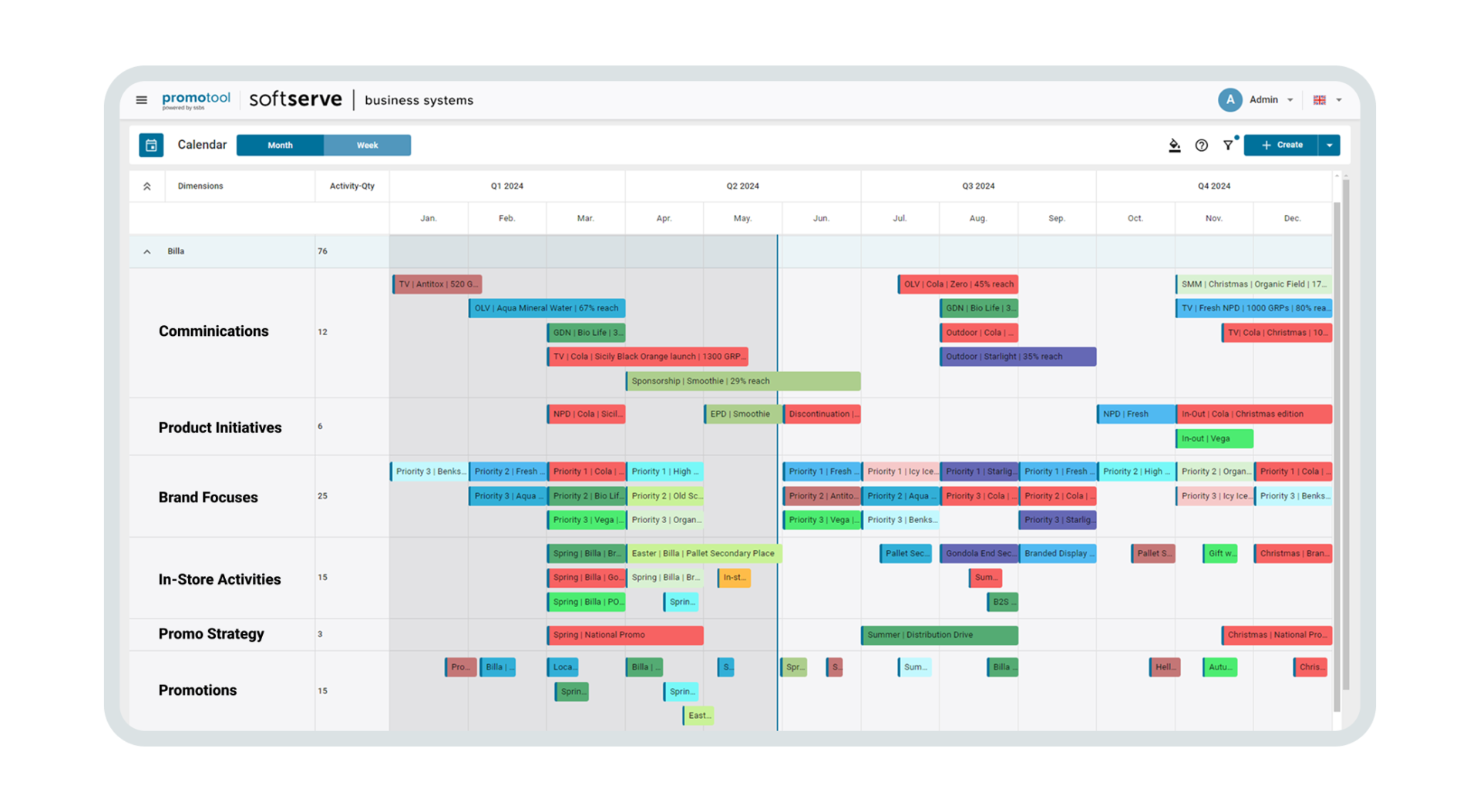
Imagine the marketing team approves a promotion, but some stores continue displaying the old price because the update never reached them.
Image Recognition flags the discrepancy during the first store visit, while TPM provides the promotion details needed to identify what should have been implemented and where corrective action is required.
Field Force Optimization
FMCG Sales Force Automation with sales territory management features helps field teams plan routes, complete tasks, and report results more efficiently.
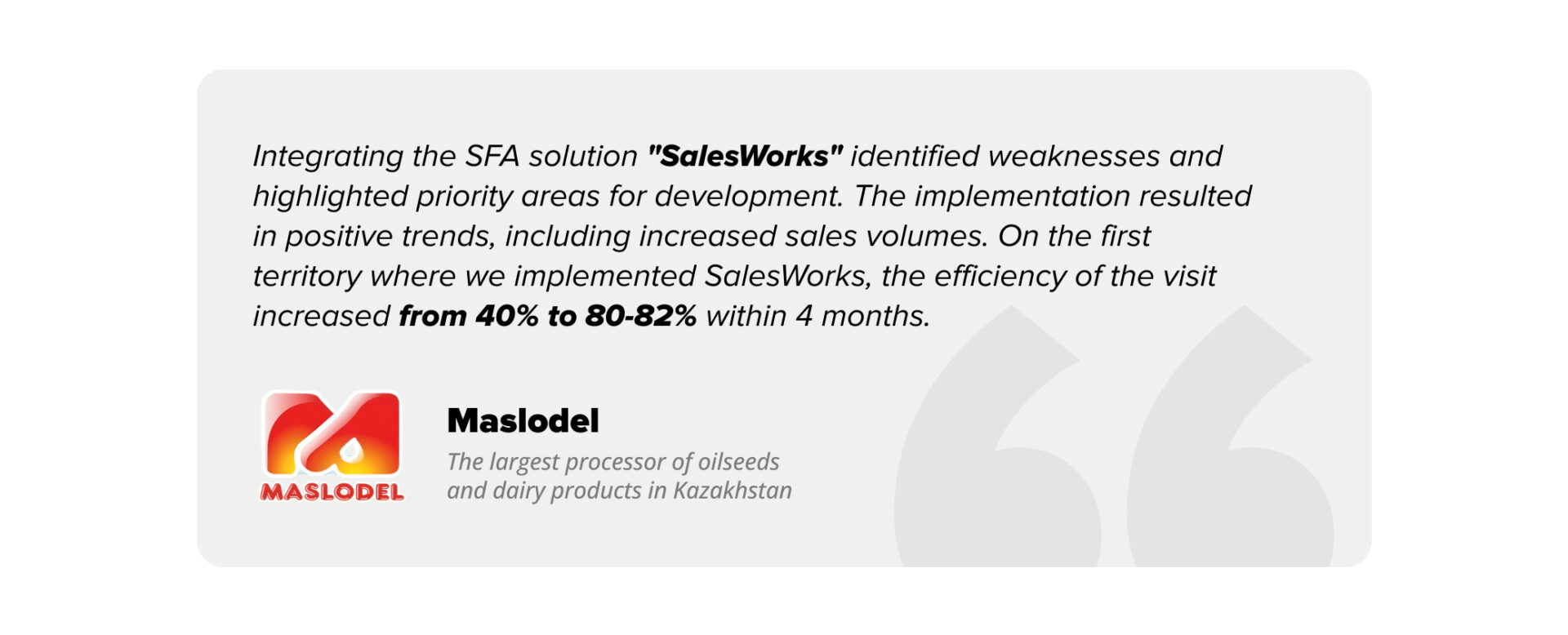
Let’s see how it looks for SSBS clients who use our SFA, SalesWorks.
Say, a regional manager is planning the week’s store visits.
The system highlights stores with execution issues, low stock levels, or upcoming promotions and automatically assigns tasks to field teams.
At the same time, every outlet has its own KPIs based on its format, sales potential, and local priorities. A convenience store may be measured on availability and visit frequency, while a hypermarket may focus on promotional execution and shelf share.
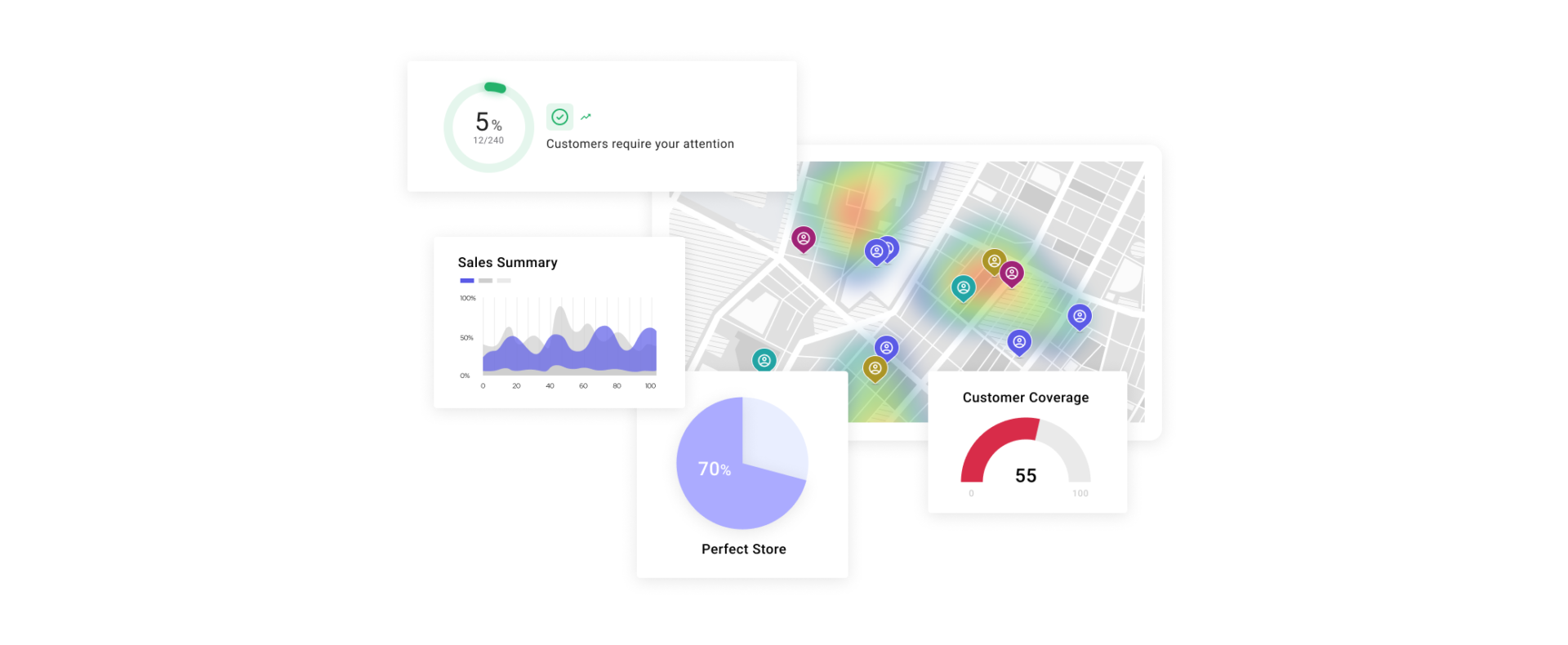
When sales reps arrive at the store, they already know what needs to be checked and which targets matter most.
Orders, shelf audits, and merchandising activities are captured in real time, giving managers immediate visibility into performance across territories and helping teams focus on the actions that drive results.
Key Retail Execution Strategies for Better Store Performance
Here, we will start with a short overview of general strategies that help consumer goods brands improve their retail execution management process.
Why short? Because strategies are mostly clever uses of those components we’ve already discussed. So, let’s break it down into five steps, then dive into real-life cases showing how it works.
Use AI-Powered Auditing and Analytics
Retail execution generates more data than field teams, and managers can realistically process it manually.
Thus, if you want to improve your retail execution, start by using AI-driven solutions to turn that data into actionable insights in real time.
Ways to do that are:
- synchronizing the data across departments
- replacing manual audits with Image Recognition
- prioritizing stores based on execution risk
- turning insights into immediate actions
- tracking KPIs at the outlet level
Manage Field Teams with Real-Time Store Data
As we’ve already established, real-time data helps management of sales territory teams focus on the right priorities in their retail business strategy execution.
However, the key question is how to use retail execution solutions effectively. The goal is not to collect more data, but to make that data actionable.
Let’s say shelf images reveal recurring out-of-stocks across a group of stores. With the right solutions in place, managers can immediately adjust visit priorities, assign corrective tasks, or increase visit frequency.
SSBS’s Sales Territory Management solution, for example, allows managers to schedule meetings with field representatives directly in the system, define the purpose of the discussion, and assign follow-up actions.
Communication, tasks, and progress tracking remain in one place. This way, it is easier to ensure that execution issues are not only identified but also resolved.
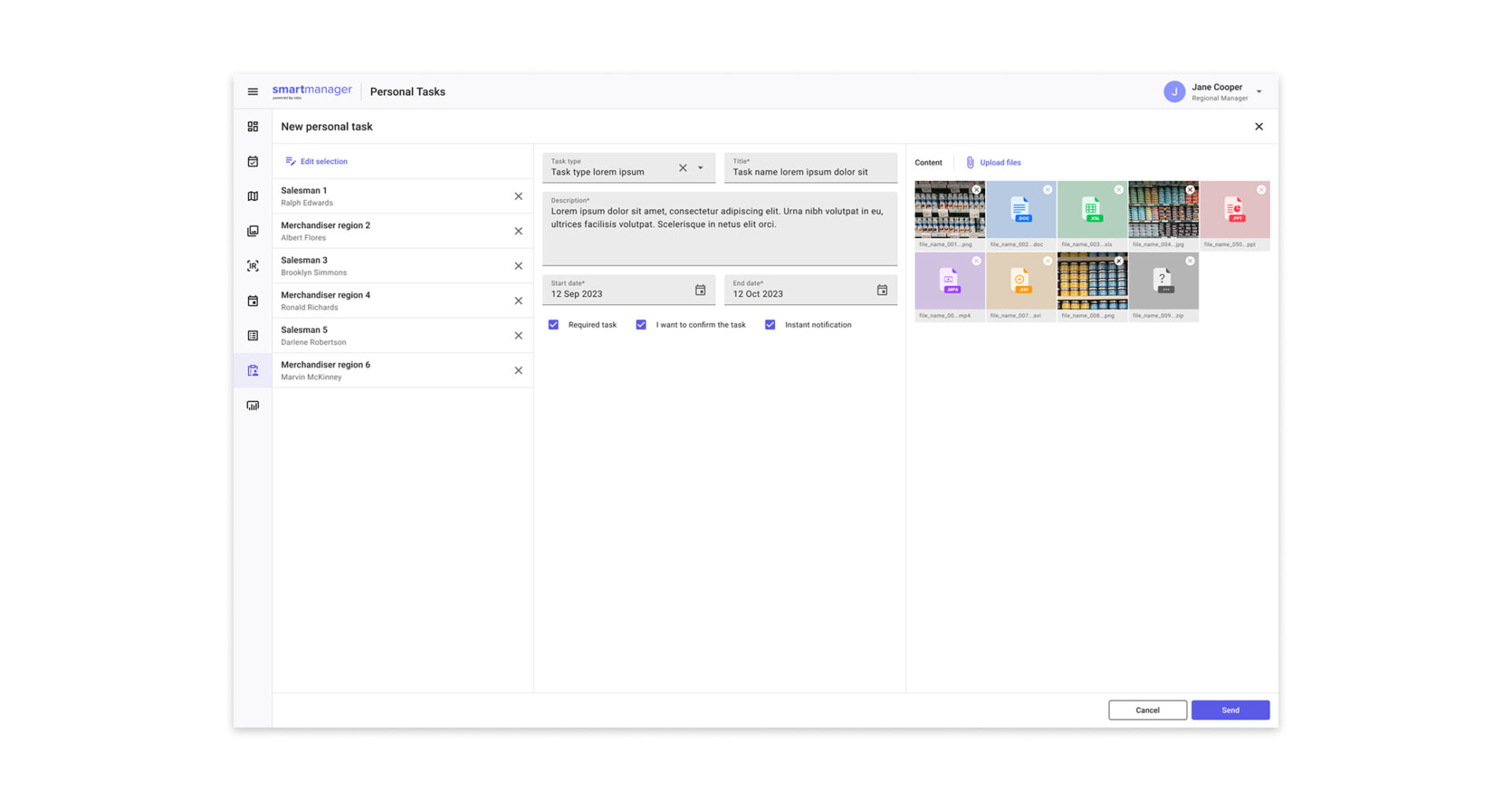
In other words, the most effective retail execution solutions use real-time store data. It continuously guides field teams toward the actions that will have the biggest impact on sales and execution.
Improve Shelf Availability and Merchandising Execution
Image Recognition remains a powerful technology. However, with Augmented Reality to reinforce it, IR becomes even more effective.
Imagine a rep auditing a long beverage aisle. With standard IR, they stop repeatedly to take separate photos of each section. With AR-powered IR (like the one SSBS provides), they can scan the shelf continuously while the system captures and analyzes the required data in real time.
The result is a faster retail execution process, audits, greater shelf visibility, and more time for in-store corrective actions.
Centralize Communication and Mobile Tasking
Disconnected systems create disconnected execution.
When merchandisers, sales representatives, and back-office teams work in separate platforms, information becomes fragmented and difficult to act on.
B2B unified commerce, along with a connected ecosystem of solutions, gives every team access to the same data, tasks, and compliance metrics.
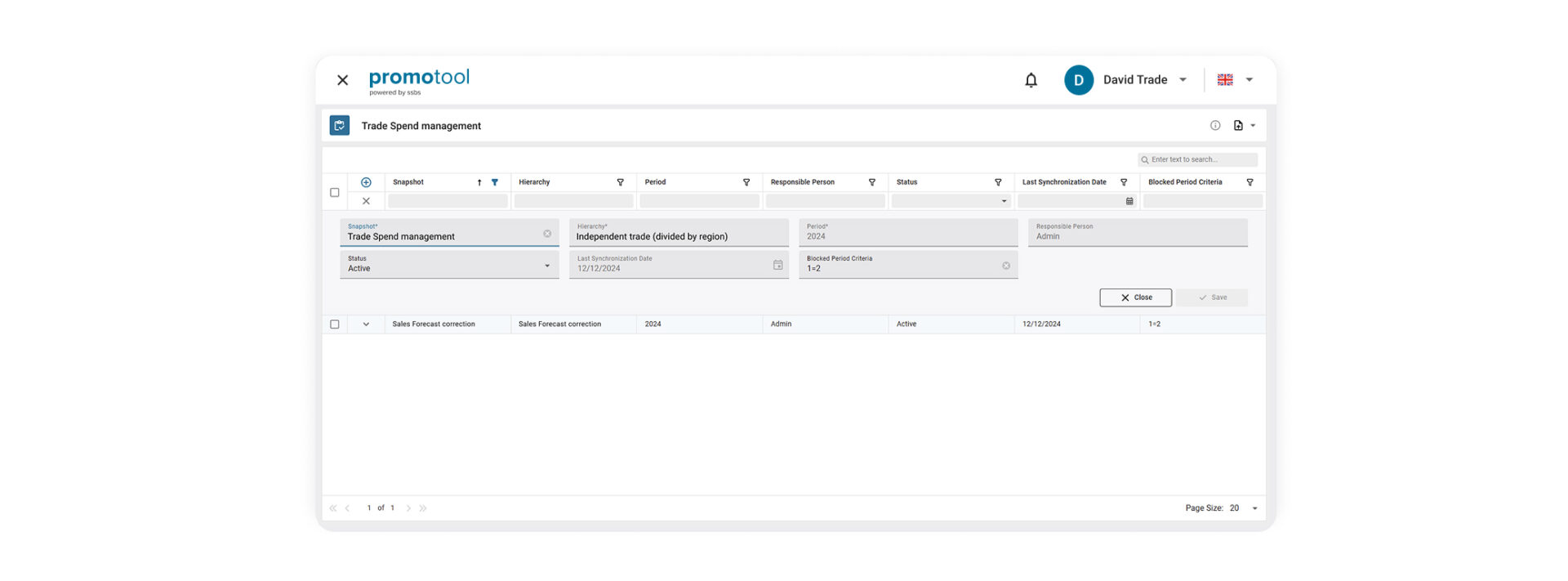
For one of our clients, the shared source of truth became our TPM/TPO solution. It may sound unusual at first, but it makes sense once you know the full picture.
The thing is, PromoTool is not limited to promotion management. It also includes a dedicated trade spend management module.
As a result, sales, finance, and management teams all worked from the same data, using a single system to plan budgets, track spending, and measure results.
The lesson here is simple: don’t force your processes to fit a platform. Instead, identify where most of your critical decisions and activities happen, and build your ecosystem around that.
Measure Results and Continuously Optimize Execution
Understanding how to improve retail execution starts with measurement.
The goal is to use what you learn from each visit to improve the next one. That requires tracking performance consistently and acting on the results.
Key metrics include:
- OSA rate by store and SKU
- Planogram compliance percentage
- Promotional display execution rate
- Visit frequency versus planned coverage
- Time-per-visit trends
3 Examples of Retail Execution Strategies in Action
These three cases take different approaches to retail execution strategies. What connects them is the ability to turn field data into clear actions while there is still time to make a difference.
AB InBev: Solving the On-Trade Audit Problem at Scale
The retail execution strategy angle: making AI work where standard retail models struggle.
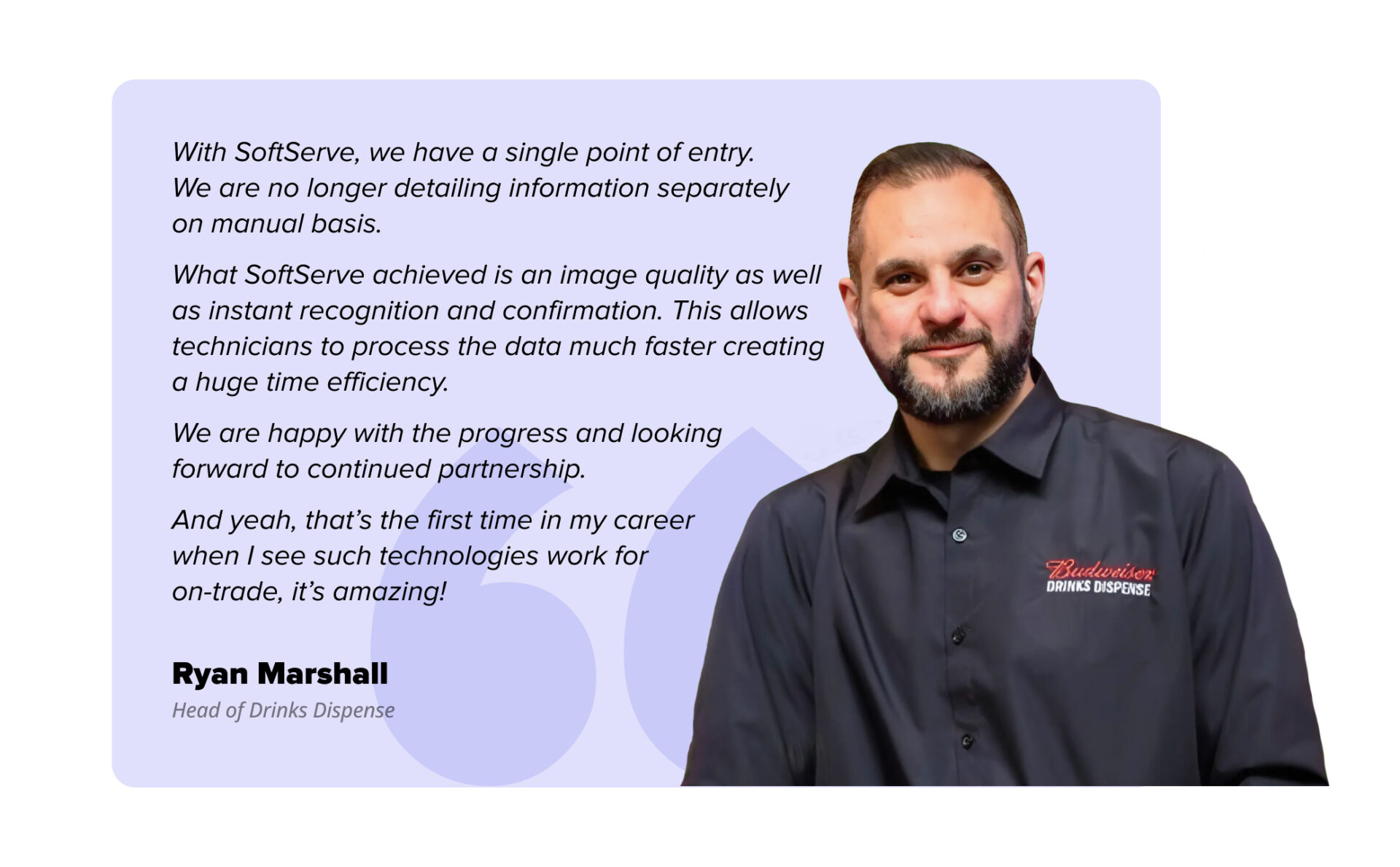
Budweiser Brewing Group supports more than 40,000 pubs and clubs across the UK. A typical visit involves checking tap layouts, confirming brand-to-line connections, verifying contract compliance, and identifying shared beer lines. Capturing all of that accurately, across thousands of venues, is a challenge in itself.
That’s a lot of tasks, and collecting this information manually across so many locations is difficult. However, scale wasn’t even the biggest challenge.
The environment itself created the problem.
Image Recognition for retail usually performs well in bright, organized retail environments. Pub cellars are very different. Low lighting, cluttered spaces, and difficult camera angles reduce the accuracy of standard Image Recognition models.
Instead of using an off-the-shelf solution, SoftServe Business Systems trained its neural networks on real cellar images. This approach delivered 98% recognition accuracy in on-trade conditions and generated reports in under five seconds.
The impact went beyond faster audits. The solution helped:
- Improve contract compliance
- Automate billing for shared beer lines
- Provide reliable data for portfolio planning
- Audit SKUs, price tags, taps, fridge contents, and brand share
- Synchronize audit data in less than 30 seconds
Leading FMCG Coffee Company: What Happens When You Unify the Ecosystem
The retail execution strategy angle: coverage growth through integration, not headcount.
This leading FMCG coffee company used separate systems for merchandisers and sales representatives across multiple markets.
As a result, data processing was slow, KPIs were inconsistent, supply and promotion planning were disconnected, and field teams spent too much time on administrative work.
Rather than improving retail execution with another tool, the company focused on integration.
It implemented a Holistic Sales Digitalization Platform by SSBS that combined integrated FMCG Sales Force Automation and DMS capabilities with AI Shelf Image Recognition.
The results appeared within three weeks.
| SKU recognition accuracy | 97%+ |
| Time from photos to report | Under 10 seconds |
| Visit duration | Under 10 minutes |
| Price tag recognition | 87%+ (paper and electronic) |
| Data accuracy across the platform | 99% |
The broader business impact was equally significant:
| Coverage growth | 20% |
| Office structure savings | 9% |
| Distributor system optimization | 30% |
For many organizations, the most important result is the 20% increase in coverage without increasing field headcount.
It means your FMCG sales strategy can reach more stores while keeping field team costs under control.
One effective tip: The benefits of Sales Force Automation increase when Image Recognition is fully integrated into your SFA platform.
A standalone Image Recognition tool can show what is happening on shelves. An integrated solution can also create tasks, recommend actions, and record outcomes within the same workflow.
Mattoni: Building a Retail Execution Ecosystem in CEE
The retail business strategy execution angle: replacing third-party audit services with owned, real-time data.
Mattoni is a leading beverage producer and PepsiCo distributor in Central and Eastern Europe.
The company needed fast, accurate store-level data, including SKU and price compliance information. It also needed to deliver that data to field teams and back-office staff without changing how they worked day to day.
Manual audits provided the necessary data, but they came with significant drawbacks:
- Consumed valuable field time
- Relied on third-party providers
- Increased audit costs
- Delayed decision-making by creating a gap between what happened in the store and when teams could respond
To address this, Mattoni integrated AI Shelf Recognition from SoftServe Business Systems into its broader retail execution ecosystem. The solution delivered:
- Near-real-time insights with 95%+ SKU recognition accuracy
- A 360° store view covering primary placements, secondary displays, pallets, and KPI validation
- Lower costs by replacing third-party audit services with in-house Image Recognition data collection
- Faster audits, giving field representatives more time for selling activities
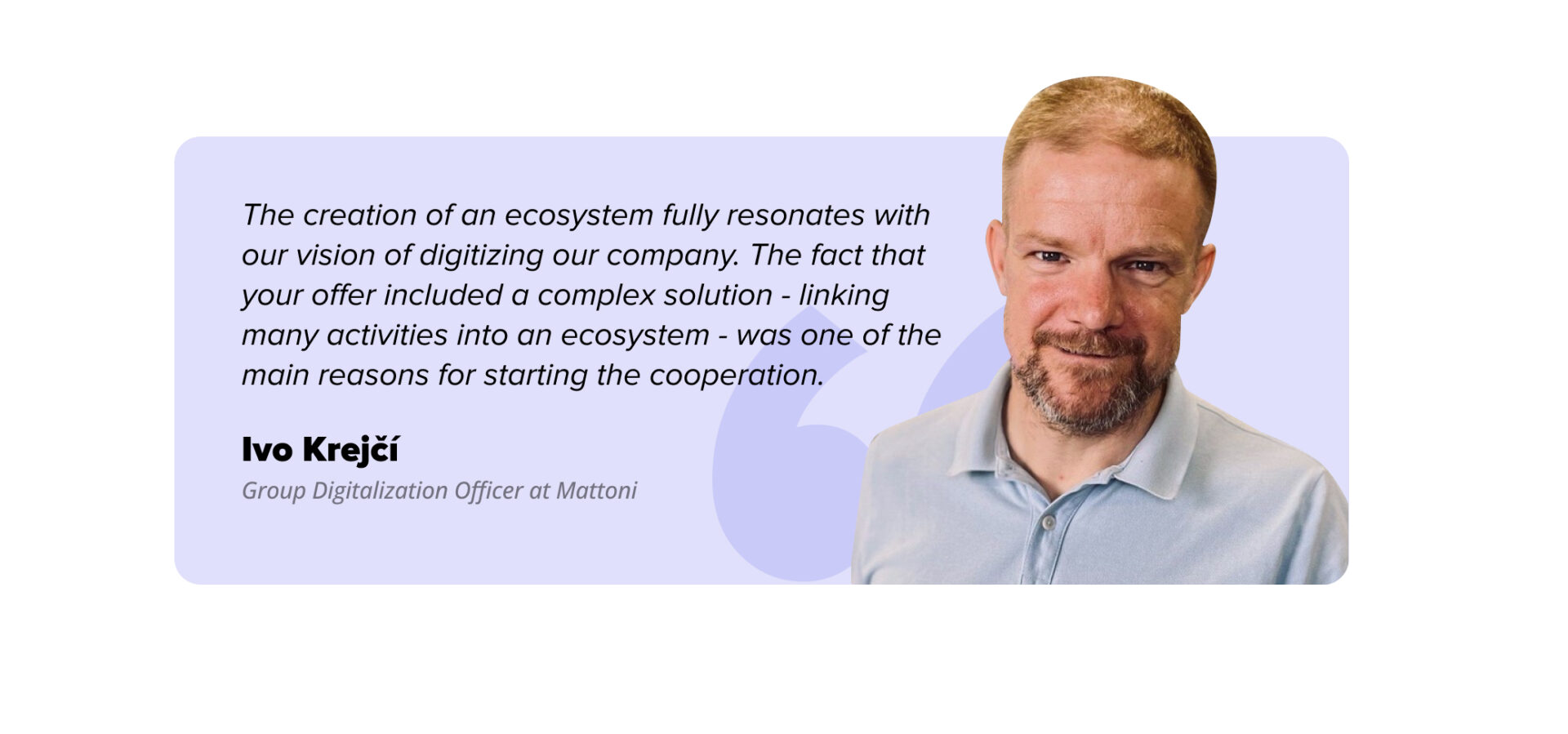
The value goes beyond faster audits.
Real-time store-level data helps companies:
- Respond to issues while they still matter
- Allocate field resources based on current store conditions
- Adjust territory coverage using real store performance data
- Reduce reliance on reports that arrive days after a visit
Instead of waiting for delayed reports, managers can make decisions based on what is happening in stores right now.


