Every few years, AI provides us with a new technology to discuss, experiment with, and find its applications to outperform competitors. But with FMCG Machine Learning, the story is different.
ML has quietly been embedded in FMCG processes for years, often without the fanfare other types of AI receive. From demand forecasting and inventory optimization to trade promotion effectiveness and personalized recommendations, ML has been steadily helping companies make data-driven decisions.
In this article, we will discuss this backbone of most modern FMCG processes. We will not only explain how its application is different from other AI techs but also showcase real-world solutions and leading companies that are significantly benefiting from ML.
Let’s start with theory.
What Machine Learning Really Means (In Plain Words)
Imagine a mathematical system or formula – a model. You prepare data and feed it into this FMCG Machine Learning model so it can start recognizing patterns. Suppose it’s trying to predict how many bottles of a new juice will sell in different stores.
- The model starts with a guess.
- If it predicts too many for one store and too few for another, it tweaks the numbers slightly.
- After many rounds, it can make more accurate predictions for all stores.
In other words, the model learns from examples instead of being programmed with fixed rules.
Where to Find the ML Model?
You don’t always have to create a model from scratch. There are two main options:
- Use a pre-built model or platform: Many companies offer ready-made ML models designed for common business problems, like demand forecasting, trade promotion optimization, or inventory planning.
- Build your own model: If your business problem is unique, you can create a custom FMCG Machine Learning model tailored to your specific data and needs.
How ML in FMCG Works Differently Than Other AI
Look at each AI type as a solution to very specific problems.
Rule-based AI follows fixed instructions: “If X happens, do Y.” It can’t learn from new data – it only does what it’s programmed to do.
Machine Learning for FMCG, on the other hand, learns from examples. It notices patterns in data and improves over time without needing humans to write new rules for every situation.
Other AI types, like Natural Language Processing or Computer Vision in the FMCG industry, often rely on ML underneath. The difference is that ML focuses specifically on making predictions or decisions based on data.
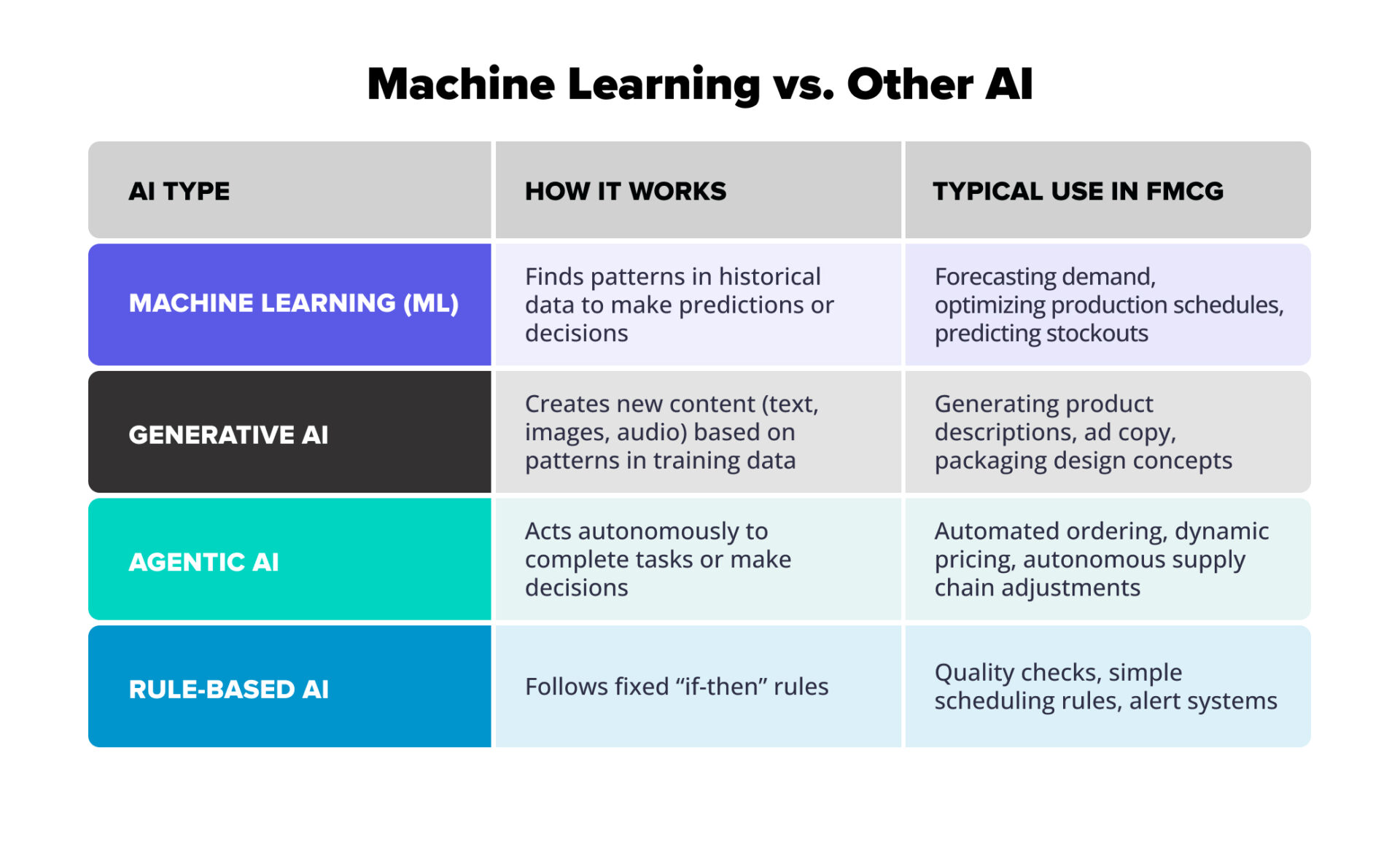
In short: ML is the part of AI that gets better with experience, while other AI may follow fixed logic or apply ML for specific tasks.
Key Applications of ML in FMCG
FMCG companies sit on huge amounts of data, but it’s useless unless they can analyze it and turn it into insights. That’s exactly what an ML-driven system is built to do. Let’s see how this capability applies to the industry.
First, imagine a beverage manufacturer that decided to adopt the ML technology. What would it gain?

Demand Forecasting
Suppose the brand wants to know how many bottles of its new iced tea will sell next month in different supermarkets. In this case, the Machine Learning for FMCG system looks at past sales, seasonality, holidays, weather, and promotions to forecast demand for each store.
Supply Chain Optimization
The manufacturer needs to ship juice boxes from the factory to hundreds of stores without delays. ML helps by analyzing traffic, fuel costs, and delivery times to recommend the fastest, most cost-efficient routes.
Personalized Marketing
The company has an idea to send a digital coupon for its kids’ juice packs to parents who often buy school snacks.
Let’s say it used our customer engagement services and transformed its B2C FMCG customer journey to the point where the brand now has more detailed information about its consumers. With this data, an ML system can automatically identify which shoppers are most likely to respond and deliver the coupon only to them.
How it works in real life – read our case study.
Consumer Insights
Machine Learning in the FMCG industry can scan distributors’ orders to see that distributors tend to reorder sports drinks and energy drinks together, especially before sporting events or summer holidays. Information about such product pairings and buying patterns can be used to avoid stockouts and run promotions at the right moments.
Product Development
The brand wants to launch a new drink, but what do people actually want? ML scans reviews, online posts, and trend data to spot rising interest in plant-based protein shakes, giving the brand a ready-to-go plan!
Quality Control
Some bottles on the brand’s production line may be underfilled or capped incorrectly. An ML-driven computer vision system checks every bottle image in real time and flags defects instantly.
Fraud Detection
A distributor suddenly orders far more energy drinks than usual, raising suspicion. Machine Learning in FMCG can compare the order to past patterns and alert the team if the spike looks abnormal.
Customer Churn Prediction
The manufacturer notices that some loyal buyers of its cold brew coffee have stopped purchasing every week. ML in FMCG tracks changes in purchase frequency and identifies customers who may be at risk of leaving, allowing the marketing team to step in with targeted offers and win them back.
Benefits of Machine Learning in FMCG
Let’s wrap up this theoretical part by summarizing the four main advantages ML provides to FMCG companies.
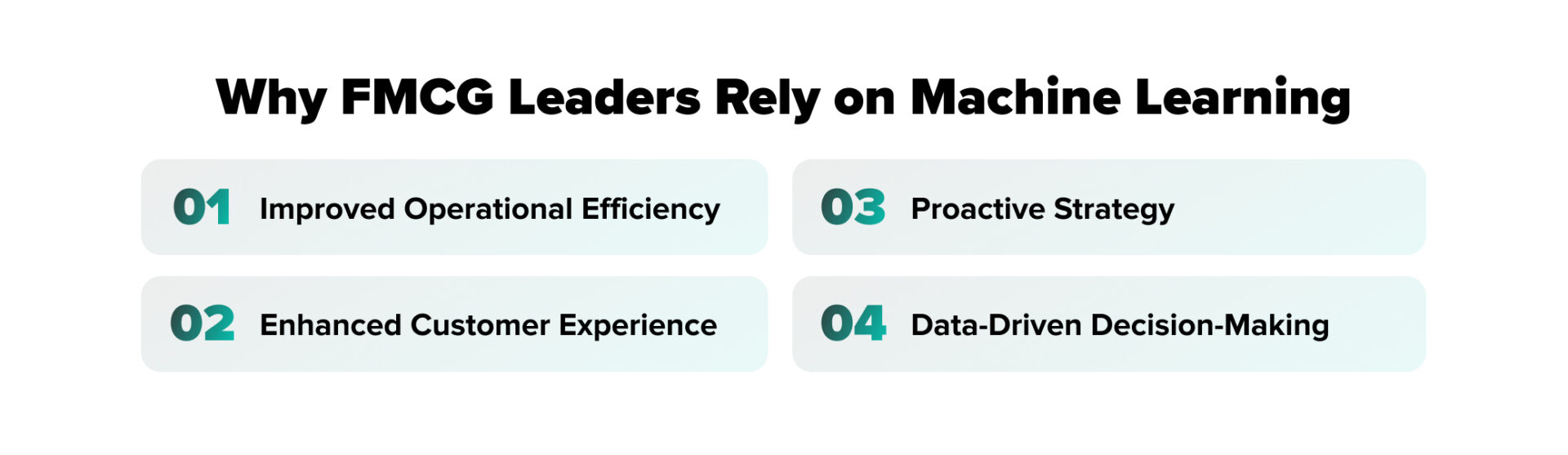
Improved Operational Efficiency
- Streamlines production and distribution, saving time and costs.
- Makes processes smoother so teams can focus on growth.
- Reduces errors and waste in manufacturing and logistics.
Enhanced Customer Experience
- Delivers personalized offers that match shopper preferences.
- Helps brands respond quickly to changing consumer needs.
- Makes interactions with the brand more relevant and engaging.
Proactive Strategy
- Spots trends and risks before they become problems.
- Helps plan campaigns and launches with foresight.
- Allows the brand to stay ahead of competitors.
Data-Driven Decision-Making
- Turns complex data into clear insights for smarter choices.
- Guides decisions in marketing, production, and sales.
- Replaces guesswork with evidence-backed planning.
Finally, time to look at how FMCG Machine Learning benefits not imaginary systems and businesses, but real ones.
5 Use Cases of Machine Learning in the FMCG Industry
Since ML isn’t a new concept for fast-moving consumer goods companies, the whole discussion now is about its scale and impact. Here are five concrete examples of how FMCG Machine Learning is essential to some foundational industry tools and big players.
ML in TPM for Baseline Calculations
The problem with baseline calculations is one of the biggest challenges for the FMCG industry.
Companies need to analyze a massive amount of historical data to understand what “normal” sales would look like without promotions. And some companies don’t even have that historical data in the first place.
An ML-driven Trade Promotion Management solution (like the one SSBS developed) solves this challenge on several levels.
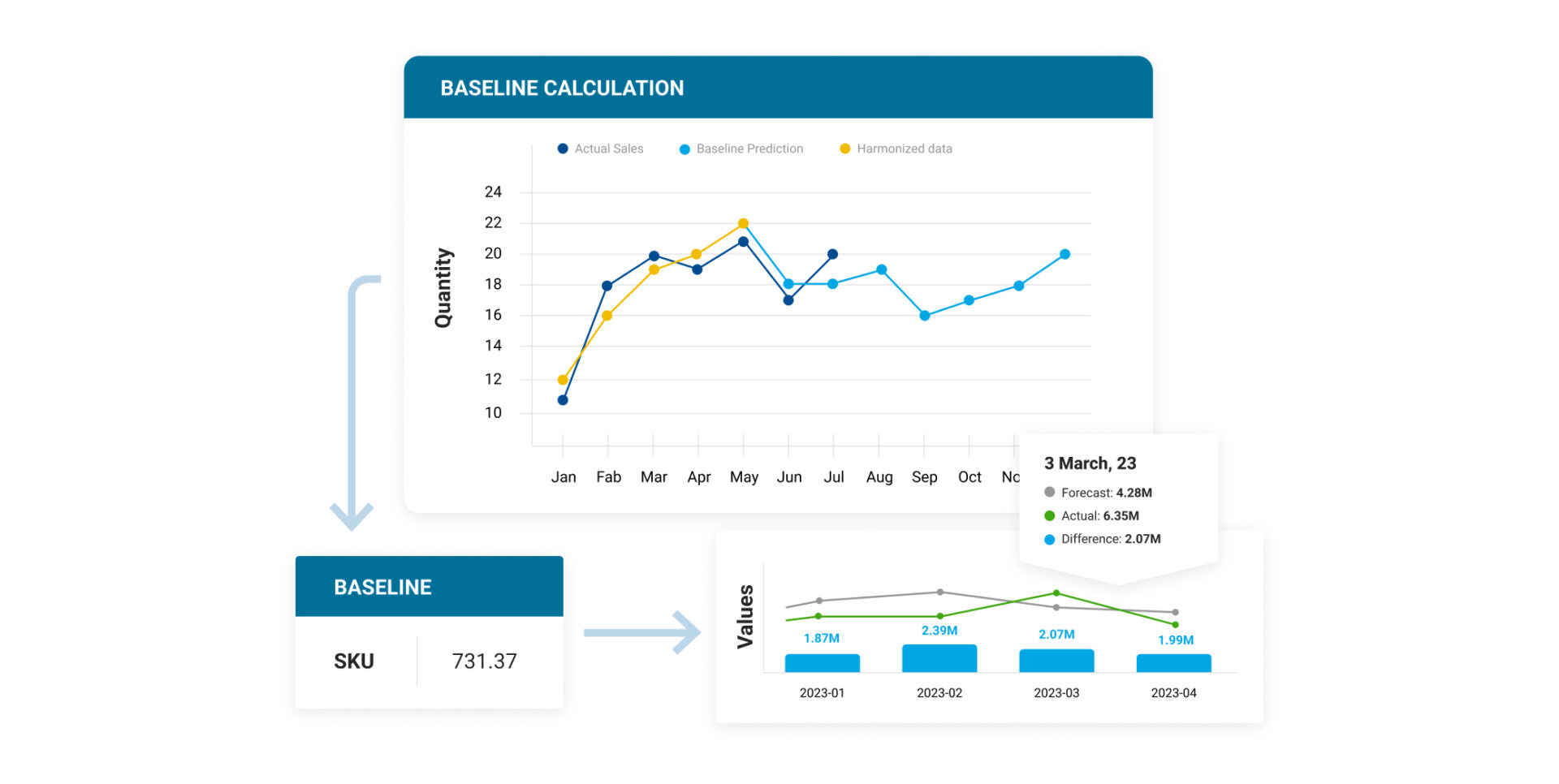
- TPM organizes and filters your data by promos, time periods, products, sales channels, etc. Instead of digging through endless spreadsheets, the system automatically pulls together all relevant records.
- When ML steps in, it evaluates every possible price situation your product has been in (according to the data you’ve provided) and learns how sales reacted in each case.
- By comparing these patterns, the system removes the “promotion effect” and calculates what sales would have been under normal conditions.
The result is a reliable baseline that allows you to measure true uplift from any campaign and plan future promotions with much more confidence.
ML for Shelf Audit
Not all Image Recognition for FMCG systems are AI-driven. Unfortunately, some providers for the FMCG market still rely on manual analysis of shelf images and deliver results only after 24 hours. That’s not our case.
SSBS’s AI product recognition solution uses ML in several ways:
- We use neural networks at the core – ML models that process images by converting pixels into numbers, treating them as patterns rather than raw data. These neural networks first identify simple features like edges, colors, and shapes, then build up to complex ones such as logos, packaging, and subtle differences between SKUs.
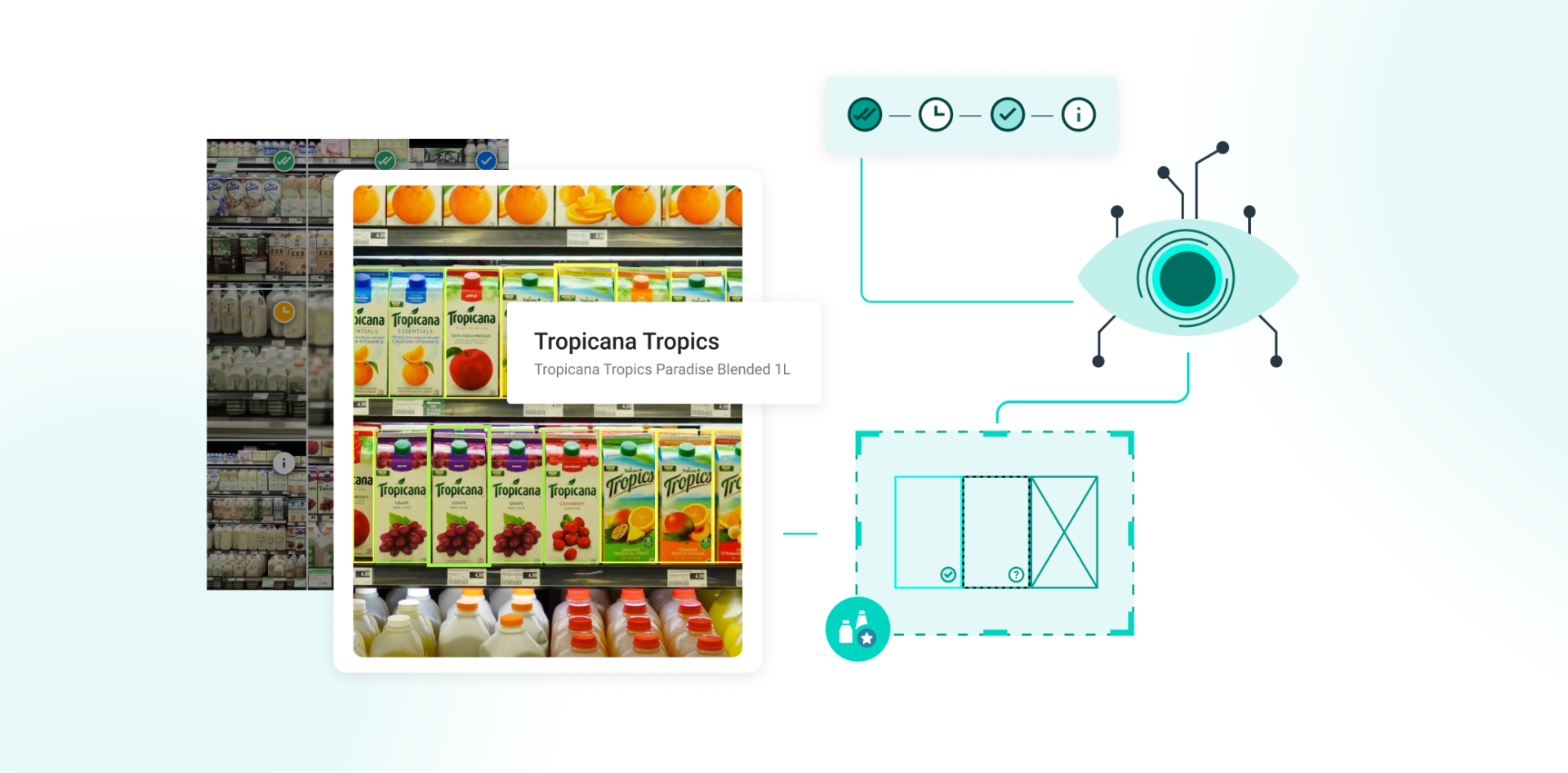
- Our Image Recognition solution provides real-time reports on product placement and availability.
- The shelf recognition system is supplemented by Recommended Steps of the Visit – actionable recommendations that guide field teams on what to do next.
Instead of just showing which products are missing or misplaced, the additional ML-driven solution suggests concrete actions: restock a certain SKU, adjust pricing labels, or correct shelf placement.

These days, ML is also essential for solutions like sales force automation for FMCG (such as our SalesWorks) and for the broader decision-making processes like determining the best FMCG sales strategy.
Now, let’s talk about the famous FMCG companies and the results they’ve achieved.
How Unilever Uses ML to Reduce Waste and Increase Ice Cream Sales
Ice cream demand is highly dependent on the weather. Knowing this, Unilever used FMCG Machine Learning to transform its ice cream supply chain.
Unilever’s ML-powered ice cream supply chain works as a closed feedback loop.
The company feeds an ML model with weather and demand data so that the system predicts sales more accurately, allowing factories to adjust output in line with consumer needs.
Inventory systems then step in to reroute products quickly if unexpected demand shifts occur, while logistics are optimized to reduce costs and energy use.
At the retail end, AI-enabled freezers provide live stock updates from stores and feed this information back into the system.
As a result:
- ML predicts demand, helping factories cut waste and save up to 10% of valuable ingredients like vanilla and cocoa.
- AI-enabled freezers helped boost sales by up to 30% in markets like Denmark and the US.
- With FMCG Machine Learning in place, the company achieved better forecasting, optimized logistics, and faster decision-making.
PepsiCo Saves 4,300 Workdays per Year With ML
PepsiCo leverages Azure Machine Learning to predict store-level demand and provide field teams with actionable daily priorities. Their Store DNA tool analyzes sales, inventory, weather, and local events to guide stocking decisions, improving forecast accuracy by 40%.
By driving FMCG automation with MLOps, PepsiCo has freed up 4,300 workdays per year, allowing employees to focus on higher-value activities.
The result:
- Better-stocked shelves
- Faster execution
- Measurable growth across multiple US markets.
Nestlé Boosts Forecast Accuracy +7% and Cuts Inventory by 1.2 Days With ML
Nestlé has integrated SAS analytics and FMCG Machine Learning into its global demand planning, helping the company predict consumer demand more accurately across thousands of products and markets.
By standardizing planning for 450 demand planners and leveraging ML-assisted tools, Nestlé can assess the impact of promotions, reduce forecast bias, and improve supply chain efficiency.
As a result:
- Forecast accuracy rose from 74% to 81%
- Case fill rates increased from 98.1% to 99.2%
- Finished goods inventory dropped by 1.2 days
- Customer service levels improved by 50 basis points.
Conclusion
Machine Learning in the FMCG industry isn’t a new concept. Moreover, it’s a basis for FMCG automation, end-to-end supply chain efficiency, predictive demand planning, personalized customer engagement, and better sales and marketing strategies. And without this solid ML foundation, it’s hard to successfully implement more experimental and advanced types of AI.