Moving toward B2B eCommerce is common among innovative FMCG companies. They know: the sooner it becomes part of the RTM strategy, the better.
However, it often comes with one major concern: many brands are unsure how to bring their retail partners online after launch, and worry this could jeopardize the entire project. And they’re not wrong: the failure rate of B2B eCommerce projects across industries reaches around 90%.
While there’s no isolated data for CPG brands, our CPG B2B experiences suggest the number is similarly high. However, in most cases, it’s the brands to blame.
In this article, we’ll explore the successful cases of our clients that went far beyond just implementing a well-developed platform. We will share their strategies for overcoming customers’ resistance, so now their retail partners actually use, trust, and return to their eCommerce platforms.
Before diving into these strategies, let’s first look at what makes B2B CPG unique and why it can’t be treated like any other eCommerce segment.
What Makes CPG B2B Platforms Different from Other eCommerce Solutions
CPG B2B platforms are part of a broad eCommerce landscape. From the outside, they may seem like any other online store, with a catalog, prices, and an ordering system. That’s why so many software development companies claim they can build such platforms for any industry, including consumer packaged goods (the difference between FMCG and CPG is not particularly relevant in this context).
However, most of the IT companies don’t fully understand the specifics of the MFCG/CPG business model – how orders are placed, how promotions are structured, or how retail relationships actually work.
To understand why a one-size-fits-all approach doesn’t work for such CPG software solutions, let’s look at what makes CPG B2B platforms unique:
Target Audience
Primarily small retail stores, on-trade outlets (cafés, bars, restaurants), and specialized shops (including tobacco, alcohol, or pet product stores).
Purchase Behavior
These platforms are designed for regular, repeat orders rather than occasional one-off purchases.
Personalized Conditions
Each retailer gets custom pricing, product availability, and terms tailored to their agreement with the supplier.
Promotional Activity
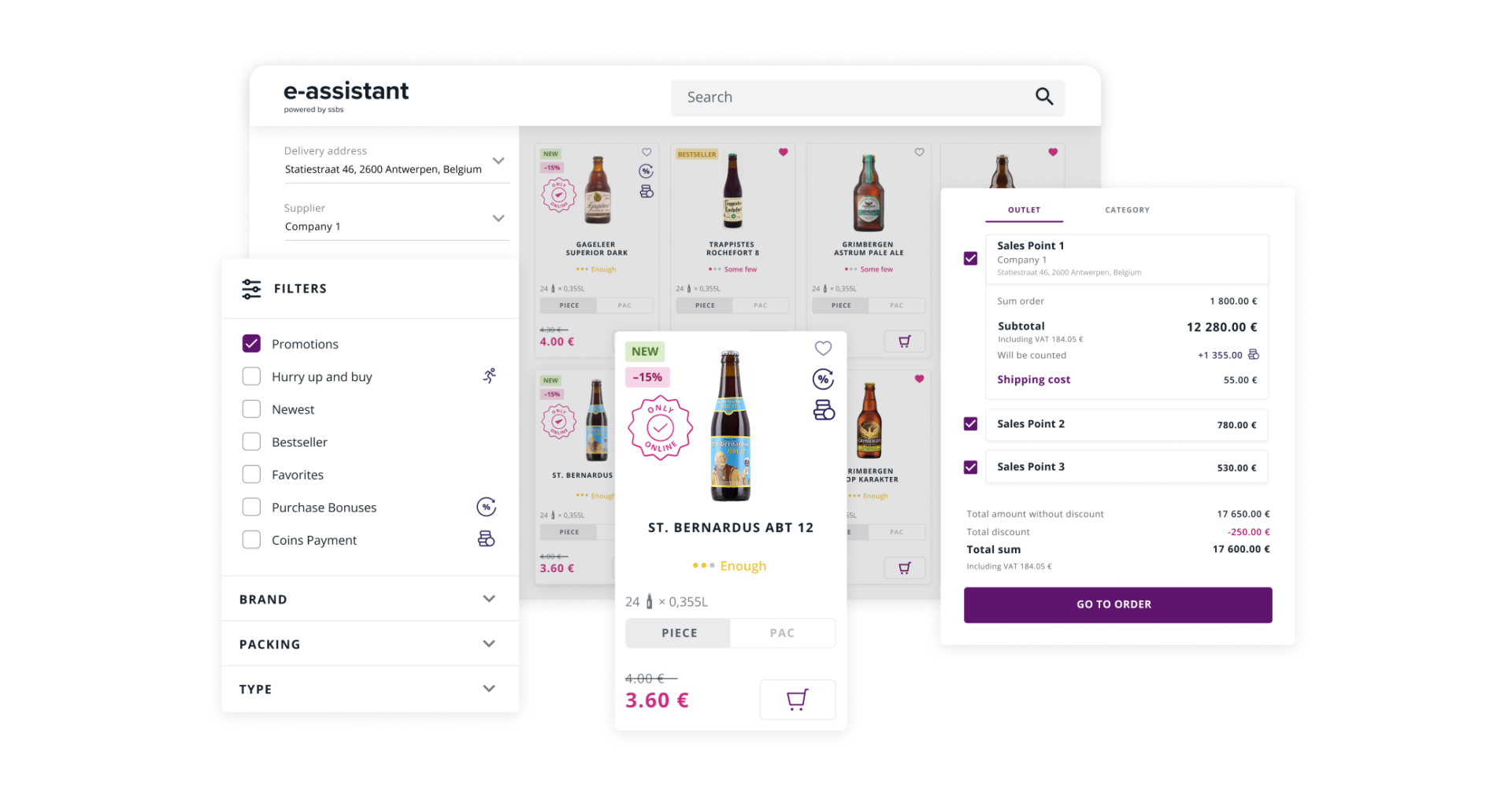
Platforms support frequent promotions, such as trade discounts, seasonal campaigns, and loyalty programs. This encourages retailers to order more frequently and add extra products to their baskets.
System Integrations
Fully connected with Sales Force Automation (SFA) and ERP systems, and optionally linked to Trade Promotion Management (TPM) tools. This ensures smooth order processing, accurate stock management, and consistent data across all systems.
Part of an Omnichannel Strategy
The platform is one of several sales channels, complementing traditional trade reps, phone orders, and in-person sales. Retailers can choose the most convenient channel, while the brand maintains consistent service across all touchpoints.
The industry is pretty specific, and that makes it even more relationship-driven. So why keep investing in B2B FMCG eCommerce when in-person meetings, trade visits, and traditional sales channels are once again possible?
Why Brands Still Need B2B CPG eCommerce in the post-COVID Economy
Although store visits are no longer restricted, B2B eCommerce has become an essential sales channel for CPG manufacturers. These platforms are a natural response to today’s market reality with its rising costs and shrinking margins.
A digital B2B CPG channel helps brands:
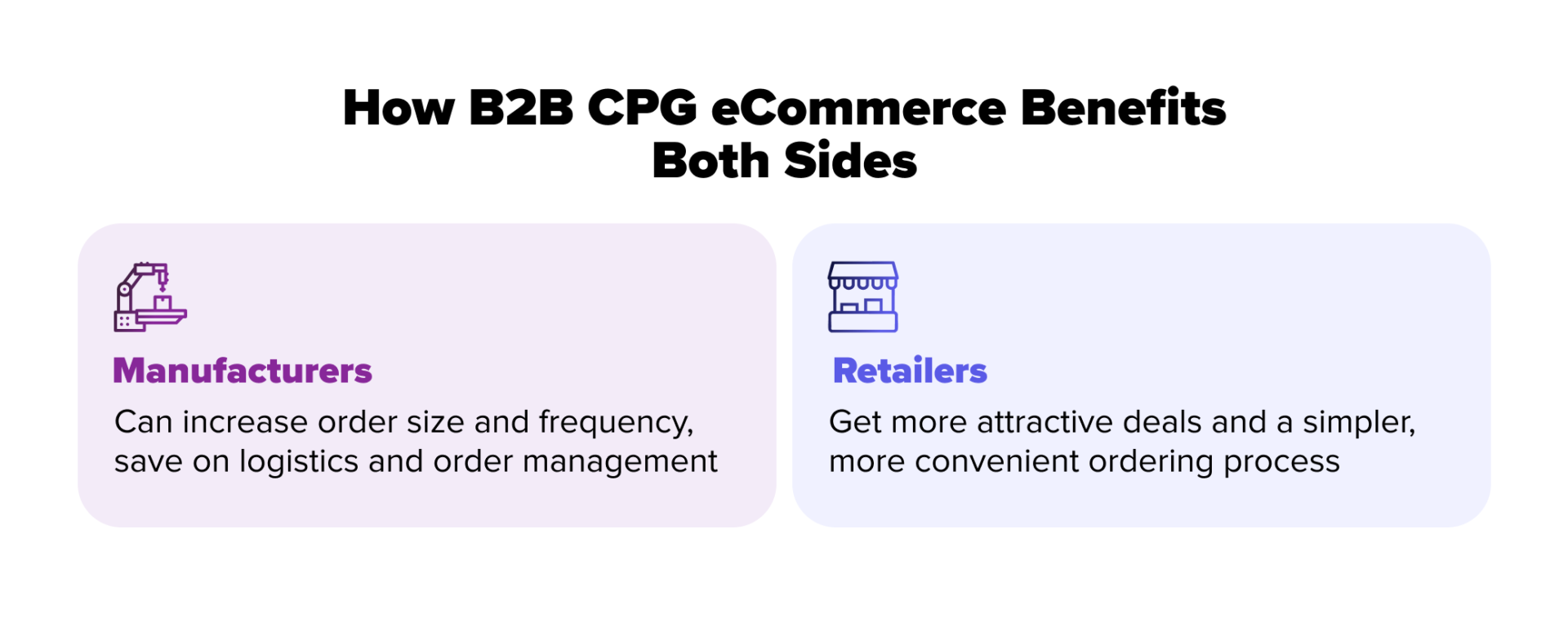
- Cut distribution, logistics, and order management costs
- Automate routine tasks
- Increase order size and frequency with AI-driven recommendations, personalized offers, and targeted promotions
- Collect more market data
For retail partners, B2B CPG improves their experience differently:
- 24/7 access to product catalogs, order history, and delivery updates
- Personalized promotions and offers delivered clearly and on time
- Machine learning–driven recommendations for restocking based on data from thousands of similar stores
Such a beneficial channel! Why then is the failure rate of B2B CPG eCommerce platforms still high? Let’s start with the complexity of developing and managing such a solution.
Key Challenges in Building and Growing CPG B2B eCommerce Platforms
Launching such a platform sounds simple in theory – build a store, connect your customers, and start selling. In practice, however, there are three main challenges of B2B eCommerce that most companies face.
Technological Complexity
Building and maintaining a system that meets the needs of thousands of retail customers every day, with constantly updated catalogs with thousands of SKUs, is a hard task in at least four ways:
Hard to Achieve High Performance and Reliability
Each disruption, even a brief one, can lead to lost orders and frustrated customers. Maintaining such reliability requires significant infrastructure, constant monitoring, and vendor support.
Deep System Integration
The platform needs to connect with core business systems:
- CRM, SFA, ERP, and TPM systems – for smooth data flow and process automation.
- Payment gateways and promotional tools – for easy transactions and campaign management.
Flexible Configurations
The system should support individual pricing, terms, and assortments for different customer segments.
Data and AI at the Core
AI in B2B eCommerce proves how far modern CPG B2B platforms go beyond transactions. The systems use:
- Data analytics to track behavior and performance.
- AI-powered recommendations to help retailers discover new products.
All this makes such platforms complex and expensive to build from scratch. Not every company is ready for that level of investment. Therefore, many CPG brands now choose ready-made, industry-specific solutions to speed up implementation and improve ROI in B2B eCommerce sooner.
Risks of Shifting from Traditional Sales Channels
Imagine a sales team that’s spent years building trust through calls and in-person visits. Suddenly, a new B2B portal has emerged where customers can place orders themselves.
Questions arise: Will sales reps lose their set sales or activity goals? It’s a genuine concern. That’s why, during digital transformation, it is crucial to redefine sales roles. Sales reps can transition into territory or account development managers. This way, they will combine personal relationships with digital tools.
Customer Onboarding and Adoption
Picture another scenario: your company invests months of effort and budget into launching a sleek new ordering portal. However, most retailers still call their sales rep or send messages on WhatsApp.
Why? The CPG vs. B2B dynamic often creates an adoption gap because, unlike typical B2B customers, retail partners require onboarding and motivation to go digital. But let’s explore this problem in more detail in the following paragraph.
The Barriers Customers Face When Switching to a B2B eCommerce Portal
Adoption is often the hardest part, and not because the technology doesn’t work. Here are the main reasons why retail customers may have trouble switching to online ordering:
Cultural and Behavioral Barriers
Imagine a small shop owner who has worked with the same sales rep for years. They know each other, trust each other, and have an easy rhythm: call, order, receive. Asking them to place orders online can feel impersonal, risky, or simply unnecessary. For those less comfortable with apps or web platforms, the digital system can feel intimidating, like learning a new language overnight.
Lack of Clear Motivation
Even if the portal is easy to use, why would a retailer switch to it? If ordering online doesn’t offer something tangible (such as a discount, loyalty bonus, faster delivery, or transparent pricing), it becomes an extra effort instead of a convenience.
Poor User Experience
Picture trying to place an urgent order, only to get lost in a slow, confusing portal, with too many clicks and unclear categories. Frustration builds quickly. If the digital system is more complex than calling a trusted agent, retailers won’t bother trying a second time.
Platform Overload
Some retailers are juggling multiple portals, each from a different supplier, with separate logins, rules, and quirks. It’s exhausting. There’s a high risk that they will eventually abandon most platforms and return to the familiar path – the phone, email.
The reasons are clear now, and we can finally discuss what to do.
Strategies to Drive Retailers to Your CPG B2B Channel
At SSBS, we’ve been partnering closely with both global and regional brands and have seen firsthand what all successful CPG B2B examples have in common.
Those manufacturers know users don’t come pre-packaged with a B2B platform. Therefore, their main challenge isn’t building the platform – it’s making retailers want to use it. Let’s discuss how you can achieve that.
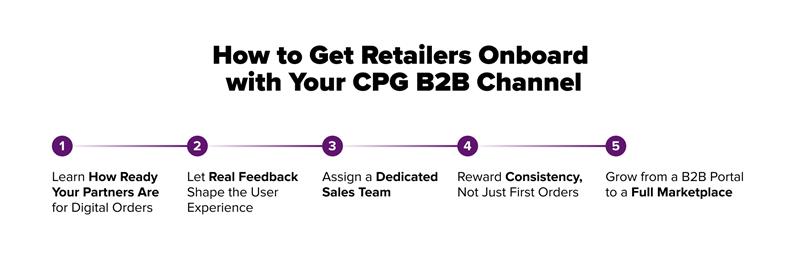
Learn How Ready Your Partners Are for Digital Orders
Successful B2B CPG projects start in the field – with store visits, interviews, and even live demonstrations of platform prototypes to see how retailers actually place and manage orders. Usually, brands deal with three types of retailers:
- Retailers who co-create value: For one of our clients, retailer partners turned out to be highly proactive. They were ready to align their own development strategies with the manufacturer’s, sharing data, co-creating sales plans, and even influencing promotional calendars.
- Retailers motivated by profitability: For some other clients, retailers responded best to financial motivators, such as bonuses for online orders, flexible discounts, and tailored offers that helped them improve their margins.
- Retailers empowered by insights: Information itself can also be a strong motivator. A well-established B2B platform holds data from thousands of stores, revealing which products are often bought together, which SKUs perform best in specific locations or store formats, and where new items have the highest potential. Retailers can access these insights through AI-driven recommendations on what to order, in what quantities, and when to test new products
Let Real Feedback Shape the User Experience
We don’t wait for complaints. We actively encourage the brands using our B2B platforms to engage their clients in sharing feedback. Quick surveys, in-app prompts, and calls from account managers help identify what confuses retailers during the ordering process.
For example, a retailer might leave a comment through the feedback icon, suggesting that the order of product categories be changed so that the most frequently purchased items appear first. Small improvements like this can significantly speed up the ordering process and make the platform feel more intuitive.
Assign a Dedicated Sales Team
A dedicated sales team assigned to draw as many retailers as possible from traditional ordering to online is crucial. It should be a separate project, not just an additional task for existing sales reps. The new “digital” team will walk customers through the benefits and address any onboarding issues that may arise.
Over time, this team naturally evolves into a new kind of territory representatives – someone who balances traditional, in-person relationships with digital sales touchpoints.
Reward Consistency, Not Just First Orders
Bonuses and discounts attract retailers, but loyalty keeps them returning. Programs that reward regular orders, growing online purchases, or joining promotions help build a strong, lasting user base.

Our platform makes it easy to set up these long-term rewards for each market or retailer type.
Grow from a B2B Portal to a Full CPG B2B Marketplace
There are many platforms that customers are engaging with, and that creates both a challenge and competition. If a platform is inconvenient or difficult to use, retailers quickly abandon it, switching to a competitor or falling back to phone orders and in-person visits.
To avoid this, some smaller brands choose to join forces with other, non-competing brands that have already expanded their platforms into CPG B2B marketplaces. This approach has its benefits: instead of investing heavily in their own platform, they gain access to retailers through an established system.
However, this also means missing out on an additional channel for generating profit, data, and market insights. The trend of marketplace platforms is still growing, which gives brands plenty of room to become leaders themselves – owning the platform, engaging retailers directly, and capturing valuable business insights.

Conclusion
Not all projects survive, but those that succeed bring companies not only measurable benefits (such as growth in order size and frequency) but also a competitive advantage and the potential to evolve into a full-fledged CPG B2B marketplace.
However, this success doesn’t come from simply buying, customizing, or maintaining a platform. Investments in retailer engagement are just as significant. Where to allocate those investments and the steps to take – you already know.
Looking for a provider with deep experience in helping CPG brands launch and scale B2B digital channels? Drop us a line!