B2B eCommerce return on investment (ROI) heavily depends on adoption. But obsessing over adoption before you’ve built the right foundation for it is like putting the cart before the horse.
In this article, we do not focus specifically on bringing retailers online – we’ve already done so in great detail. Instead, we focus on what happens before the adoption conversation with retailers even starts:
- how you define ROI
- how you build the business case that survives contact with finance
- how you structure the launch so that when adoption does happen, the numbers are already working in your favor
We also showcase a real-life example from one of our clients – a global pet food brand. We break down what they did and how they built a B2B eCommerce ROI case that held up under scrutiny from day one.
What Drives B2B eCommerce ROI
ROI has four drivers, and the strongest ones are on the revenue side.
| Key drivers of ROI for B2B eCommerce | ||
| Driver | How it creates ROI | Key metric |
| Revenue growth | Upsell & cross-sell during ordering | Avg. order value (before vs after) |
| Cost reduction | Fewer manual orders and admin work | Cost per order |
| Retention & share of wallet | Easier reordering, better experience | Share of wallet |
| Scalable growth | Serve more customers without more resources | Cost to serve per customer |
Higher Revenue Through Online Sales, Up-sell, and Cross-Sell
The most direct ROI driver is revenue that wouldn’t have happened offline.
The biggest upside of a B2B eCommerce platform comes from influencing decisions during each order.
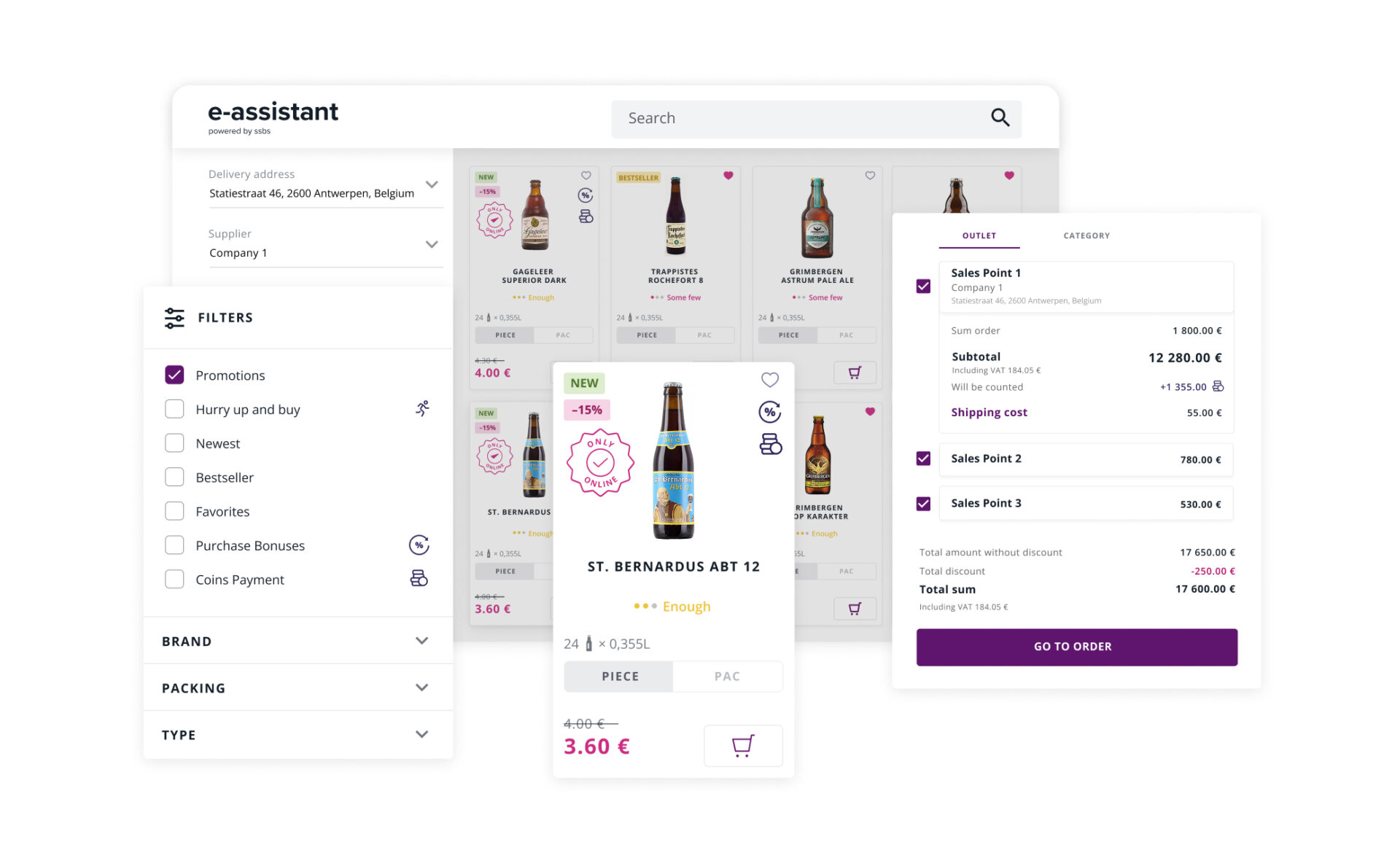
A well-built portal has AI-driven or rule-based suggestions. The main job of AI in B2B eCommerce is to nudge behavior in the moment of purchase. Complementary SKUs, volume thresholds that unlock better pricing, and seasonal promotions triggered by order history – these are the recommendations that drive up-sell and cross-sell at scale.
Reps might mention some special offers once in a quarterly visit. A portal makes them visible and accessible every single time.
The metric to watch here isn’t just online revenue – it’s the delta between average order value before and after portal adoption, per customer.
Lower Operational Costs Through Automation
Every manual order incurs a cost, regardless of channel.
A field visit is the most obvious case, but a WhatsApp text, email, or phone call still triggers work: someone reads it, re-enters data into the system, and clarifies details. The cost is just less visible because it’s fragmented across roles and time.
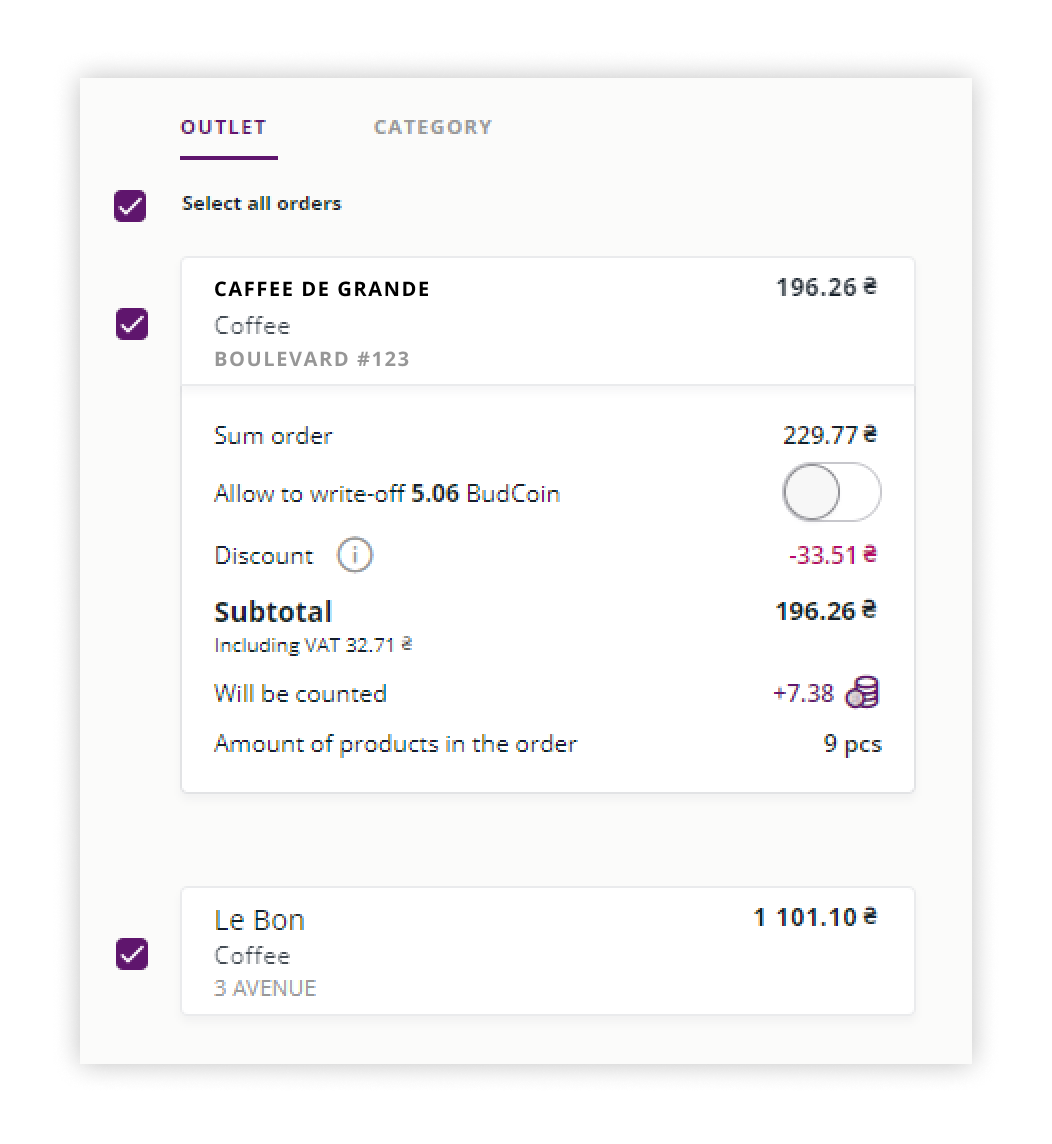
B2B eCommerce shifts the cost to the customer but makes it convenient. It turns order handling into a streamlined eCommerce operation rather than a series of manual steps.
The order enters the system clean. The confirmation is automatic. The rep’s time is spent on relationships and growth conversations rather than on order-taking.
The ROI here is measurable and fast. Track order processing time and cost before and after launch, per order type.
This is where digital transformation becomes tangible: visible in time saved, cost reduced, and capacity freed.
Better Customer Experience, Retention, and Share of Wallet
Retention and experience are often underestimated compared to cost savings. They shouldn’t be.
Imagine a small retailer who usually orders by calling or messaging a sales rep. It’s familiar, quick, and requires little effort.
Now introduce a B2B FMCG eCommerce platform that remembers past orders, shows current prices, and highlights relevant promotions. At first, the retailer still calls. But over time, for simple or repeat orders, they start using the portal, especially when it’s faster than waiting for a response.
That shift doesn’t happen overnight, but when it does, behavior changes. Orders become more frequent, more consistent, and easier to repeat.
Share of wallet from existing clients is the most honest measure of whether your B2B eCommerce platform is actually working. We will discuss this metric in more detail a bit further.
Greater Market Reach and Scalable Growth
Territory management requires significant resources, including technology. A CPG B2B portal, by contrast, is not limited by territory.
In some markets, a meaningful share of retailers is small and dispersed. They are costly to visit frequently. Still, these retailers often use those visits to place orders. Therefore, coverage there may be inconsistent, and ordering tends to be irregular.
A B2B eCommerce platform builds on this situation by giving these retailers a structured, always-available way to place orders.
Offline, growth requires more coverage and people. Online, the same setup can serve a much broader customer base without proportionally increasing resources.
How to Measure B2B eCommerce ROI
Knowing the drivers is good, but not enough. You need to establish a measurement system long before launch.
Here are the six metrics that, together, capture a full picture.
| Measuring ROI in B2B eCommerce: key metrics | ||
| Metric | What it shows | Why it matters |
| Online revenue growth | Revenue via portal (new vs shifted) | Distinguishes growth from channel migration |
| Average order value (AOV) | Order size online vs offline | Indicates upsell & cross-sell effectiveness |
| Share of wallet | Your share of customer spend | Shows competitive gain and retention strength |
| Order cost & time | Cost per order before vs after | Captures immediate operational savings |
| Conversion rate | Funnel from access to usage to orders | Reveals adoption and UX issues |
| Self-service adoption | Share of portal vs manual orders | Reflects efficiency and behavior shift |
Online Revenue Growth
How much revenue flows through the portal, and how is it evolving month over month? Online revenue growth is a core component of ROI for B2B eCommerce. Track it by segment, not just total. Separate new revenue from channel shift.
Let’s say, online revenue grows 25%. 15% comes from customers moving their orders from calls and messages to the portal, while 10% is from the same retailers ordering more frequently or adding more items.
In this case, most of the online revenue isn’t new; it’s just been migrated. What does it mean:
- Revenue moves online = you’re saving costs.
- Revenue increases = you’re growing the business.
You need to know which one is happening.
Average Order Value (AOV)
If AOV online is higher than offline, your portal is driving upsell and cross-sell. If it’s lower, it signals issues.
For instance, if online AOV is €180 compared to €130 offline, it likely means retailers are adding more items or reaching volume thresholds through the portal.
If online AOV drops below offline, it may indicate that retailers are splitting orders across channels or that product discovery and recommendations aren’t working as intended.
Share of Wallet From Existing Clients
Share of wallet measures how much of a retailer’s total category spend you are capturing.
For example, if a retailer spends €1,000 in your category and €400 goes to you, your share of wallet is 40%, while €600 goes to competitors. After adopting the portal, if their purchases increase to €550, your share rises to 55%.
In this case, you are capturing a larger portion of the retailer’s overall spend, often at the expense of competitors.
Order Processing Time and Cost
Compare the cost per order before and after launch. This is an immediate, verifiable return on investment.
For instance, manual orders cost €4 to process, while portal orders cost €1. At 10,000 orders per month, that’s €30,000 saved.
Customer Conversion Rate
This metric shows how many enabled customers actually use the portal, and how many visits convert to orders.
Let’s say, 70% of invited retailers log in, but only 40% place orders. These two conversion rates together make it visible where your adoption funnel is leaking:
- If just few customers start using the portal, it’s an onboarding or communication issue.
- If they visit but don’t order, the UX isn’t working.
Both issues can be fixed.
Self-Service Adoption and Service Efficiency
Track the share of self-service vs. manual orders, and the related support volume.
For instance, if self-service grows from 20% to 60% of orders, while order-related support calls drop by 35%, it shows that customers are shifting to the portal and relying less on manual support.
How to Maximize B2B eCommerce ROI
Reaching ROI from B2B eCommerce is one thing. Scaling it is another. If you were building a B2B eCommerce ROI calculator, these are the inputs that matter most. In practice, they come down to five areas.
| What drives results: ROI model for B2B eCommerce | ||
| Practice | What it means | Why it matters |
| Personalization | Relevant products, pricing, and promos per retailer | Drives upsell & repeat orders |
| System integration | ERP, CRM, PIM in sync | Removes friction and errors |
| Adoption focus | Onboarding + rep support | Turns access into actual usage |
| High-impact use cases | Start with reorders | Builds fast habits and value |
| Continuous optimization | Improve based on behavior data | Increases conversion over time |
Implement Personalization
Show each retailer the pricing, products, and promotions relevant to their behavior.
For instance, a retailer that regularly orders premium pet food sees bundle offers and volume discounts on those SKUs, rather than a generic catalog.
You don’t even need complex AI for that – start with clean, segmented data, and simple rules based on purchase history, frequency, or basket composition. As patterns become clearer, you can layer in more advanced recommendations. But the initial impact usually comes from getting the basics right and making them consistently visible.
Integrate ERP, CRM, and PIM
ERP, CRM, and PIM integration ensures accurate data, usable insights, and consistent product content. In practice, that means a retailer logs in, sees their agreed price, real-time stock, and clear product details. From there, they can place an order without having to double-check anything.
If that’s not the case, friction shows up immediately. A retailer sees one price in the portal but remembers a different one from the last invoice, so they message the sales rep to confirm instead of ordering. Or a product has no image or unclear description, so they skip it or order offline “just to be safe.”
Each of these moments seems small, but they add up. Instead of self-service, orders go back to calls, messages, and manual handling, which is exactly what the portal is supposed to reduce.
Encourage Customer Adoption of the Portal
Adoption comes from removing friction: hands-on onboarding, sales team alignment, and active re-engagement of inactive accounts.
Simply receiving login details isn’t enough. A retailer is guided through their first order, either on a call or during a visit, so they see how it works and why it’s easier.
If that step is skipped, many accounts log in once, get confused, or see no immediate benefit, and fall back to calls or messages.
Prioritize High-Impact Self-Service Use Cases
Start with what delivers immediate value, usually repeat orders.
Let’s say, a retailer logs in and sees a ready-made list like “Order again” with their usual SKUs and quantities, and can reorder in a couple of clicks. That’s far more useful than asking them to search through a full catalog with filters and categories from day one. Once that habit is formed, you can gradually introduce more features.
Continuously Optimize Based on Data
Track how people actually use the portal and adjust accordingly.
For example, if many retailers add items to the cart but don’t complete checkout, something is getting in the way: maybe too many steps, unclear delivery dates, or missing payment options. Fixing those small blockers can quickly boost conversion rates.
The Kormotech Case: Strategy Behind a Strong ROI of B2B eCommerce
Let’s finally discuss the real-life case of adopting our E-assistant platform and the B2B-specific ROI model for eCommerce behind it: what was done in practice, and what actually drove results from day one.
Why the Company Needed B2B eCommerce
Kormotech’s growth model was working and becoming unsustainable at the same time.
Specialized pet stores accounted for 45% of revenue and were growing each year. Every new store meant more rep time, more headcount. When Kormotech analyzed where that time actually went, the number was stark: 75% of every rep’s day was spent on order processing. Not relationship building. Order processing: stores relied on the rep’s physical presence to place orders.
There were two options: keep adding headcount, or create a channel to handle the transactional work and free the sales team for what actually required their skills.
The Uncomfortable Question They Asked Before Building Anything
Before starting, Kormotech defined success in concrete terms. Not “improve efficiency,” but shifting a measurable amount of time from low-value tasks to high-value ones.
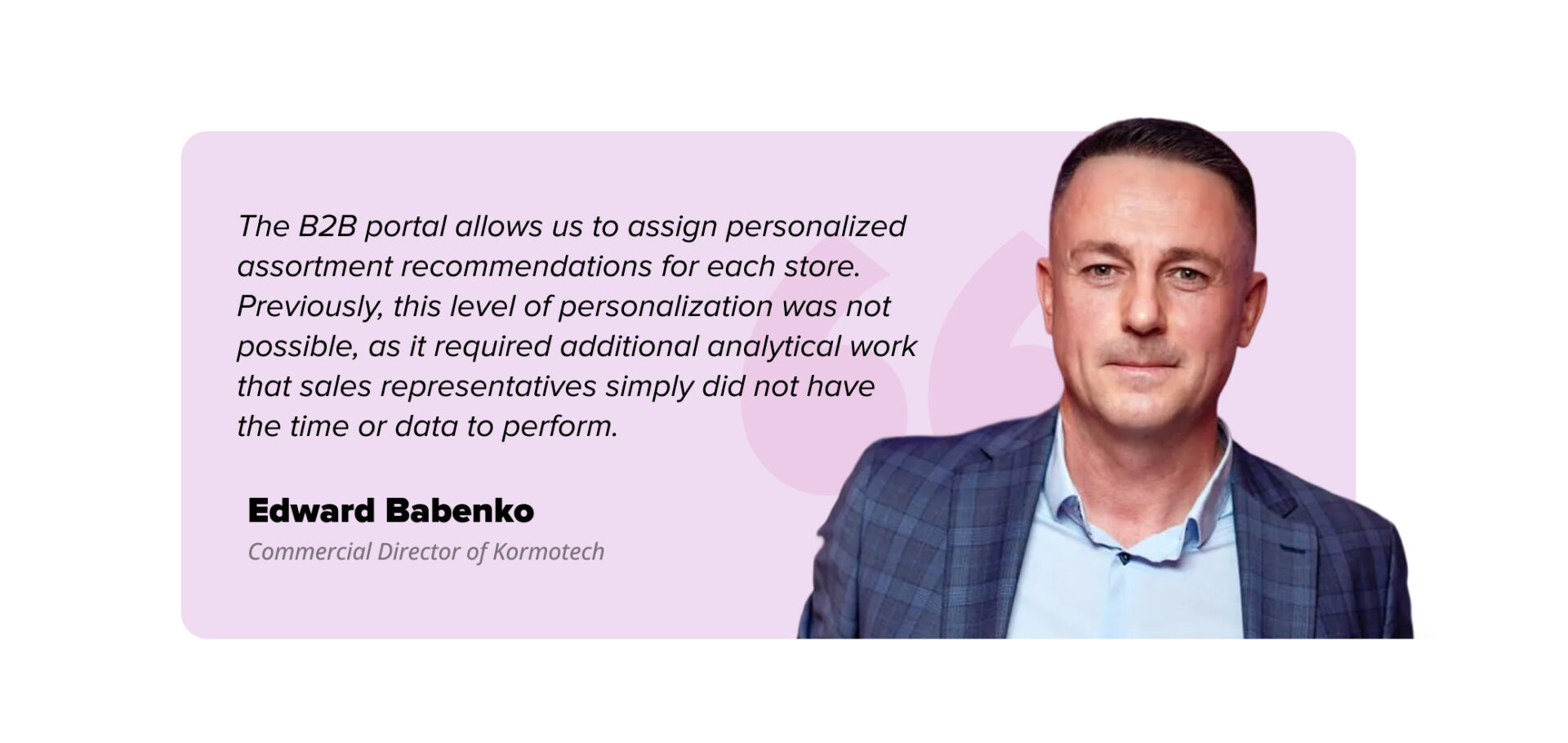
The revenue goal was just as specific. Personalized assortment recommendations were always possible in theory, but reps didn’t have time to do them during a 20-minute visit. The portal made this scalable.
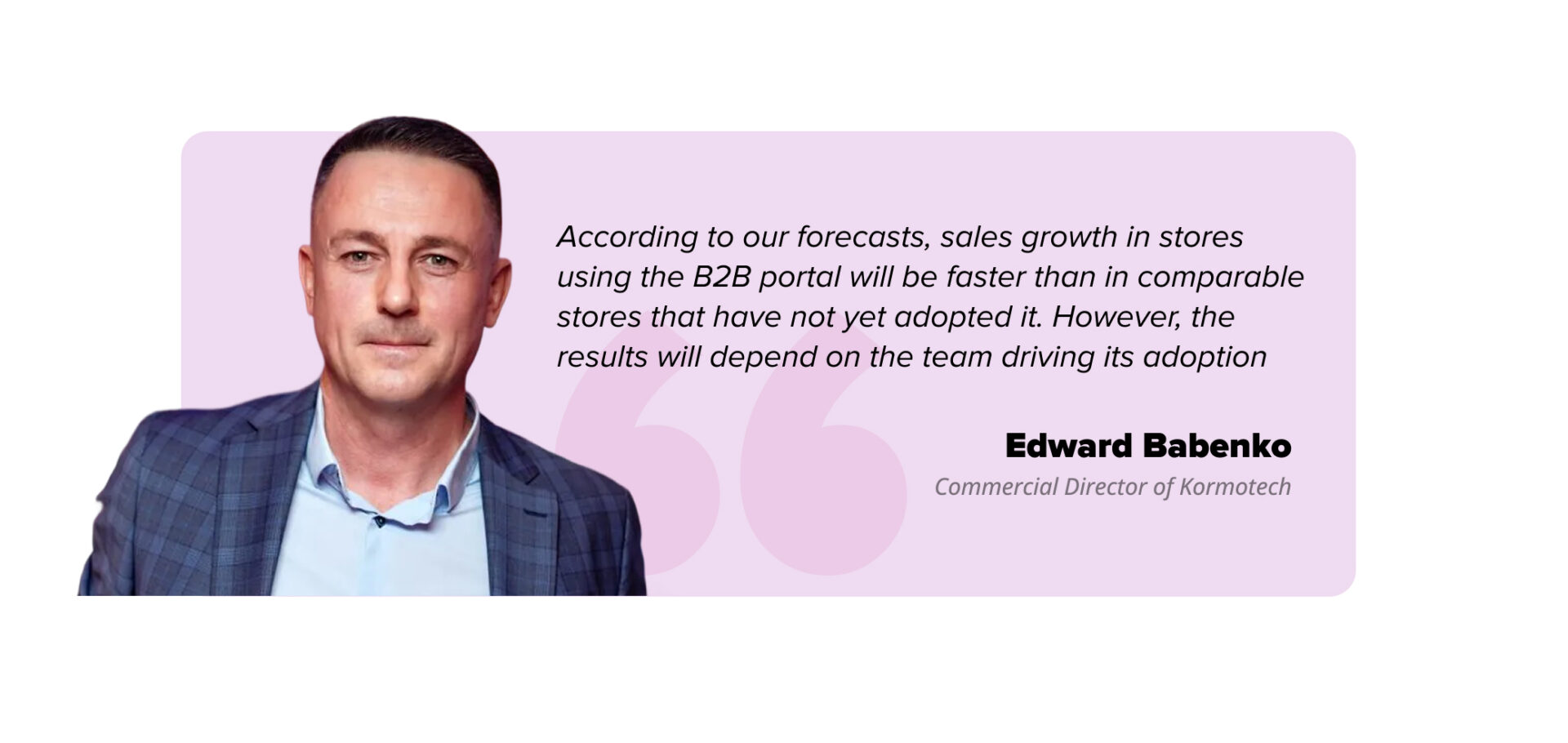
They also built a direct comparison into their measurement from day one: stores using the portal versus similar stores that were not, making the ROI for B2B eCommerce visible and comparable.
Most companies avoid committing to measurable outcomes before building. Here, it became the foundation for everything else.
Why They Didn’t Try to Onboard Everyone
The default instinct is to push adoption as fast as possible. Kormotech did the opposite.
Their rollout was simple: the store had to understand the portal and be willing to use it. If not, they were either educated first or excluded from the rollout. Not postponed, but intentionally left out to avoid affecting B2B eCommerce ROI from the start.
Forcing reluctant retailers creates friction that shows up as poor metrics, fuels internal doubt, and slows everything down. A smaller group of active users gives clearer signals and more credible results than a large, disengaged base.
They also set up a dedicated implementation team separate from field sales and planned for resistance from the start, rather than reacting to it later.
What the Portal Actually Changed Day to Day
For sales reps, time was shifted away from order-taking to planning, promotions, and growth conversations.
For retailers, everything became available on demand and in real time: orders, promotions, recommendations, and performance data. A retailer placing an order late at night had the same level of guidance as one visited by a rep that morning.
What This Case Actually Teaches
Define the outcome before you build. Choose early adopters deliberately. Measure what you committed to. Anticipate internal resistance.
Every FMCG brand that has struggled to prove B2B eCommerce ROI made at least one of those decisions wrong – or skipped them entirely. In practice, these are the core challenges of B2B eCommerce, and they usually surface when the CFO asks the question six months after launch.
The portal is the easy part. The foundation is what most companies skip.