72% of promotions won’t break even! – This widely quoted statistic highlights the urgent need for change in the management and optimization of trade promotions in the FMCG sector. But is the situation with promo effectiveness really that dire?
Most resources citing this 72% statistic reference a Nielsen study, but these results were published back in 2014, during the early days of Trade Promotion Optimization (TPO) technology adoption in the industry. Over the past decade, advancements in TPO have indeed brought significant improvements.
Today’s Trade Promotion Management (TPM) and Trade Promotion Optimization (TPO) solutions leverage advanced analytics, AI, and machine learning to streamline promotional planning, execution, and evaluation. These tools enable businesses to predict campaign outcomes, maximize ROI, and fine-tune strategies based on real-time data.
According to the Promotion Optimization Institute’s State of Industry Report 2024, 32% of FMCG companies have reduced the number of inefficient promotions thanks to TPM and TPO functionality. However, more than a third of companies still lack those capabilities, and the overall share of ineffective promotions remains at 30% to 40%. Considering that promotional spending today accounts for 20–25% of gross revenue, the industry’s annual losses run into tens of billions of dollars.
The True Cost of Trade Promotions
Now, let’s shift from industry-wide figures to the perspective of an individual business.
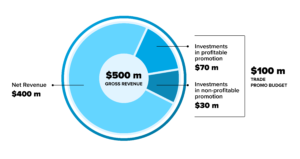
For a company operating in a single national market, promotional spending can range from tens to hundreds of millions of dollars annually. This means that a business with net revenue of $400 million and a trade promo budget of $100 million could be losing around $30 million solely on unprofitable trade promotions!
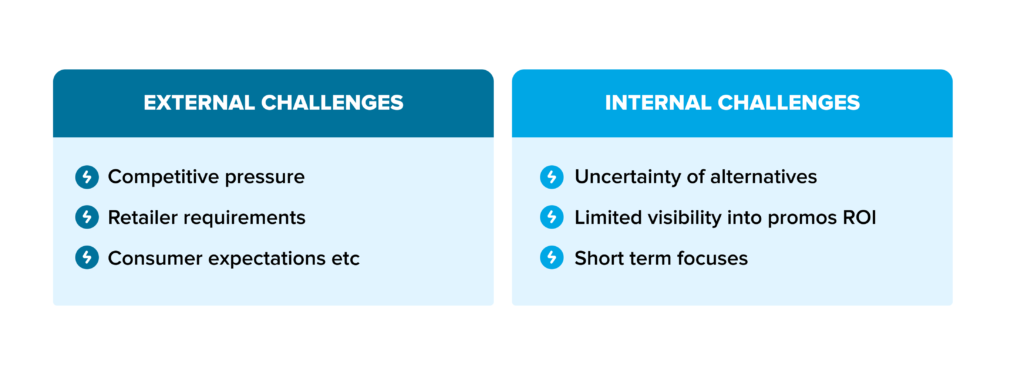
It might seem logical to simply reduce trade promotion investments to avoid losses and redirect freed resources into more profitable areas. However, companies refrain from doing so due to both external and internal factors:
To improve the situation, businesses should not simply reduce investments in trade promotions but instead redesign trade strategies.
However, the reality is that many companies lack the necessary data and capabilities for trade promotion effectiveness analysis to implement such changes effectively. And this is the reason why they continue to run unprofitable promotions. Evaluating even a single campaign can be challenging, as it involves multiple analytical steps:
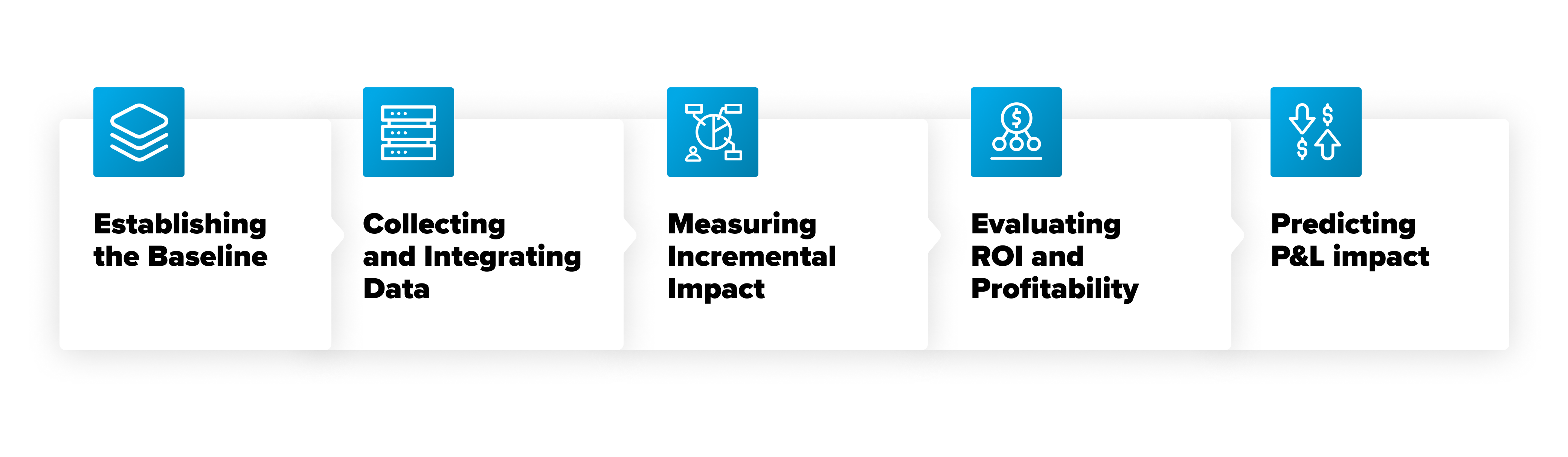
Each of these steps demands advanced analytics tools, yet 80% of companies still use spreadsheets to manage promotion effectiveness, and for half of them, spreadsheets remain the primary tool. With some businesses running thousands of promotional campaigns annually, it becomes impossible to effectively analyze them without specialized systems.
As a result, Key Account Managers, who plan and oversee dozens of promotions per month, often replicate campaigns based on intuition and fragmented data rather than advanced analytics. This reliance on outdated tools and methods leads to losses from unprofitable promotions, reducing overall effectiveness and ROI.
Transitioning to TPM/TPO systems can eliminate unprofitable promotions by providing KAMs with clear insights into the profitability of various promotions (Promotion Optimization Institute: State of Industry 2024, Building Efficient CPG Industry Growth). This shift positively impacts several KPIs:
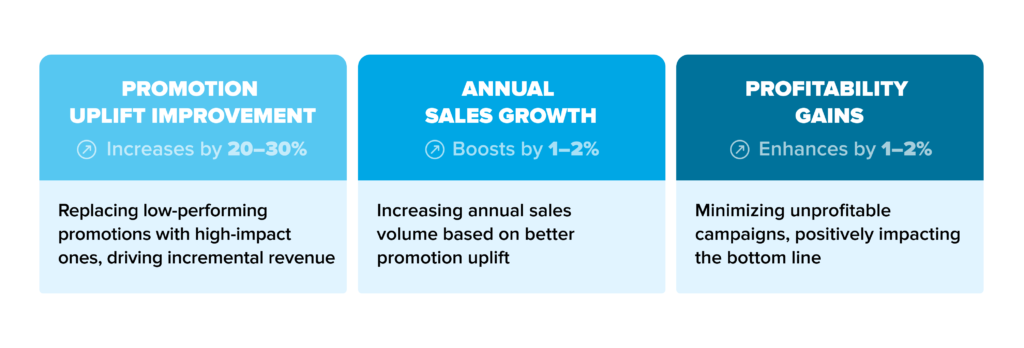
Building the Foundations for Trade Promotion Transformation
The first essential step is the automation of post-analysis and profitability forecasting for promotions. This can be achieved even at the stage of implementing basic TPM functionality, enabling businesses to:
- Instantly access profitability data for all promotions over any period, identifying both successful and unprofitable tactics.
- Accurately predict the profitability of each planned promotion.
- Quickly and easily create, adjust, and analyze promotions, saving time for more strategic tasks.
Such a data-driven approach helps optimize the overall promotional budget while maintaining efficiency. For our scenario above, even a 1% optimization can save a business $1 million annually, ensuring a strong return on investment in TPM/TPO technology.
As TPO systems continue to evolve, the integration of advanced analytics and AI/ML will unlock new opportunities for trade promotion optimization. These technologies will enable dynamic optimization, allowing real-time adjustments to promotions based on predicted outcomes.
Moreover, organizations will be able to forecast the long-term impact projection backed by business scenarios planning and RGM tools. Such advanced capabilities will provide a significant long-term competitive advantage.
The first step toward achieving them should be a solid foundation of complete and accurate historical data, only then could any automations, improvements and advancements be introduced.
Such phased approach – from building a robust foundation to implementing advanced AI/ML analytics – forms the core of PromoTool, the TPM/TPO solution from SoftServe Business Systems.
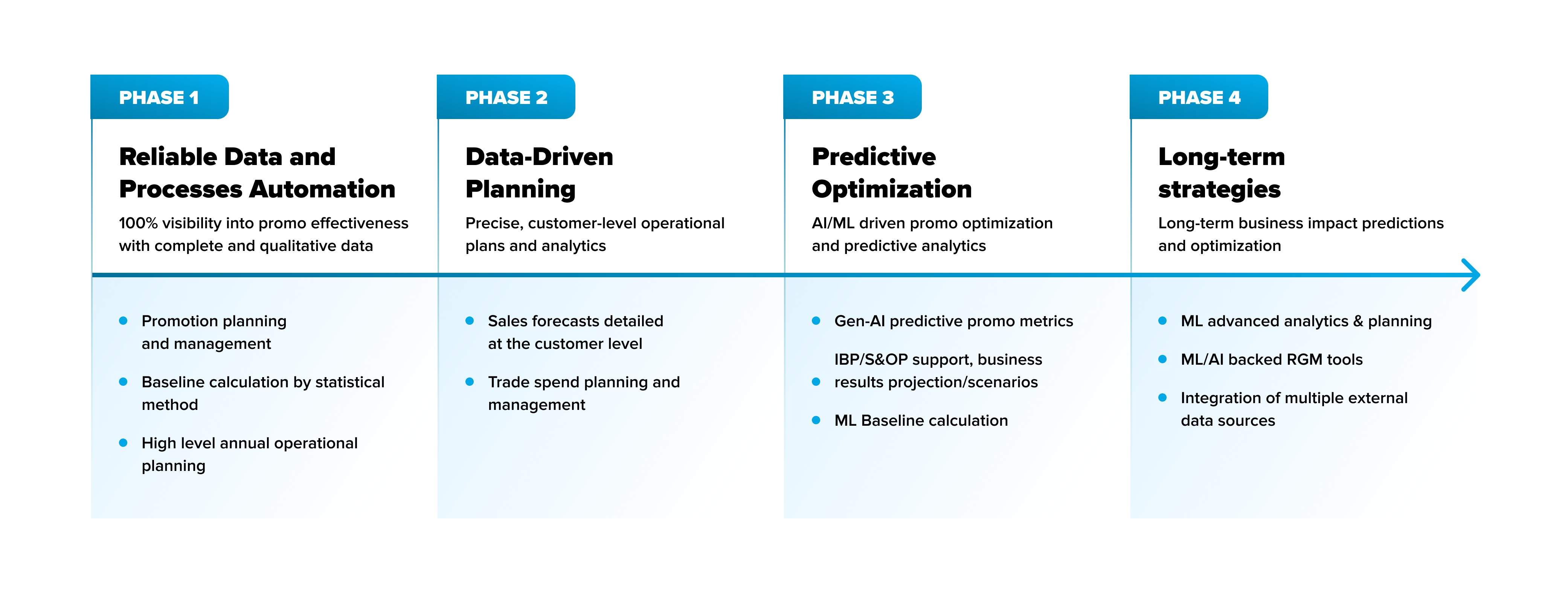
We implement it for companies at different stages of their Promo Optimization journey and across markets with varying levels of maturity. With PromoTool, businesses can transform their trade promotion strategies, ensuring measurable results and a clear path toward higher profitability and market leadership.


