You’ve been in FMCG long enough to know how often a solid revenue growth strategy fails at the shelf.
Promotions drove volume but destroyed margin. Price increases stalled because field execution lacked visibility. Distribution gaps surfaced six weeks after a retailer quietly stopped ordering.
This article examines real-life revenue growth strategy examples to show you how FMCG companies grow revenue without eroding margin – and what technologies can do the same for your brand.
What Is a Revenue Growth Strategy?
A revenue growth strategy is how you grow sales without hurting profitability. It covers decisions about pricing, promotions, product mix, distribution, and assortment.
In FMCG, growth rarely comes from a single action. It depends on many decisions made in concert across products, retailers, and channels.
How FMCG Revenue Growth Differs from General Revenue Growth
Common business revenue growth strategies such as pricing, upselling, and customer acquisition still matter, but they work differently in FMCG.
The reason? Companies in this field face challenges that many other industries do not:
- You manage large product portfolios across multiple retailers and sales channels simultaneously.
- Promotions can account for 15-20% of gross revenue, while retailers strongly influence pricing and shelf visibility.
- Upselling may mean moving shoppers to premium products or larger pack sizes.
- Pricing decisions often depend on retailer negotiations, not only consumer demand.
These are just the most obvious reasons FMCG is more complex than many other industries.
Where Revenue Growth Management Fits
While revenue growth tactics define where and how the business wants to grow, Revenue Growth Management (RGM) focuses on execution.
In other words, RGM connects a revenue growth plan with day-to-day commercial decisions across sales, marketing, category management, and finance.
Key Factors That Influence FMCG Revenue Growth
Several factors affect how much growth your company can achieve:
- Category dynamics: Mature categories need different strategies than fast-growing or premium categories.
- Retail relationships: Strong partnerships with retailers improve placement, assortment, and promotional opportunities.
- Data quality: Better sales data leads to better pricing and promotion decisions.
- Field execution: Poor shelf execution quickly reduces sales performance.
- Speed of adaptation: Companies that respond more quickly to market changes gain an advantage.
How to Measure Revenue Growth in FMCG
What is a revenue growth strategy if not a way to understand which actions actually drive revenue streams?
Revenue growth in FMCG is not only about whether revenue increased. You also need to understand what caused the change.
Basic Revenue Growth Rate Formula
The standard formula is:
(Current period revenue − Previous period revenue) ÷ Previous period revenue × 100
What does it mean:
If your company generated $80M last year and $88M this year, your revenue growth rate is 10%.
However, the formula alone does not explain the source of growth. Revenue may increase due to higher prices, stronger sales volume, a better product mix, or lower discounts and returns.
Key Metrics: From Volume to Net Revenue, Margin, and Market Share
To measure growth accurately, you need more than revenue totals. The metrics that matter in business revenue growth strategies:
- Gross revenue vs. net revenue. Gross revenue looks good on a slide. Net revenue – after trade spend, discounts, and returns – tells you what you actually kept. Many companies find that their gross revenue is growing while net revenue is flat or declining. That’s a signal that the trade-investment model needs work.
- Revenue per SKU and per customer. Average figures hide concentration risk. If 12% of your SKUs generate 80% of your net revenue, your growth plan needs to account for that dependency.
- Promotional baseline vs. lift. How much of your volume sells at full price? What’s the incremental lift from a promotion versus volume that would have sold anyway? Companies without this data are funding promotions that don’t work.
- Market share by channel. Overall share is a lagging indicator. Share by channel tells you where you’re gaining ground and where you’re losing it, often before it shows up in the aggregates.
- Lifetime value of key accounts. The long-term value of a customer relationship helps determine how much you should invest in customer retention and customer service.
Why measurement matters:
Revenue management depends on reliable and consistent data.
Without accurate metrics, pricing, promotion, and assortment decisions become difficult to evaluate and improve.
Revenue Growth Strategies for FMCG Companies
Many FMCG companies seek growth through new products, new markets, or larger promotional budgets. But most revenue problems start much earlier – inside pricing, trade terms, and execution.
Before you invest in advanced revenue growth strategies, you need to answer a simpler question: Do you fully understand how your current revenue is generated, discounted, and protected?
That is why pricing and margin management are usually the first major growth levers.
| Key strategies for profitable growth | |
| Strategy | Explanation |
| Pricing & Margin Management | Improve profitability by optimizing pricing, discounts, rebates, and trade investments. |
| Promotion ROI Optimization | Increase returns from promotions by measuring performance and improving trade spend efficiency. |
| Portfolio & Assortment Optimization | Focus on high-performing SKUs and build pack architectures that support profitable growth. |
| Customer Retention & Loyalty | Encourage repeat purchases and strengthen retailer relationships through value-added engagement. |
| Channel & Distribution Expansion | Grow revenue by entering new markets, channels, and retail partnerships while maintaining visibility. |
| Sales & Field Execution Excellence | Improve product availability, pricing compliance, and in-store execution through better field operations. |
| Product Innovation & Premiumization | Drive growth through new products, premium offerings, and consumer-driven innovation. |
| Upselling, Cross-Selling & Bundling | Increase order value by promoting complementary products, larger packs, or premium alternatives. |
| AI & Data-Driven Growth | Use analytics and AI to improve forecasting, promotion planning, assortment decisions, and resource allocation. |
1. Strengthen Pricing and Margin Management
Pricing is one of the most effective ways to improve profitability in FMCG. Even small pricing improvements often deliver more profit than large volume increases.
However, FMCG pricing is complex. Your list price is only the starting point. Discounts, promotions, rebates, and customer agreements all reduce actual revenue.
Many companies lack visibility into where margins are lost across customers, channels, and SKUs. As a result, pricing decisions become reactive instead of data-driven.
To improve pricing and margin management:
- Audit net revenue by customer and channel.
- Build a clear price waterfall across all discounts and trade investments.
- Define minimum margin thresholds by SKU and channel.
- Model the volume impact of price changes before retailer negotiations.
This foundation matters because advanced revenue growth tools – such as forecasting, AI, and predictive optimization – only work when pricing data and field execution are already reliable.
One effective approach:
Before any price increase conversation with a retailer, run the numbers on their net revenue contribution to your business. If you can show them your category is growing their basket in specific demographics, you’re negotiating with leverage. If you walk in with a list price increase and a cost inflation justification, you’re asking them to do you a favor.
2. Improve Promotion ROI and Trade Spend Efficiency
One of the most common revenue growth approaches.
Many FMCG companies invest heavily in trade promotions without fully understanding which activities actually drive profitable growth. As a result, a large share of promotional spending delivers little or no return.
One of the main revenue goals here is not to reduce promotions. The goal is to improve how you plan, execute, and evaluate them.
That requires a consistent process. You need to forecast expected results before launch, track execution during the campaign, and measure outcomes afterward. Without this feedback loop, promotion planning becomes guesswork.
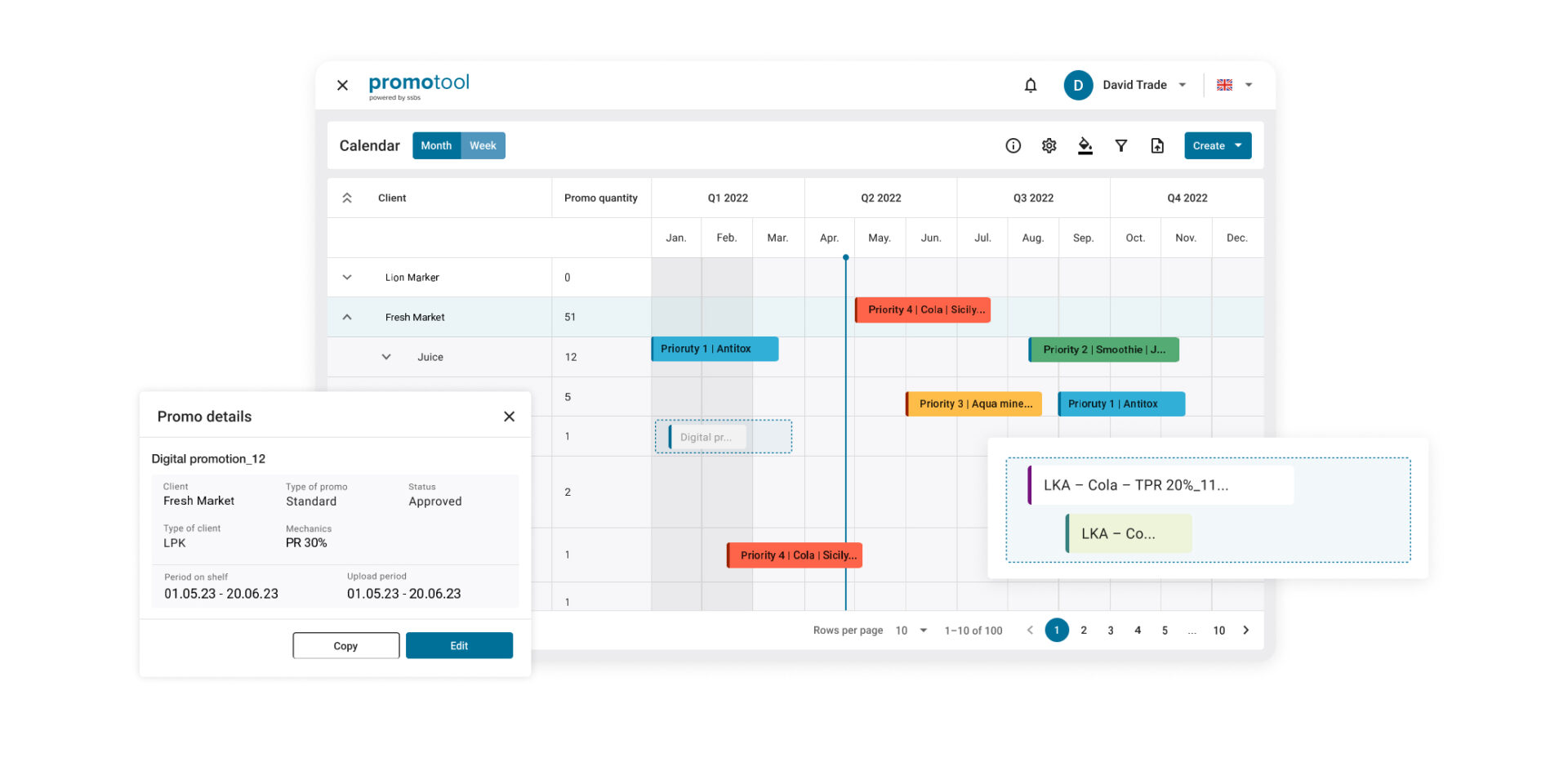
Trade Promotion Management software helps teams manage this process across retailers, markets, and promotional periods. Without them, most companies rely on spreadsheets and delayed reporting that make optimization difficult.
One Idea We’ve Seen Work in Practice
A global confectionery brand managed promotions across tens of thousands of small traditional retailers.
The problem: commercial agreements were tracked manually, leading to slow, unreliable visibility into promotions.
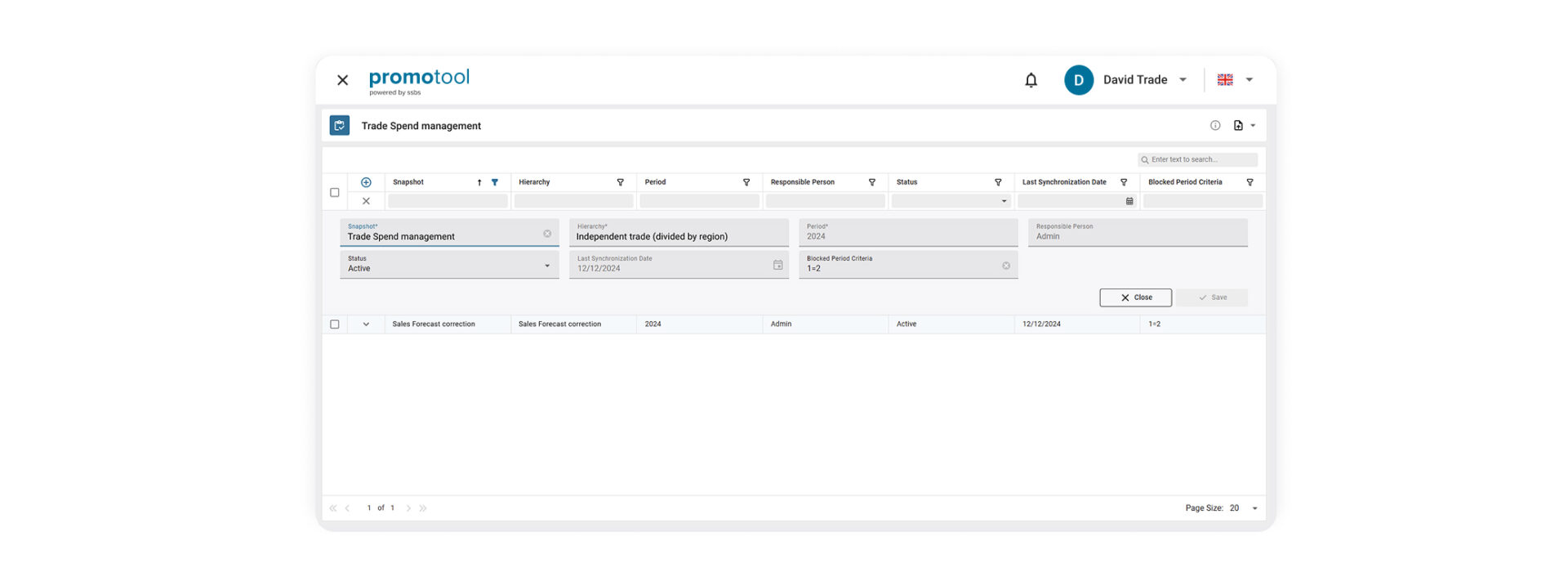
SoftServe Business Systems solved the issue by developing a special module for our TPM/TPO system (PromoTool).
As a result, the brand:
- digitized trade agreements across outlets
- gained near-real-time visibility into promotion costs and profitability
- automatically flagged loss-making agreements
- helped managers identify root causes faster
- improved decision-making without expanding the team
Now, the company has faster control over trade spend and fewer unnoticed profitability leaks.
The practical checklist for promotion efficiency:
- Measure ROI after every promotion
- Compare promotional lift against baseline sales
- Analyze which mechanics perform best by retailer and channel
- Compare sell-in with sell-out to identify inventory build-up
- Coordinate promotion timing to avoid cannibalizing regular sales
The companies that improve trade spend efficiency are usually those that treat promotions as measurable investments, not as routine commercial activity.
3. Optimize Product Portfolio, Assortment, and Pack Architecture
Many FMCG portfolios contain SKUs that add complexity without contributing meaningful growth or margin. Some products underperform for years but remain in the assortment because they are not systematically reviewed.
Portfolio optimization helps you focus resources on the products that actually drive revenue, margin, and shelf performance. It also makes assortment discussions with retailers simpler and more strategic.
Pack architecture plays a major role in both revenue and profitability. Different pack sizes and price points help move shoppers from entry-level products to larger or more premium options. That increases basket value and improves margins over time.
To optimize your portfolio and assortment:
- Analyze revenue, margin, and sales velocity by SKU
- Identify low-performing SKUs for rationalization or repackaging
- Review assortment overlap across similar products
- Build clear pack-price ladders across entry, core, and premium segments
- Identify pack-size gaps that competitors may already be filling
Strong FMCG companies treat portfolio management as an ongoing commercial process, not a one-time assortment review.
4. Increase Customer Retention, Repeat Purchase, and Brand Loyalty
Retention matters at both the consumer and trade levels. You need shoppers to keep buying your products and retailers to keep supporting them.
One Idea We’ve Seen Work in Practice
Our client, a global beverage company, increased consumer interaction by 25% and achieved a 40% increase in repeat purchases.
All they did was make promotions more interactive and personalized. With our help, obviously.
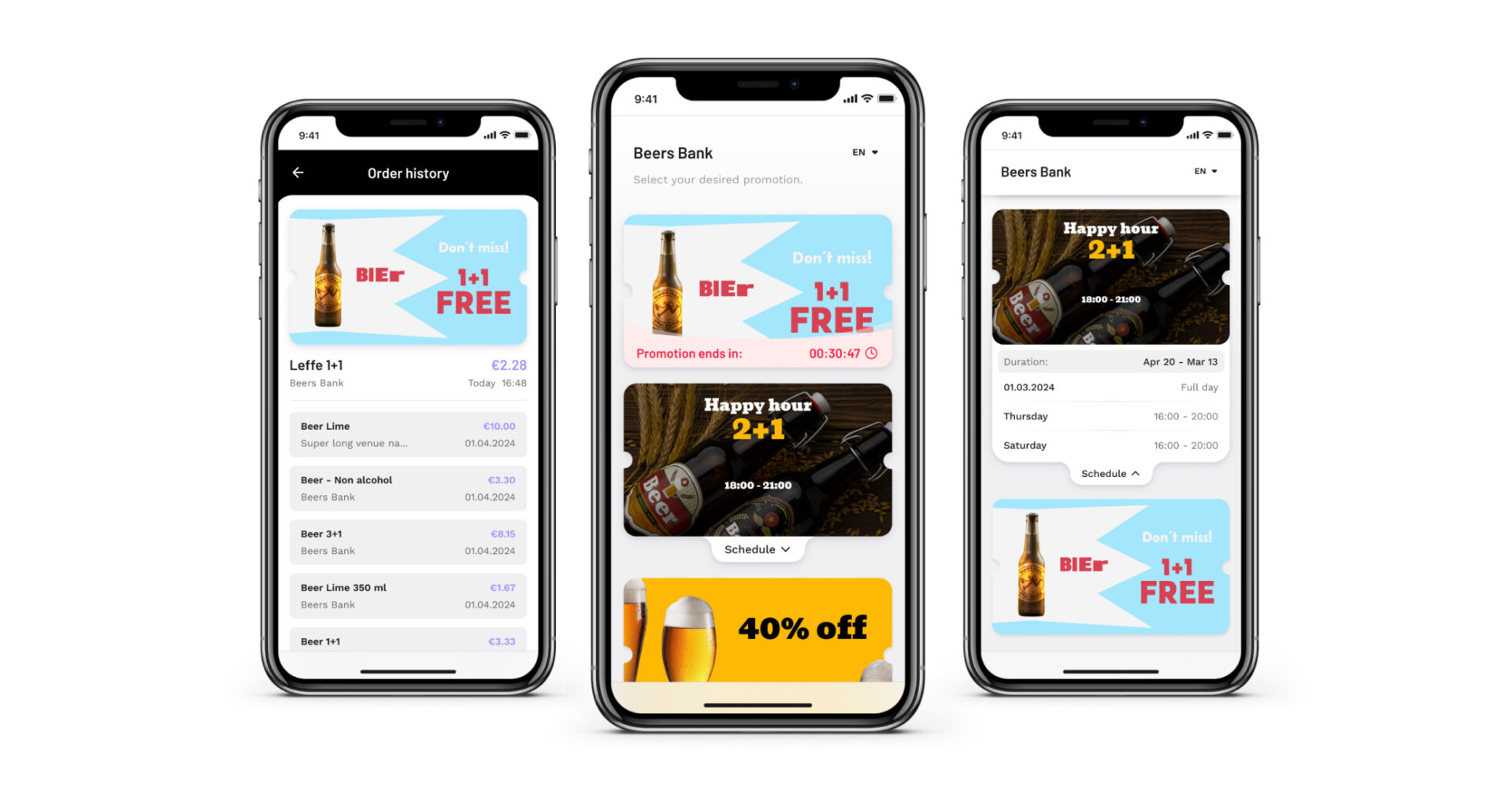
The brand introduced real-time promotional experiences (an app SSBS developed) that consumers could join directly from their phones.
For example, customers at bars, restaurants, or retail outlets could scan a QR code to:
- unlock instant discounts or free drinks
- join limited-time challenges
- earn bonus rewards
- complete surveys in exchange for prizes
At the same time, the company could launch and manage campaigns across thousands of venues in real time while collecting valuable first-party consumer data and engagement insights.
We believe the same approach of engaging existing customers has strong potential in off-trade environments as well. Consumers already scan receipts and packaging in supermarkets and convenience stores.
The opportunity is to turn those touchpoints into interactive experiences that encourage repeat purchases and ongoing engagement.
Trade retention works differently. Retailers and distributors stay loyal when your products help grow their category performance, not just your own sales.
To strengthen trade relationships:
- Share sell-out and category performance data
- Identify assortment and shelf opportunities proactively
- Maintain strong in-store execution and product availability
- Support retailers with category insights, not only promotions
Companies that bring data and category value into retailer conversations usually build stronger long-term partnerships.
5. Expand Into New Channels, Territories, and Retail Partnerships
For established FMCG brands, expansion often means growing distribution rather than building new products from scratch. The challenge is maintaining visibility as the network becomes more complex.
Many companies expand into new regions or channels through distributors and trade partnerships, but struggle to track what happens after shipments leave the warehouse. Sell-in may increase while real consumer demand remains unclear.
To scale distribution effectively, you need visibility into sales, inventory, and outlet coverage across the network.
Key areas to focus on:
- Track distributor performance and secondary sales
- Monitor inventory levels across territories and channels
- Identify underpenetrated regions and outlet gaps
- Optimize sales coverage based on outlet potential
- Build digital ordering processes for distributors and retailers
A Distributor Management system and a Sales Territory Management software (often a part of SFA) help commercial teams manage their revenue expansion strategy more consistently. B2B FMCG eCommerce platforms also improve ordering efficiency while giving you better visibility into trade customer behavior.
One Idea We’ve Seen Work in Practice
Our client, a global poultry producer, used Image Recognition integrated with SFA to track actual store opening hours across a small GT stores.
The challenge was practical: many traditional trade outlets have “flexible” real-life schedules. That’s risky for fresh poultry products.
Instead of investing in expensive infrastructure, the company chose a lightweight approach:
- store staff generated zero-value receipts at opening and closing
- receipts were photographed in-store
- Shelf Image Recognition extracted timestamps automatically
- data was transferred directly into the SFA system
As a result, the company gained reliable visibility into actual outlet operating hours using the systems they already have.
6. Improve Sales, Marketing, and Field Execution
Revenue growth plans succeed or fail in stores. Strong marketing campaigns and commercial strategies lose impact quickly when products are unavailable, poorly placed, or missing from target outlets.
This is why field execution matters as much as planning.
Marketing and sales teams need to work from the same commercial priorities. If marketing drives demand but stores do not execute correctly, the business loses both sales and marketing investment.
FMCG Sales Force Automation systems help field teams execute more consistently. They standardize store visits, route planning, shelf checks, pricing control, and promotion execution across the network.
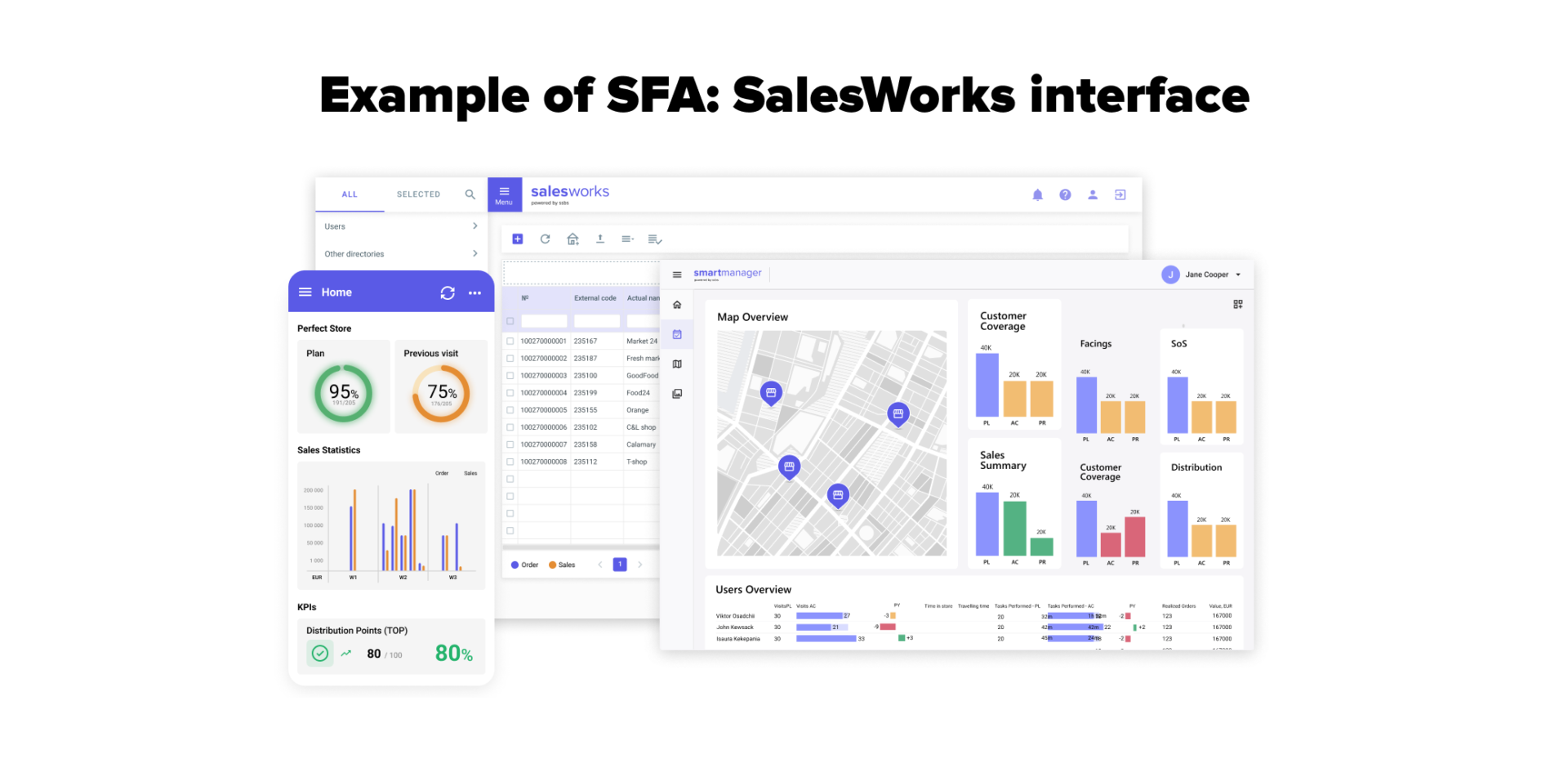
More importantly, they create a continuous flow of field data back into the business.
One Idea We’ve Seen Work in Practice
Maslodel, one of the largest oilseed and dairy processors in Kazakhstan, improved field visit efficiency from 40% to 80-82% within four months after implementing SalesWorks, an SFA solution by SSBS.
Before implementation, field reps had to report store issues to managers and wait for instructions. This slowed execution and delayed in-store corrective actions.
After consolidating KPIs, outlet priorities, and visit workflows into one system, reps could identify issues, complete actions immediately, and capture data directly during visits.
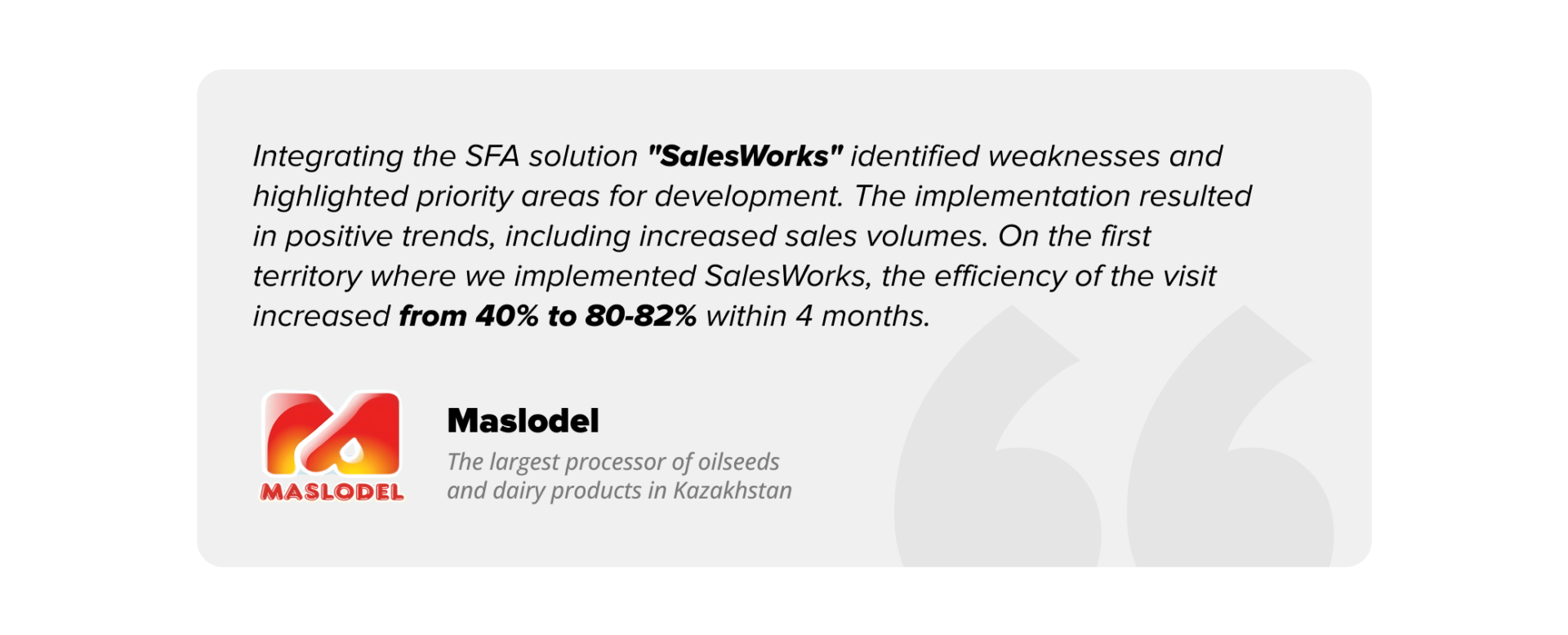
The system did not change the work itself. It removed the delay between identifying a problem and acting on it.
7. Grow Revenue Through Product Innovation and Premiumization
Many brands turn to innovation too quickly when their revenue growth plans stop delivering results. In many cases, better execution of the existing portfolio could deliver results at a lower cost.
Still, well-targeted innovation can drive strong margin growth. Premium products often carry higher margins and face less pricing pressure from retailers.
The key is basing decisions on real market data, not assumptions.
8. Use Upselling, Cross-Selling, and Bundling in FMCG
FMCG brands often focus on selling more new customers the same products instead of increasing the value of each order. But simple revenue growth tactics like upselling, cross-selling, and bundling can boost revenue without expanding distribution.
For consumers, this can mean encouraging larger pack sizes, premium versions, or complementary products.
In B2B channels, like B2B FMCG eCommerce, retailers can be guided toward related items, seasonal products, or new launches during the ordering process.
One Idea We’ve Seen Work in Practice
A client that adopted a B2B eCommerce platform by SSBS used it not only for ordering, but also as a collaboration environment for retailers.
The portal helped retailers make better commercial decisions by providing:
- personalized assortment and reorder recommendations at the store level
- visibility into promotional conditions and incentive programs
- 24/7 access to presentations, launches, and marketing materials
- reporting and operational tools previously handled manually by sales reps
- remote audit and KPI tracking capabilities
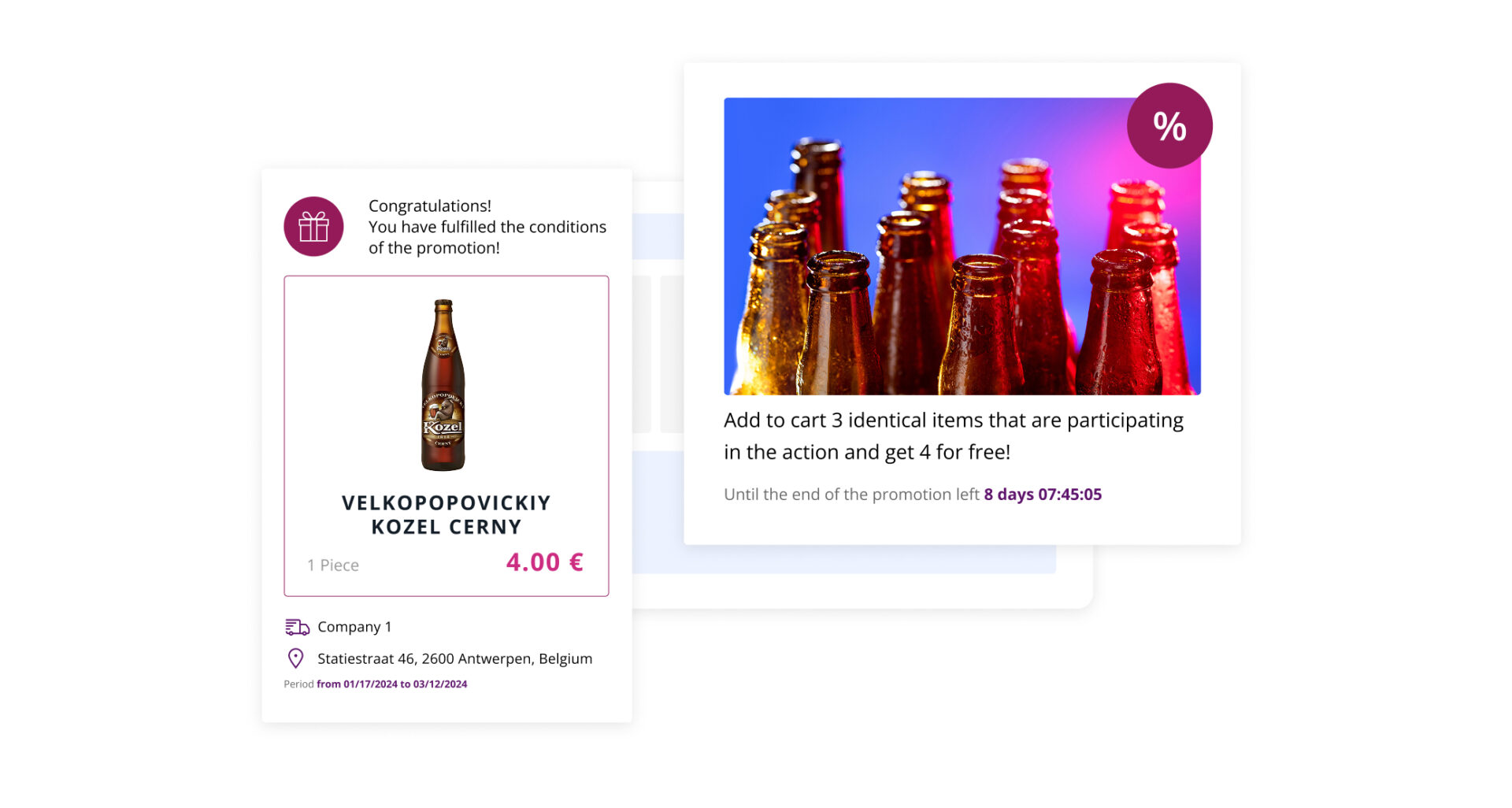
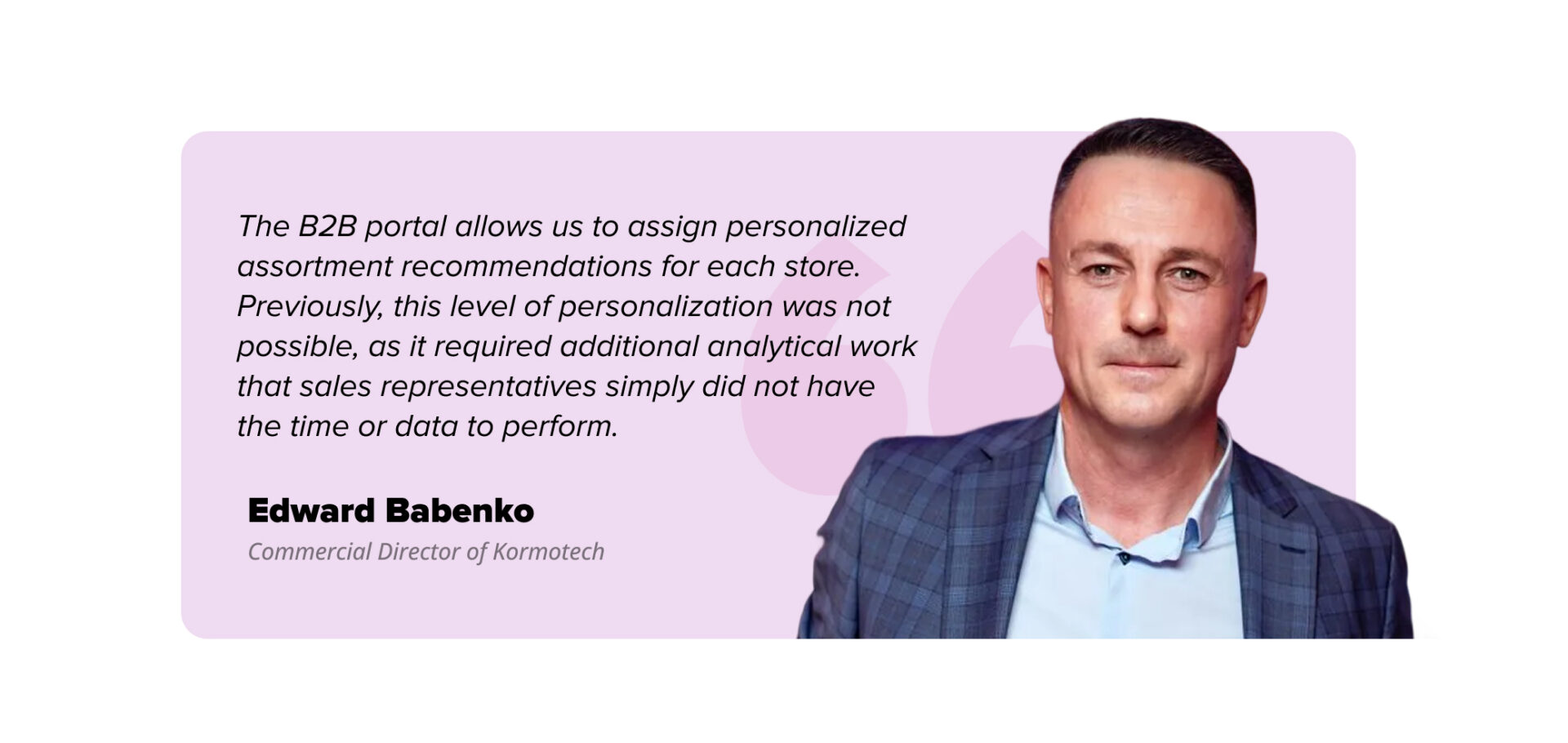
The ability to scale personalized recommendations is one of the biggest advantages of the B2B platform, according to the client. That’s something sales reps simply didn’t have time to do during regular store visits.
9. Use AI, Consumer Insights, and Data Analytics to Find Growth Opportunities
AI helps FMCG companies identify growth opportunities faster. But only when the underlying data is reliable. The goal is not to replace commercial teams, but to help them make better decisions within their revenue growth strategies.
Today, brands use AI and other types of analytics to:
- improve demand forecasting
- predict promotion performance before launch
- optimize assortments by location
- identify high-potential markets and outlets
- monitor shelf availability and pricing through image recognition
However, there is one important limitation: poor data quality leads to poor insights. Strong data infrastructure comes first.
One Idea We’ve Seen Work in Practice
One of our clients, a global pet food brand, discovered through data from our SFA system (SalesWorks) that reps were spending nearly 75% of their time manually taking orders in specialized pet retail chains.
The insight revealed a hidden growth constraint: teams responsible for category development, launches, and retailer partnerships had very little time left for strategic work.
To solve this, the company automated ordering via SSBS’s B2B eCommerce platform.
As a result:
- less KAM time was spent on operational tasks
- more time became available for retailer collaboration
- teams could focus more on category growth and in-store development
The case shows that data-driven growth opportunities are not always about predicting the future. Sometimes they come from identifying where commercial resources are being used inefficiently today.